If you have any questions, you are always welcome to contact us. We'll get back to you as soon as possible, withing 24 hours on weekdays.
Customer service
All questions about your order, return and delivery must be sent to our customer service team by e-mail at yourstore@yourdomain.com
Sale & Press
If you are interested in selling our products, need more information about our brand or wish to make a collaboration, please contact us at press@yourdomain.com
Help
If you have any questions, you are always welcome to contact us. We'll get back to you as soon as possible, withing 24 hours on weekdays.
Customer service
All questions about your order, return and delivery must be sent to our customer service team by e-mail at yourstore@yourdomain.com
Sale & Press
If you are interested in selling our products, need more information about our brand or wish to make a collaboration, please contact us at press@yourdomain.com
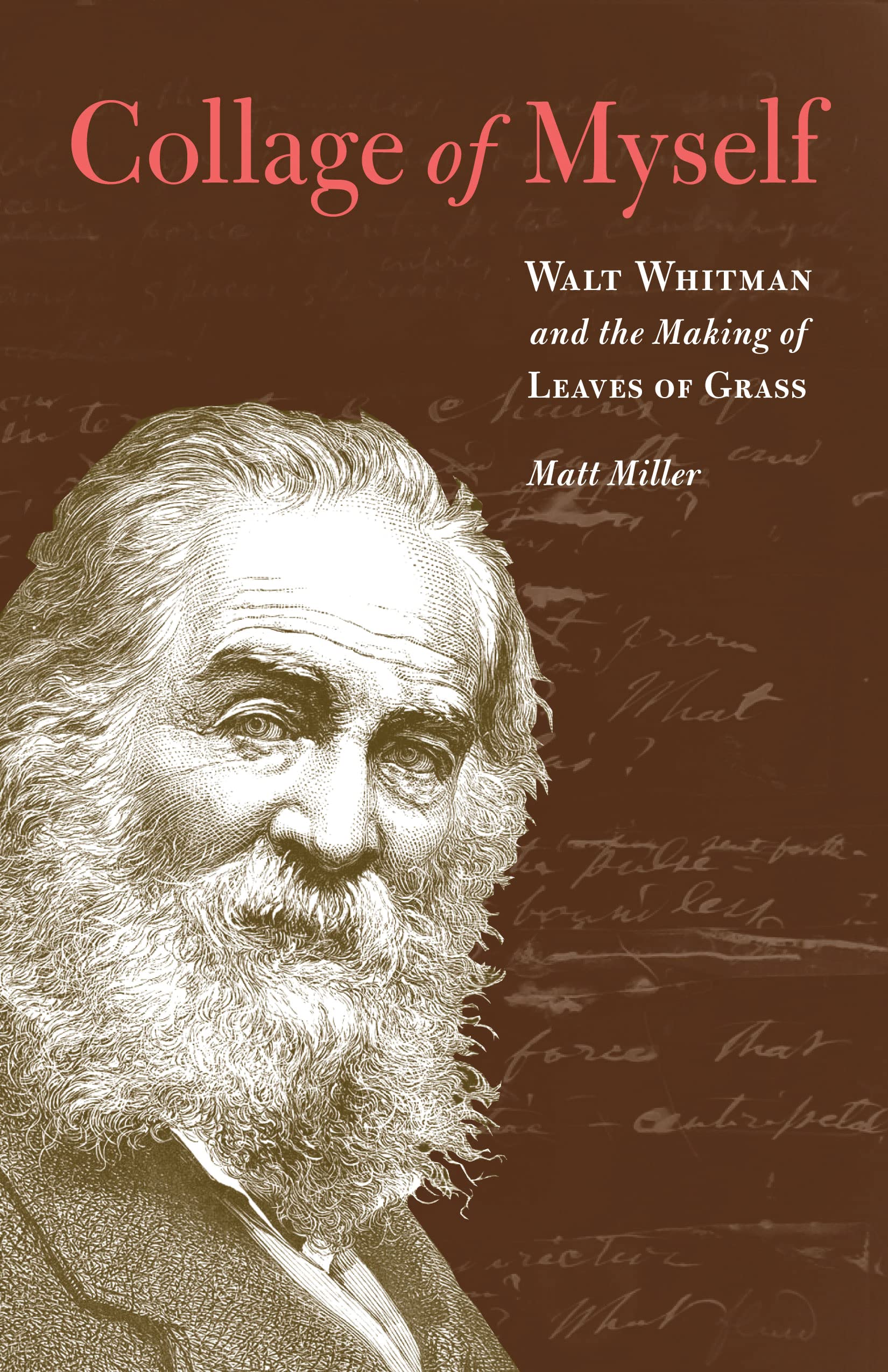
Collage of Myself presents a groundbreaking account of the creative story behind Americas most celebrated collection of poems. In the first booklength study of Walt Whitmans journals and manuscripts, Matt Miller demonstrates that until approximately 1854 (only a single year before the first publication of Leaves of Grass), Whitmanwho once speculated that Leaves would be a novel or a playwas unaware that his ambitions would assume the form of poetry at all.Collage of Myself details Whitmans discovery of a remarkable new creative process that allowed him to transform a diverse array of texts into poems such as Song of Myself and The Sleepers. Whitman embraced an art of fragments that encouraged him to cut and paste his lines into everevolving forms based on what he called spinal ideas. This approach to language, Miller argues, represents the first major use in the Western arts of the technique later known as collage, an observation with significant ramifications for our reception of subsequent artists and writers. Long before the modernists, Whitman integrated found text and readymade language into a revolutionary formulation of artistic production that anticipates much of what is exciting about modern and postmodern art.Using the Walt Whitman Archives collection of digital images to study what were previously scattered and inaccessible manuscript pages, Miller provides a breakthrough in our understanding of this great American literary icon.
⚠️ WARNING (California Proposition 65):
This product may contain chemicals known to the State of California to cause cancer,
birth defects, or other reproductive harm.
For MAP (Minimum Advertised Price) violations and Intellectual Property (IP) or Trademark concerns, please contact:
support@ergodebooks.com
⚠️ California Proposition 65 Warning: Some products sold on this website may expose you to chemicals known to the State of California to cause cancer, birth defects, or other reproductive harm. For more information, visit www.P65Warnings.ca.gov.