
Title
Colonial Modernity in Korea,Used
Sold by Ergodebooks, an authorized reseller.
Returns accepted within 30 days | support@ergodebooks.com
Shipping Information
- Free Standard Shipping — United States only
- Processing Time: 3–5 business days
- Estimated Delivery: 6–10 business days after dispatch
- Double-boxed, fully insured & discreetly packaged
- Tracking number sent via email once dispatched
Returns & Refund
Returns accepted within 30 days of delivery.
Damaged or Defective Item
Free return shipping + replacement or full refund
Wrong Item Received
Free return shipping + replacement or full refund
Change of Mind
Return shipping at customer's expense · 25% restocking fee applies
Payment Option

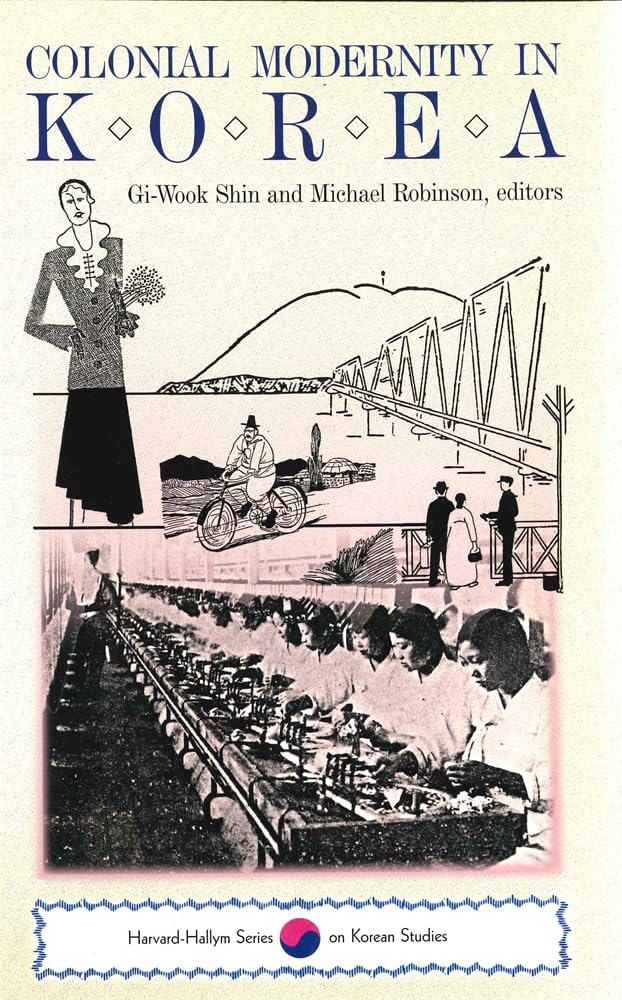
The twelve chapters in this volume seek to overcome the nationalist paradigm of Japanese repression and exploitation versus Korean resistance that has dominated the study of Koreas colonial period (19101945) by adopting a more inclusive, pluralistic approach that stresses the complex relations among colonialism, modernity, and nationalism. By addressing such diverse subjects as the colonial legal system, radio, telecommunications, the rural economy, and industrialization and the formation of industrial labor, one group of essays analyzes how various aspects of modernity emerged in the colonial context and how they were mobilized by the Japanese for colonial domination, with often unexpected results. A second group examines the development of various forms of identity from nation to gender to class, particularly how aspects of colonial modernity facilitated their formation through negotiation, contestation, and redefinition.
⚠️ WARNING (California Proposition 65):
This product may contain chemicals known to the State of California to cause cancer, birth defects, or other reproductive harm.
For more information, please visit www.P65Warnings.ca.gov.
- Q: What is the page count of 'Colonial Modernity in Korea'? A: This book contains four hundred sixty-six pages. It provides a comprehensive exploration of Korea's colonial period.
- Q: What are the dimensions of this book? A: The dimensions of 'Colonial Modernity in Korea' are six inches in length, one point two inches in width, and nine point zero two inches in height.
- Q: What type of binding does this book have? A: The book is published in paperback binding. This allows for easier handling and portability.
- Q: Who is the author of 'Colonial Modernity in Korea'? A: The author of this book is Daqing Yang. He provides a detailed analysis of Korea's colonial history.
- Q: What is the main focus of 'Colonial Modernity in Korea'? A: The book focuses on the complex relations among colonialism, modernity, and nationalism in Korea. It challenges traditional narratives of resistance versus repression.
- Q: Is this book suitable for academic study? A: Yes, this book is suitable for academic study. It offers insights valuable for scholars and students of Korean history.
- Q: How does this book address colonial identity? A: The book examines the development of various forms of identity, including national, gender, and class identities, in the context of colonial modernity.
- Q: Is there a specific age group for this book? A: This book is intended for adult readers and scholars. It contains complex themes that require a mature understanding.
- Q: Does this book include diverse perspectives on colonialism? A: Yes, it includes diverse essays that provide pluralistic views on Korea's colonial period. The authors analyze various aspects of modernity.
- Q: What is the condition of the book if it is used? A: The book is classified as used but in good condition. It should be legible and intact for reading.
- Q: What should I do if I want to understand Korea's colonial history better? A: Reading 'Colonial Modernity in Korea' is an excellent choice for understanding Korea's colonial history. It offers a detailed and nuanced perspective.
- Q: Are there any specific themes covered in the book? A: Yes, the book covers themes such as the colonial legal system, industrialization, and the formation of industrial labor.
- Q: Can this book help with understanding modern Korean identity? A: Yes, it helps in understanding modern Korean identity by analyzing how colonial experiences shaped various identities.
- Q: What is the publisher of 'Colonial Modernity in Korea'? A: The book is published by Harvard University Press. It is part of the Harvard University Asia Center's offerings.
- Q: Is this book a good resource for understanding Korean nationalism? A: Yes, it is a valuable resource for understanding Korean nationalism during the colonial period. It discusses the complexities involved.
- Q: How do I care for a used book like this? A: To care for a used book, store it in a cool, dry place and avoid exposure to direct sunlight. Handle it gently to maintain its condition.