
Title
Colonialism and Its Forms of Knowledge,Used
Sold by Ergodebooks, an authorized reseller.
Returns accepted within 30 days | support@ergodebooks.com
Shipping Information
- Free Standard Shipping — United States only
- Processing Time: 3–5 business days
- Estimated Delivery: 6–10 business days after dispatch
- Double-boxed, fully insured & discreetly packaged
- Tracking number sent via email once dispatched
Returns & Refund
Returns accepted within 30 days of delivery.
Damaged or Defective Item
Free return shipping + replacement or full refund
Wrong Item Received
Free return shipping + replacement or full refund
Change of Mind
Return shipping at customer's expense · 25% restocking fee applies
Payment Option

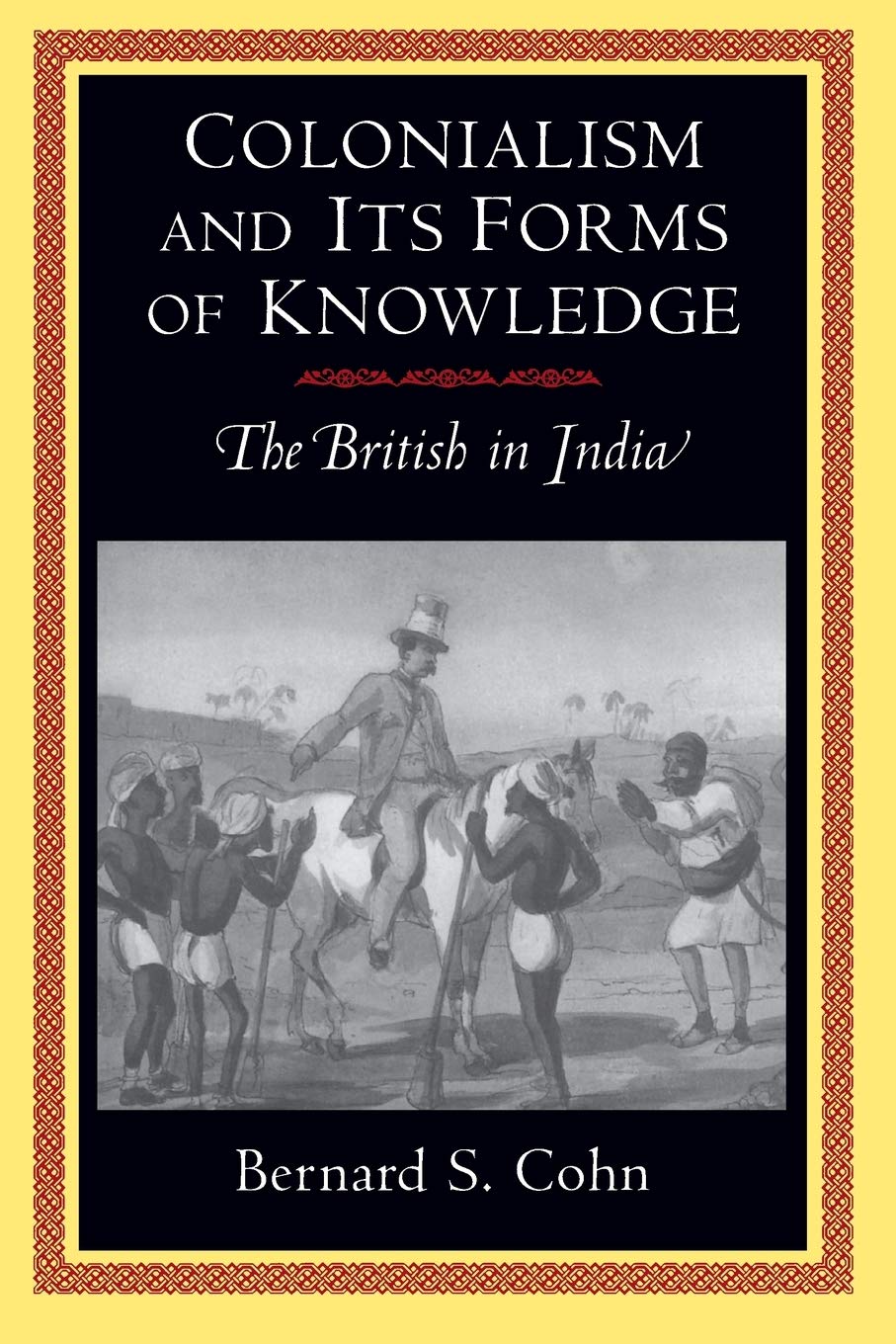
Bernard Cohn's interest in the construction of Empire as an intellectual and cultural phenomenon has set the agenda for the academic study of modern Indian culture for over two decades. His earlier publications have shown how dramatic British innovations in India, including revenue and legal systems, led to fundamental structural changes in Indian social relations. This collection of his writings in the last fifteen years discusses areas in which the colonial impact has generally been overlooked. The essays form a multifaceted exploration of the ways in which the British discovery, collection, and codification of information about Indian society contributed to colonial cultural hegemony and political control.Cohn argues that the British Orientalists' study of Indian languages was important to the colonial project of control and command. He also asserts that an arena of colonial power that seemed most benign and most susceptible to indigenous influencesmostly lawin fact became responsible for the institutional reactivation of peculiarly British notions about how to regulate a colonial society made up of 'others.' He shows how the very Orientalist imagination that led to brilliant antiquarian collections, archaeological finds, and photographic forays were in fact forms of constructing an India that could be better packaged, inferiorized, and ruled. A final essay on cloth suggests how clothes have been part of the history of both colonialism and anticolonialism.
⚠️ WARNING (California Proposition 65):
This product may contain chemicals known to the State of California to cause cancer, birth defects, or other reproductive harm.
For more information, please visit www.P65Warnings.ca.gov.
- Q: What are the dimensions of the book? A: The book measures six point two six inches in length, zero point five one inches in width, and nine point two five inches in height.
- Q: How many pages does the book have? A: The book contains two hundred pages, providing a comprehensive collection of Bernard Cohn's essays.
- Q: What type of binding does this book have? A: This book features a paperback binding, making it lightweight and easy to handle.
- Q: Who is the author of this book? A: The author of the book is Bernard Cohn, a prominent scholar in the field of modern Indian culture.
- Q: What is the main theme of the book? A: The book explores the impact of colonialism on Indian society, focusing on cultural and intellectual phenomena.
- Q: Is this book suitable for academic study? A: Yes, this book is highly suitable for academic study, particularly for those interested in colonialism and Indian culture.
- Q: How should I store this book to keep it in good condition? A: Store the book in a cool, dry place away from direct sunlight to preserve its physical condition.
- Q: Is this book safe for young readers? A: Yes, the book is safe for young readers, but it may be more suitable for older students due to its complex themes.
- Q: Can I lend this book to others? A: Yes, you can lend this book to others, but be sure to check its condition before doing so.
- Q: What should I do if the book arrives damaged? A: If the book arrives damaged, contact the seller for a return or replacement within their specified return policy.
- Q: Is this book available in digital format? A: No, this product listing is for a physical paperback edition only.
- Q: Does this book contain illustrations? A: Yes, the book includes black and white illustrations that complement the text.
- Q: How often does the author reference historical events? A: The author frequently references historical events throughout the book to support his arguments on colonialism.
- Q: Is there a glossary of terms in the book? A: No, the book does not include a glossary, but it provides detailed explanations within the essays.
- Q: What kind of essays are included in this collection? A: The collection includes essays that explore overlooked areas of colonial impact on Indian society.
- Q: What is the publication date of this book? A: The publication date is not specified in the provided details, so please check the seller for more information.