
Title
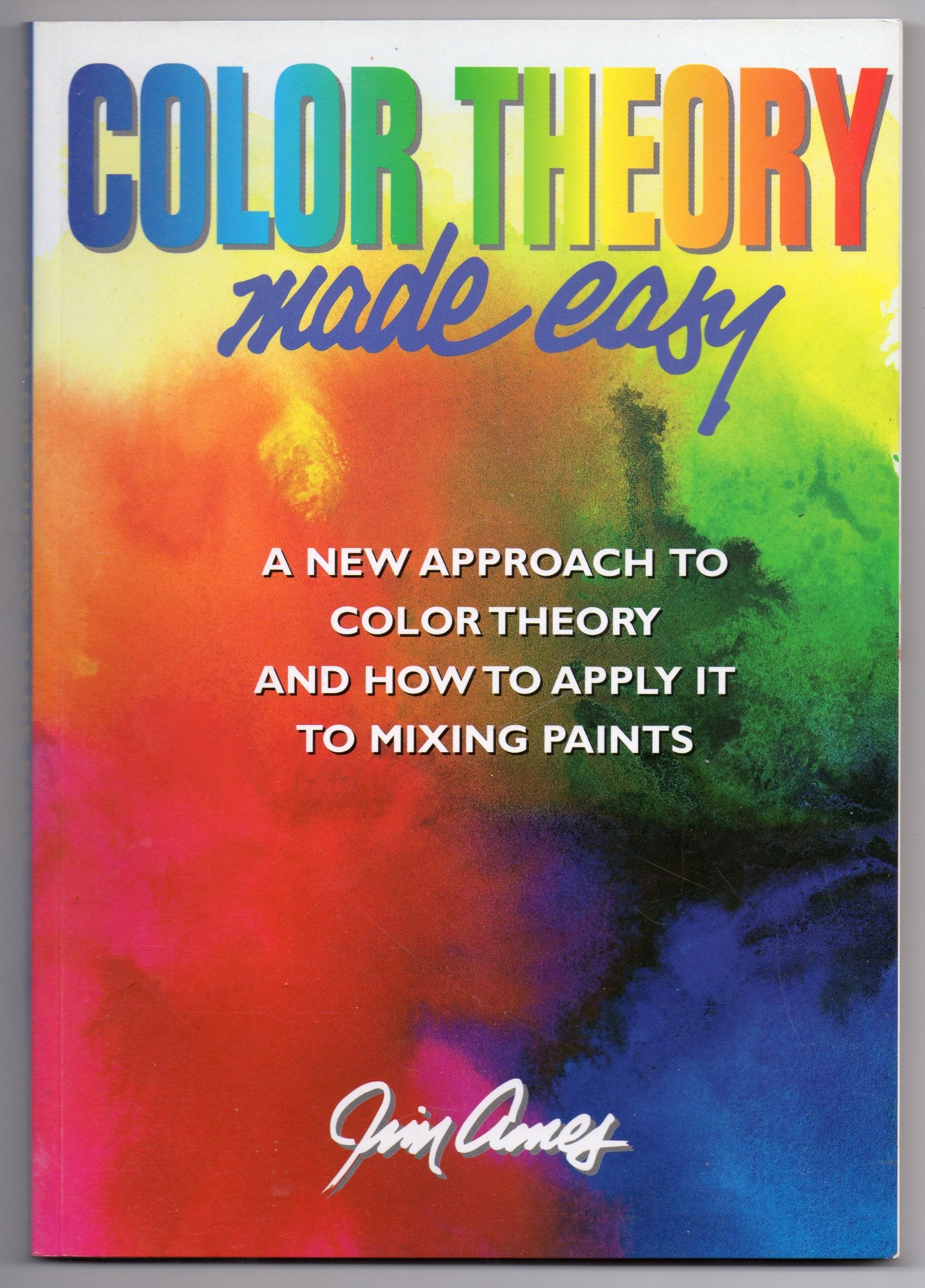
Color Theory Made Easy: A New Approach to Color Theory and How to Apply it to Mixing Paints,New
Sold by Ergodebooks, an authorized reseller.
Returns accepted within 30 days | support@ergodebooks.com
Shipping Information
- Free Standard Shipping — United States only
- Processing Time: 3–5 business days
- Estimated Delivery: 6–10 business days after dispatch
- Double-boxed, fully insured & discreetly packaged
- Tracking number sent via email once dispatched
Returns & Refund
Returns accepted within 30 days of delivery.
Damaged or Defective Item
Free return shipping + replacement or full refund
Wrong Item Received
Free return shipping + replacement or full refund
Change of Mind
Return shipping at customer's expense · 25% restocking fee applies
Payment Option

Traditional color theory can be confusing to artists, especially when they try to use inaccurate color wheels as guides to mixing their colors. Now, Color Theory Made Easy presents an alternative approach that cuts through the tangle of established but contradictory concepts that gives artists a universal theory that really applies to their work. Most artists have been taught that red, blue, and yellow are the primary colorshues that cannot be created from any combination of other colors. However, as a result of years of study, author and artist Jim Ames has concluded that the true primary colors are cyan (a greenish blue), magenta (a violet red), and a yellow that does not learn toward either cyan or magenta.In Color Theory Made Easy, Ames explains the importance of these three colors as the basis for all our thinking about color. Using friendly, clear language and colorful diagrams, the author lays the foundation in Chapter 1 for applying his color theory in art. He shows that all colors in nature are composed of varying percentages of cyan, magenta, and yellow. Chapter 2 builds on this with a survey of the pigment colors artists actually use. Here the author offers an essential education concerning paint selection, and he lists currently available tube colors that are the most accurate in terms of the true primaries. The final chapter explores color mixing principles based on cyan, magenta, and yellow, and applies these principles through a series of watercolor demonstrations.In this illuminating book, Jim Ames has broken new ground and given us a workable color theory that is both simple and indispensable.
⚠️ WARNING (California Proposition 65):
This product may contain chemicals known to the State of California to cause cancer, birth defects, or other reproductive harm.
For more information, please visit www.P65Warnings.ca.gov.