If you have any questions, you are always welcome to contact us. We'll get back to you as soon as possible, withing 24 hours on weekdays.
Customer service
All questions about your order, return and delivery must be sent to our customer service team by e-mail at yourstore@yourdomain.com
Sale & Press
If you are interested in selling our products, need more information about our brand or wish to make a collaboration, please contact us at press@yourdomain.com
Help
If you have any questions, you are always welcome to contact us. We'll get back to you as soon as possible, withing 24 hours on weekdays.
Customer service
All questions about your order, return and delivery must be sent to our customer service team by e-mail at yourstore@yourdomain.com
Sale & Press
If you are interested in selling our products, need more information about our brand or wish to make a collaboration, please contact us at press@yourdomain.com
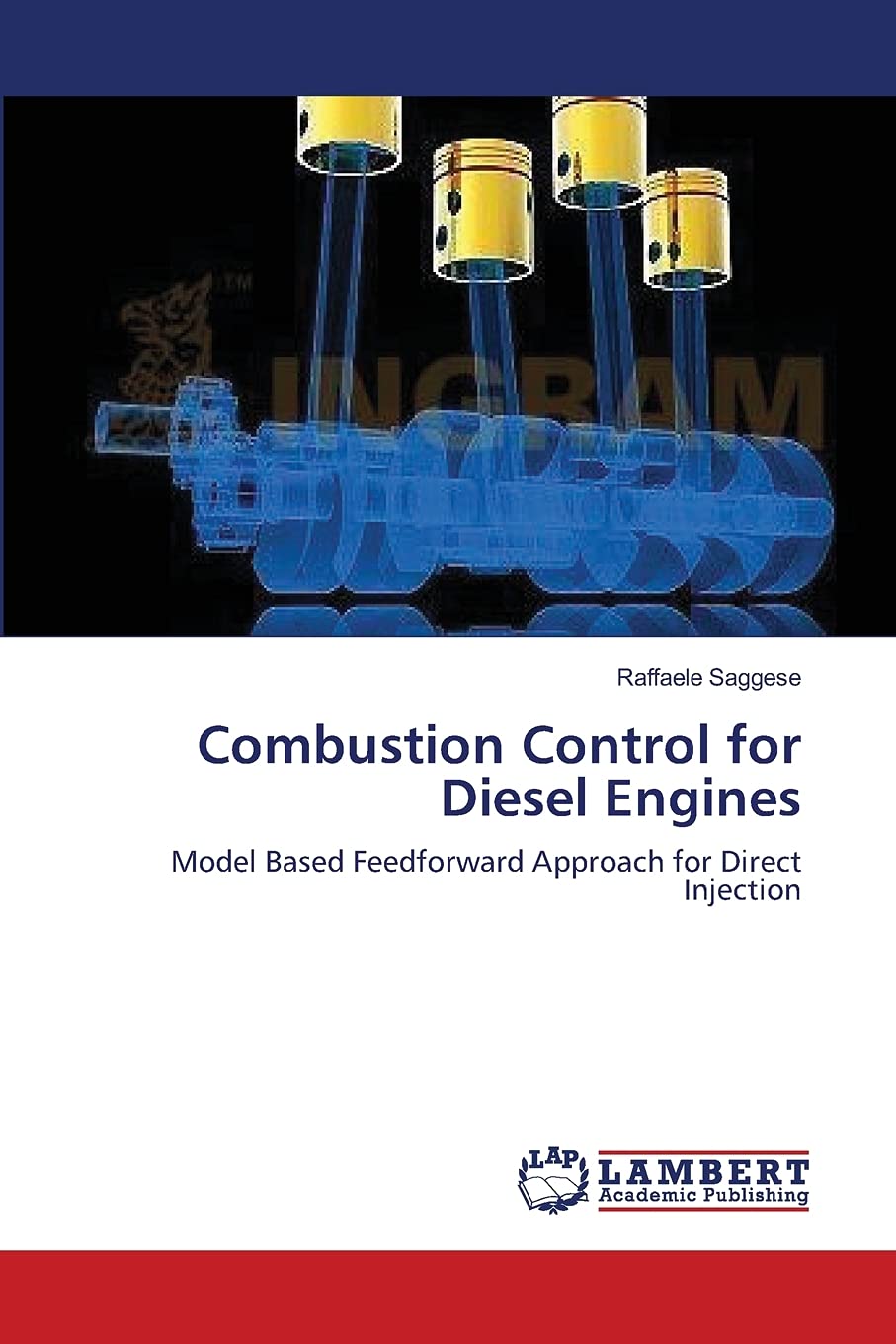
The development of increasingly sophisticate control systems has allowed to increase year after year the Internal Combustion Engine performances and perceived quality (NVH, emission, fuel economy etc.). The most complex subsystem in the engine control strategy is the one managing the fuel combustion. This is a composite phenomenon which is driven, from one side, by the injection strategy (number of injection, timing, fuel quantity), and from the other by the charging characteristics (air pressure, O2 fraction, air temperature). Most of the current control strategies use a simple map based approach to determine the setpoint required at the injection timing; nevertheless, from what said above it is easy to understand how a large number of parameters should be considered in order to correct required timing in order to get the demanded combustion phasing. Therefore, in the last years, the maps needed to define injection setpoint have increased in size and number, with a huge impact on the time and effort required for calibration and on the memory needed in the controller. In this monograph, the possibility to introduce a model based combustion control approach is explored.
⚠️ WARNING (California Proposition 65):
This product may contain chemicals known to the State of California to cause cancer,
birth defects, or other reproductive harm.
For MAP (Minimum Advertised Price) violations and Intellectual Property (IP) or Trademark concerns, please contact:
support@ergodebooks.com
⚠️ California Proposition 65 Warning: Some products sold on this website may expose you to chemicals known to the State of California to cause cancer, birth defects, or other reproductive harm. For more information, visit www.P65Warnings.ca.gov.