
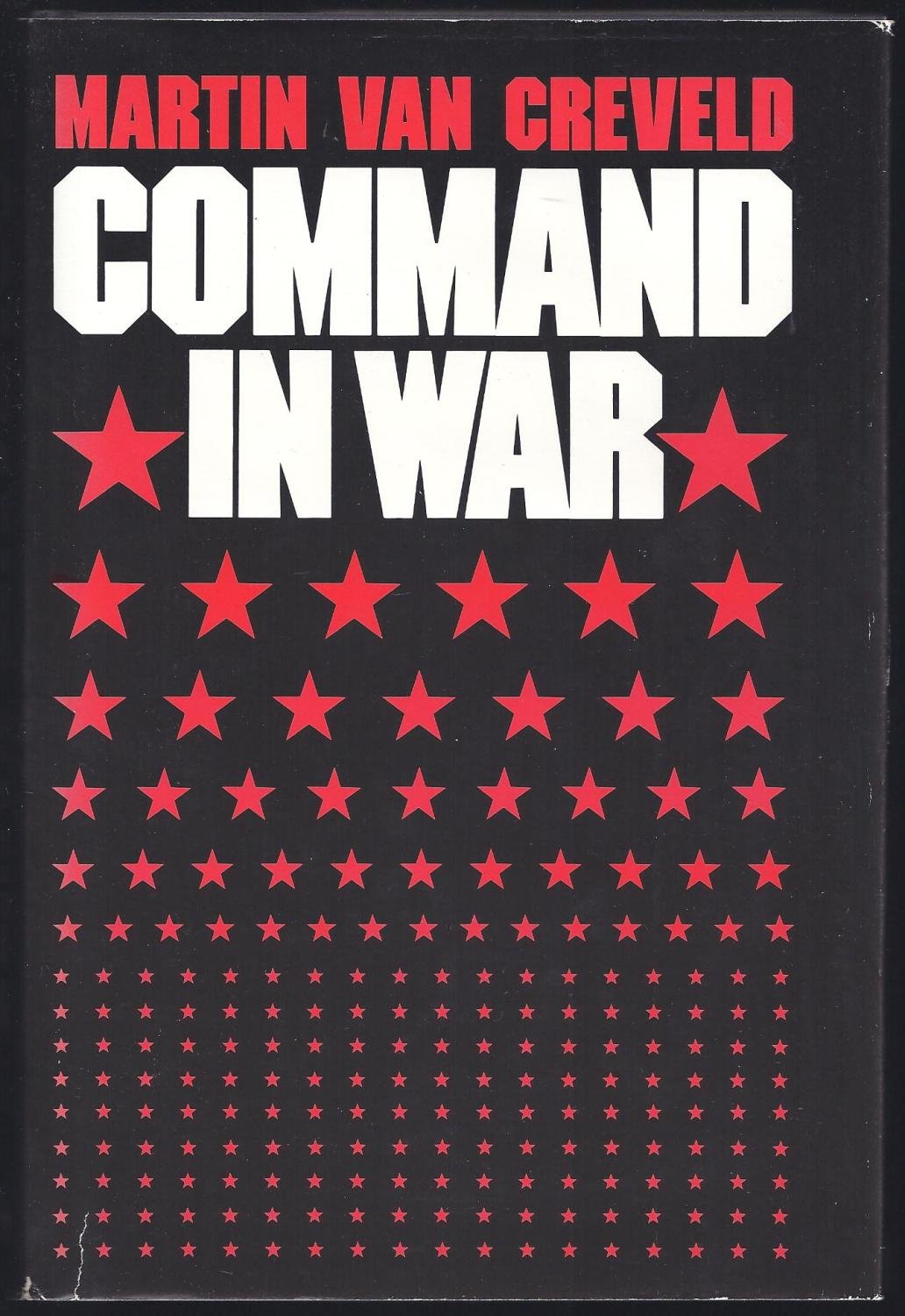
Title
Command In War.,New
Sold by Ergodebooks, an authorized reseller.
Returns accepted within 30 days | support@ergodebooks.com
Shipping Information
- Free Standard Shipping — United States only
- Processing Time: 3–5 business days
- Estimated Delivery: 6–10 business days after dispatch
- Double-boxed, fully insured & discreetly packaged
- Tracking number sent via email once dispatched
Returns & Refund
Returns accepted within 30 days of delivery.
Damaged or Defective Item
Free return shipping + replacement or full refund
Wrong Item Received
Free return shipping + replacement or full refund
Change of Mind
Return shipping at customer's expense · 25% restocking fee applies
Payment Option

Many Books Have Been Written About Strategy, Tactics, And Great Commanders. This Is The First Book To Deal Exclusively With The Nature Of Command Itself, And To Trace Its Development Over Two Thousand Years From Ancient Greece To Vietnam. It Treats Historically The Whole Variety Of Problems Involved In Commanding Armies, Including Staff Organization And Administration, Communications Methods And Technologies, Weaponry, And Logistics. And It Analyzes The Relationship Between These Problems And Military Strategy. In Vivid Descriptions Of Key Battles And Campaignsamong Others, Napoleon At Jena, Moltke'S Kniggrtz Campaign, The Arabisraeli War Of 1973, And The Americans In Vietnamvan Creveld Focuses On The Means Of Command And Shows How Those Means Worked In Practice. He Finds That Technological Advances Such As The Railroad, Breechloading Rifles, The Telegraph And Later The Radio, Tanks, And Helicopters All Brought Commanders Not Only New Tactical Possibilities But Also New Limitations. Although Vast Changes Have Occurred In Military Thinking And Technology, The One Constant Has Been An Endless Search For Certaintycertainty About The State And Intentions Of The Enemy'S Forces; Certainty About The Manifold Factors That Together Constitute The Environment In Which War Is Fought, From The Weather And Terrain To Radioactivity And The Presence Of Chemical Warfare Agents; And Certainty About The State, Intentions, And Activities Of One'S Own Forces. The Book Concludes That Progress In Command Has Usually Been Achieved Less By Employing More Advanced Technologies Than By Finding Ways To Transcend The Limitations Of Existing Ones.
⚠️ WARNING (California Proposition 65):
This product may contain chemicals known to the State of California to cause cancer, birth defects, or other reproductive harm.
For more information, please visit www.P65Warnings.ca.gov.
- Q: How many pages does COMMAND In WAR have? A: This book has three hundred fifty-two pages. It provides a comprehensive look at the nature of command in military history.
- Q: What binding type is used for COMMAND In WAR? A: COMMAND In WAR is available in hardcover binding. This type of binding ensures durability and longevity for frequent readers.
- Q: Who is the author of COMMAND In WAR? A: The author of COMMAND In WAR is Martin Van Creveld. He is a well-known military historian and strategist.
- Q: What is the main theme of COMMAND In WAR? A: The main theme is the nature of command in military history. It traces the evolution of command from ancient Greece to modern conflicts.
- Q: Is COMMAND In WAR suitable for casual readers? A: Yes, COMMAND In WAR is suitable for casual readers interested in military history. It presents complex topics in an accessible manner.
- Q: How does COMMAND In WAR address technological advancements? A: The book analyzes how technological advancements impact military command. It discusses both new tactical possibilities and limitations they introduce.
- Q: What kind of insights can I expect from reading COMMAND In WAR? A: You can expect insights into the evolution of military strategy and command challenges. The book provides historical examples from various conflicts.
- Q: Does COMMAND In WAR include real battle descriptions? A: Yes, it includes vivid descriptions of key battles and campaigns. Notable examples include Napoleon at Jena and the Arab-Israeli War of 1973.
- Q: Is COMMAND In WAR appropriate for academic studies? A: Yes, it is appropriate for academic studies in military history. The book is well-researched and provides a thorough analysis of command.
- Q: How should I store COMMAND In WAR to keep it in good condition? A: Store COMMAND In WAR in a cool, dry place. Keep it away from direct sunlight to prevent fading and damage.
- Q: Can I return COMMAND In WAR if I'm not satisfied? A: Yes, you can return COMMAND In WAR if you are not satisfied. Check the seller's return policy for specific details.
- Q: What condition is the used copy of COMMAND In WAR in? A: The used copy of COMMAND In WAR is described as being in good condition. Expect minor wear but no significant damage.
- Q: Is there a warranty for COMMAND In WAR? A: No, COMMAND In WAR does not come with a warranty. It is a book, so typical warranties do not apply.
- Q: What if COMMAND In WAR arrives damaged? A: If COMMAND In WAR arrives damaged, contact the seller for a replacement or refund. Document the damage with photos for reference.
- Q: What makes COMMAND In WAR a unique read? A: COMMAND In WAR is unique for its exclusive focus on the nature of command throughout history. It offers a historical lens on military leadership.