
Title
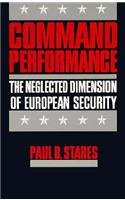
Command Performance: The Neglected Dimension of European Security,Used
Sold by Ergodebooks, an authorized reseller.
Returns accepted within 30 days | support@ergodebooks.com
Shipping Information
- Free Standard Shipping — United States only
- Processing Time: 3–5 business days
- Estimated Delivery: 6–10 business days after dispatch
- Double-boxed, fully insured & discreetly packaged
- Tracking number sent via email once dispatched
Returns & Refund
Returns accepted within 30 days of delivery.
Damaged or Defective Item
Free return shipping + replacement or full refund
Wrong Item Received
Free return shipping + replacement or full refund
Change of Mind
Return shipping at customer's expense · 25% restocking fee applies
Payment Option

Product Description For more than forty years, NATO has concentrated on deterring the now dramatically diminished threat of deliberate aggression by the Warsaw Pact. Despite numerous assessments of the European military balance and NATO's security requirements, the adequacy of NATO's command and control system, which the alliance would depend on to deter attack and defend itself, has received scant attention. This neglect, as Paul Stares argues, stems from a larger oversight in the way security threats are typically assessed and military needs defined. The standard approach is to focus on the relative quantity and quality of manpower and weaponry, while the vital contribution of command system performance to military effectiveness is almost always ignored. Drawing on several indepth case studies and other historical data, Stares analyzes the factors that commonly affect command performance. This lays the groundwork for a full assessment of NATO's crisis management and wartime command arrangements. He finds that NATO's command system has been neglected in a fundamental way, resulting in serious deficiencies that raise sobering doubts about NATO's capacity to control its forces in a crisis and direct them effectively in wartime. From the Back Cover If NATO is to serve its member's security interests and contribute to peace and stability, it must also reorient its command system, turning away from the dramatically diminished likelihood of deliberate aggression to take on the challenge of regional crisis management and conflict prevention. Accordingly, Stares presents specific recommendations for achieving this fundamental shift in priority.
⚠️ WARNING (California Proposition 65):
This product may contain chemicals known to the State of California to cause cancer, birth defects, or other reproductive harm.
For more information, please visit www.P65Warnings.ca.gov.