
Title
Commercial Agriculture, the Slave Trade & Slavery in Atlantic Africa (Western Africa Series, 4),Used
Sold by Ergodebooks, an authorized reseller.
Returns accepted within 30 days | support@ergodebooks.com
Shipping Information
- Free Standard Shipping — United States only
- Processing Time: 3–5 business days
- Estimated Delivery: 6–10 business days after dispatch
- Double-boxed, fully insured & discreetly packaged
- Tracking number sent via email once dispatched
Returns & Refund
Returns accepted within 30 days of delivery.
Damaged or Defective Item
Free return shipping + replacement or full refund
Wrong Item Received
Free return shipping + replacement or full refund
Change of Mind
Return shipping at customer's expense · 25% restocking fee applies
Payment Option

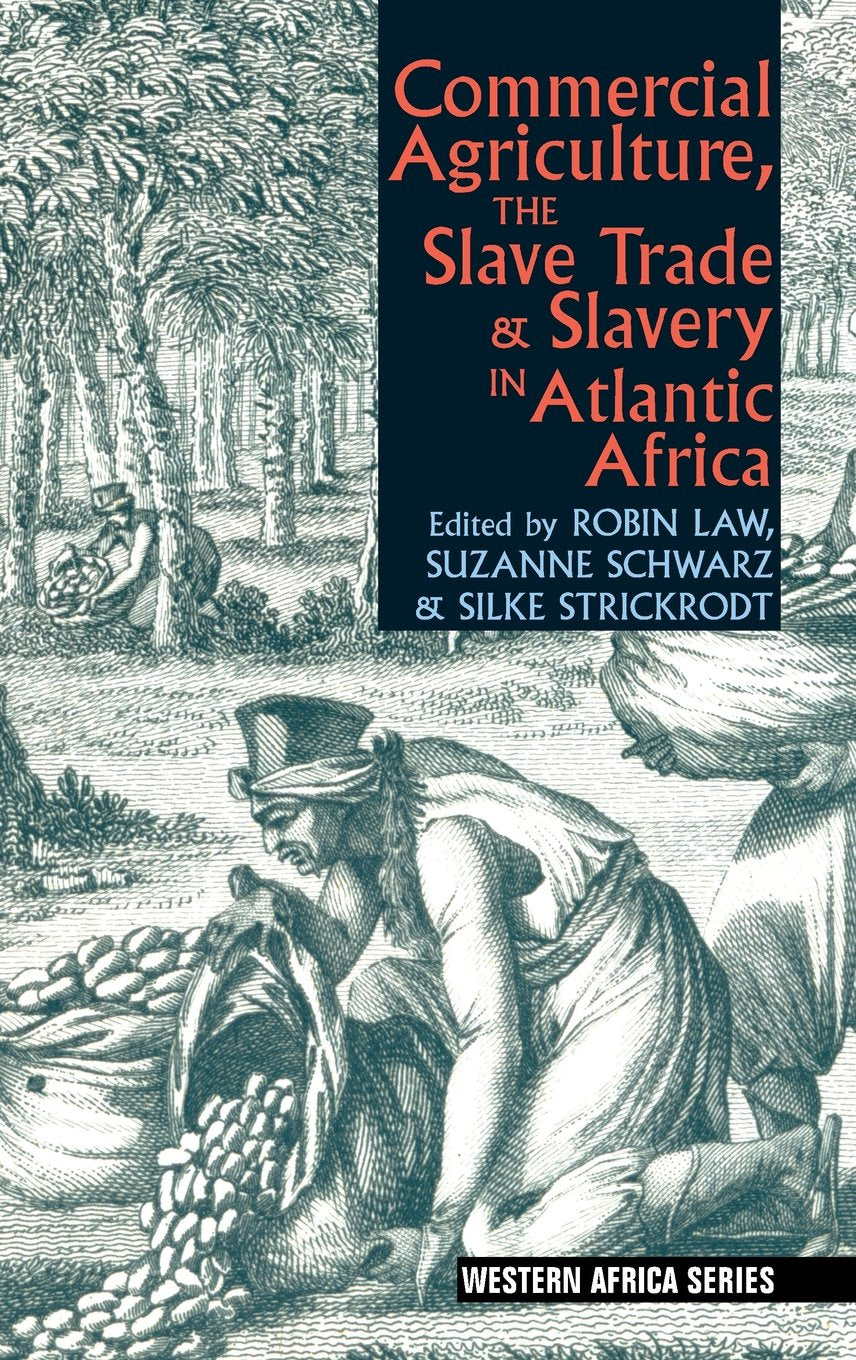
Reenvisages what we know about African political economies through its examination of one of the key questions in colonial and African history, that of commercial agriculture and its relationship to slavery.This book considers commercial agriculture in Africa in relation to the transAtlantic slave trade and the institution of slavery within Africa itself, from the beginnings of European maritime trade in the fifteenth century to theearly stages of colonial rule in the twentieth century.From the outset, the export of agricultural produce from Africa represented a potential alternative to the slave trade: although the predominant trend was to transport enslaved Africans to the Americas to cultivate crops, there was recurrent interest in the possibility of establishing plantations in Africa to produce such crops, or to purchase them from independent African producers. Thisidea gained greater currency in the context of the movement for the abolition of the slave trade from the late eighteenth century onwards, when the promotion of commercial agriculture in Africa was seen as a means of suppressing the slave trade. At the same time, the slave trade itself stimulated commercial agriculture in Africa, to supply provisions for slaveships in the Middle Passage. Commercial agriculture was also linked to slavery within Africa, since slaves were widely employed there in agricultural production. Although Abolitionists hoped that production of export crops in Africa would be based on free labour, in practice it often employed enslaved labour, so that slaveryin Africa persisted into the colonial period.Robin Law is Emeritus Professor of African History, University of Stirling; Suzanne Schwarz is Professor of History, University of Worcester; Silke Strickrodt is Visiting Research Fellow at the Department of African Studies and Anthropology, University of Birmingham.
⚠️ WARNING (California Proposition 65):
This product may contain chemicals known to the State of California to cause cancer, birth defects, or other reproductive harm.
For more information, please visit www.P65Warnings.ca.gov.