
Title
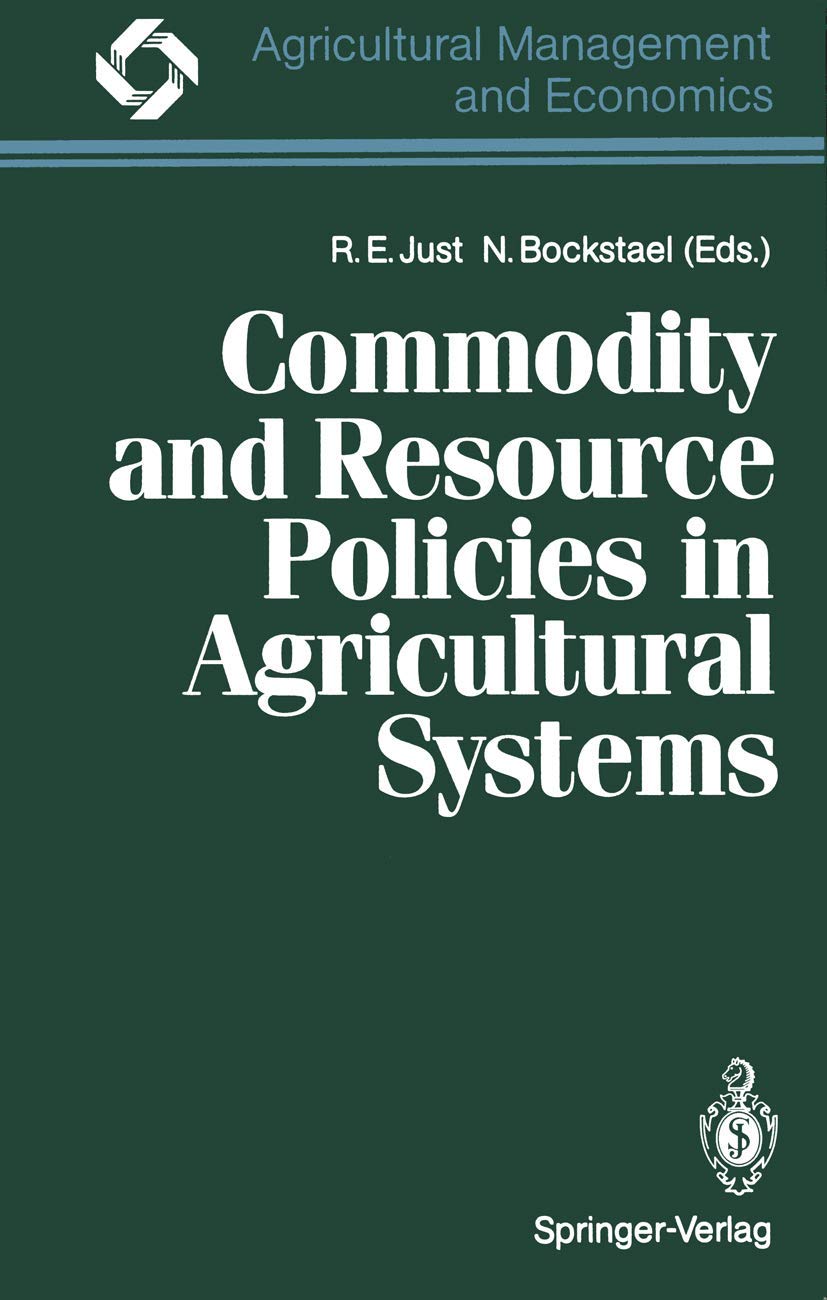
Commodity and Resource Policies in Agricultural Systems (Agricultural Management and Economics),Used
Sold by Ergodebooks, an authorized reseller.
Returns accepted within 30 days | support@ergodebooks.com
Shipping Information
- Free Standard Shipping — United States only
- Processing Time: 3–5 business days
- Estimated Delivery: 6–10 business days after dispatch
- Double-boxed, fully insured & discreetly packaged
- Tracking number sent via email once dispatched
Returns & Refund
Returns accepted within 30 days of delivery.
Damaged or Defective Item
Free return shipping + replacement or full refund
Wrong Item Received
Free return shipping + replacement or full refund
Change of Mind
Return shipping at customer's expense · 25% restocking fee applies
Payment Option

Agricultural, natural resource, and environmental problems are becom ing increasingly interdependent. For example, soil erosion is largely determined by agricultural land use. Both water use and water con tamination depend on land use and technology choice in agriculture. In many areas, the fertilizers and pesticides used in agriculture are ma jor pollutants of ground and surface water, having adverse effects on drinking water and fisheries. Agricultural pollutants such as pesticides also produce adverse health effects for agricultural workers and the consuming public. On the other hand, the availability of water resources and the value of competing land uses influence agricultural production. Additionally, regional air quality problems may affect crops and global environmental trends may have longterm implica tions for farming. Agriculture, natural resources and environmental quality are all heavily regulated in the U. S. , but they are done so by a vast array of competing or unrelated agencies within the U. S. Departments of Agriculture, Interior, and Commerce, the Environmental Protection Agency; and numerous state agencies. Considering the large number of bureaucratically remote public agencies involved and the pervasive in terdependencies between agriculture, natural resources and the environ ment, policies develop which are at best uncoordinated and at worst conflicting and counterproductive. These policies have become sources of controversy as different interest groups struggle to affect their im plementation, as different agencies have fought for administrative con trol and as legislative bodies have attempted to enact piecemeal changes.
⚠️ WARNING (California Proposition 65):
This product may contain chemicals known to the State of California to cause cancer, birth defects, or other reproductive harm.
For more information, please visit www.P65Warnings.ca.gov.