
Title
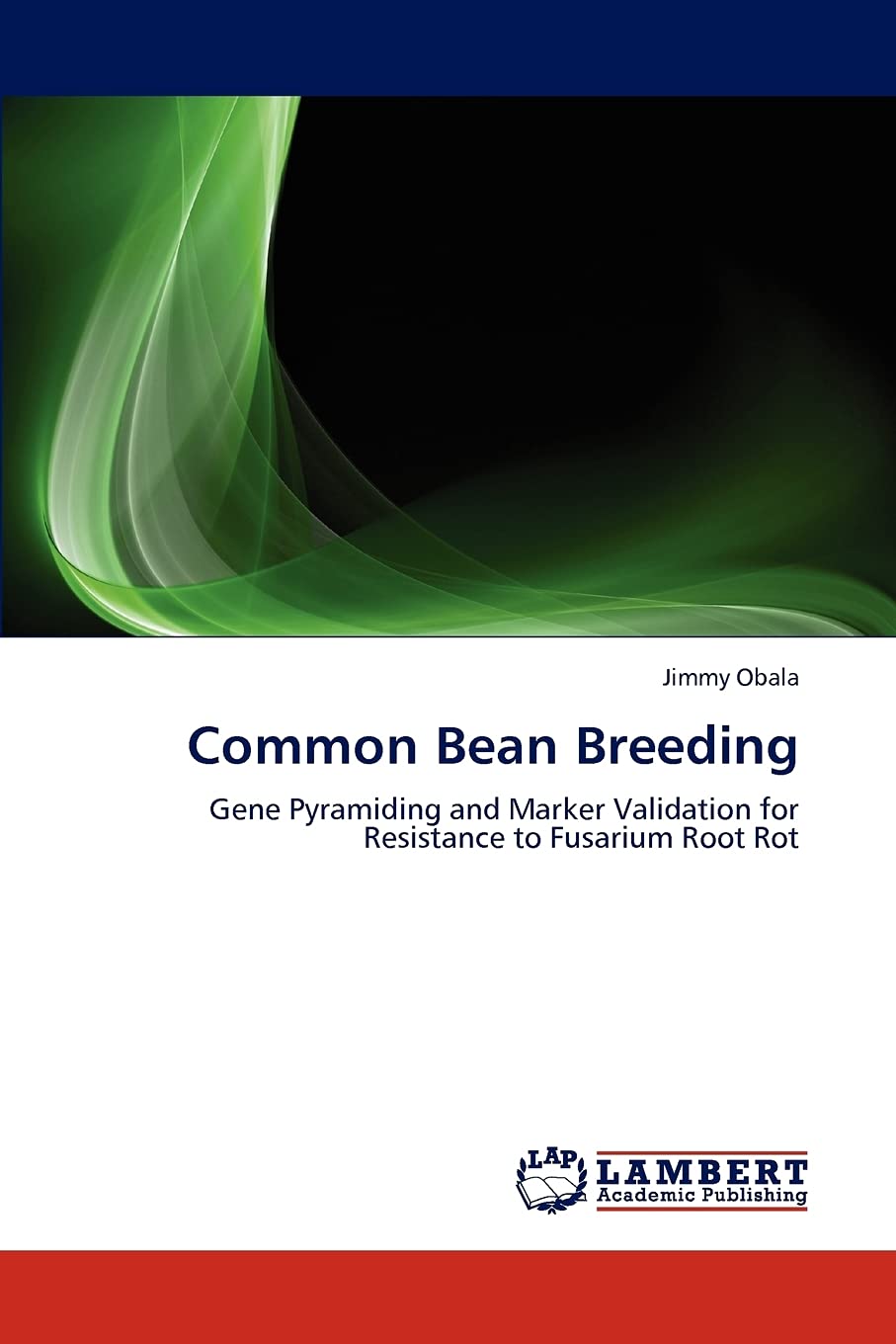
Common Bean Breeding: Gene Pyramiding and Marker Validation for Resistance to Fusarium Root Rot,Used
Sold by Ergodebooks, an authorized reseller.
Returns accepted within 30 days | support@ergodebooks.com
Shipping Information
- Free Standard Shipping — United States only
- Processing Time: 3–5 business days
- Estimated Delivery: 6–10 business days after dispatch
- Double-boxed, fully insured & discreetly packaged
- Tracking number sent via email once dispatched
Returns & Refund
Returns accepted within 30 days of delivery.
Damaged or Defective Item
Free return shipping + replacement or full refund
Wrong Item Received
Free return shipping + replacement or full refund
Change of Mind
Return shipping at customer's expense · 25% restocking fee applies
Payment Option

Bean production is constrained by a number of factors with one of the major being Fusarium root rot (FRR). Use of FRR resistant bean cultivars is the most costeffective and environmentallyfriendly control measure. Crosses among four FRR resistant (R) common bean inbred lines: MLB4889A, MLB4989A, G2333 and G685, and two susceptible cultivars: K20 and Kanyebwa were developed to estimate the number of pyramided FRR resistance genes among the four R lines and determine their effectiveness in improving levels of resistance to FRR in the susceptible (S) bean cultivars and validate SSR PVBR87 marker. The R lines were used to develop a double cross (DC) population. The DC F1 and each R parent were crossed to each of the two S cultivars to form fiveparent (FPC) and single crosses (SC), respectively. Developed populations were subjected to Fusarium solani f. sp. phasoeli isolate3 under screen house conditions. Data was analysed using GenStat. More genes segregated in the R x R DC than in the R x R SC, FPC performed better than the SC, and SSR PVBR87 was significantly associated with FRR resistance. This information is useful to bean breeders in Uganda and elsewhere in the world.
⚠️ WARNING (California Proposition 65):
This product may contain chemicals known to the State of California to cause cancer, birth defects, or other reproductive harm.
For more information, please visit www.P65Warnings.ca.gov.