
Title
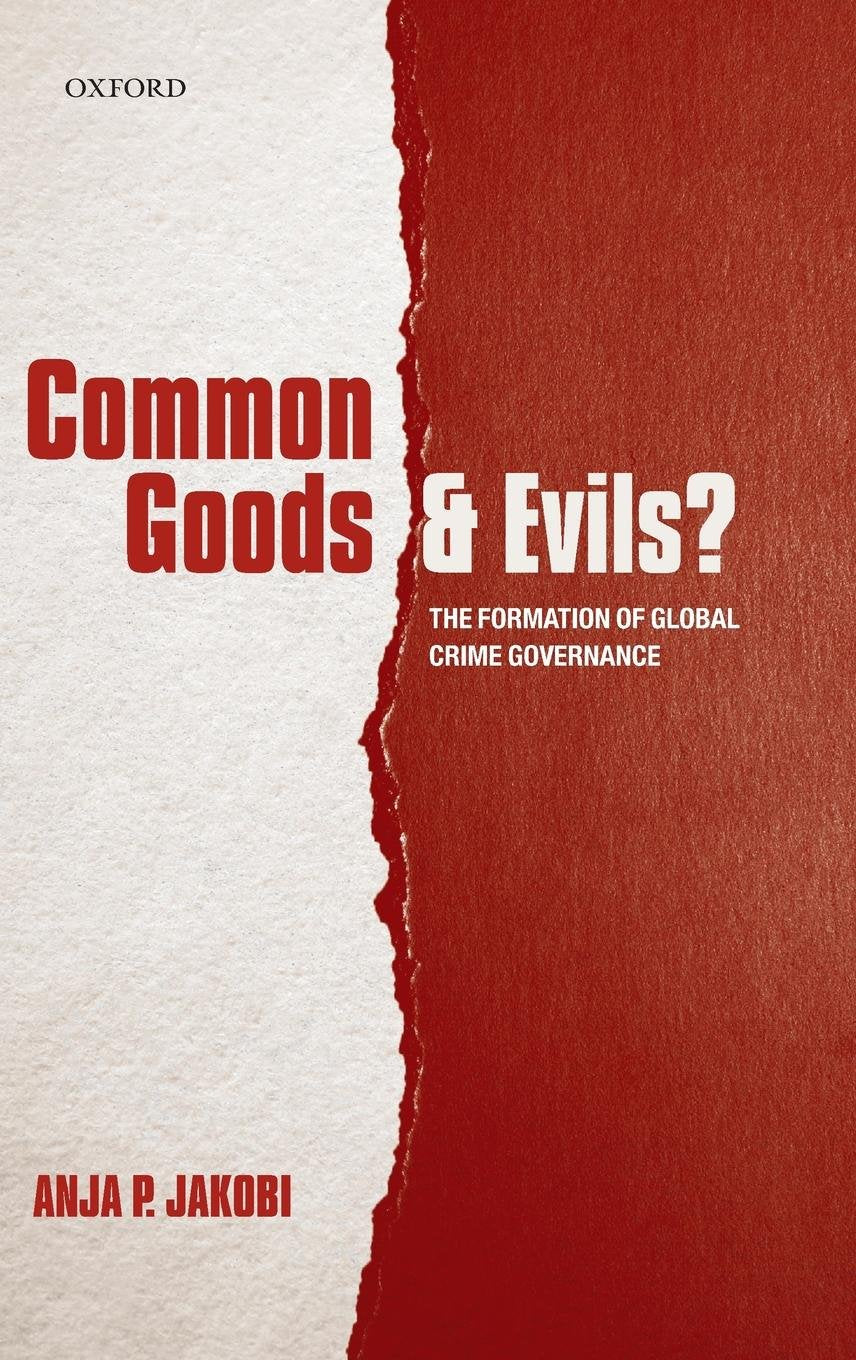
Common Goods and Evils?: The Formation of Global Crime Governance,Used
Sold by Ergodebooks, an authorized reseller.
Returns accepted within 30 days | support@ergodebooks.com
Shipping Information
- Free Standard Shipping — United States only
- Processing Time: 3–5 business days
- Estimated Delivery: 6–10 business days after dispatch
- Double-boxed, fully insured & discreetly packaged
- Tracking number sent via email once dispatched
Returns & Refund
Returns accepted within 30 days of delivery.
Damaged or Defective Item
Free return shipping + replacement or full refund
Wrong Item Received
Free return shipping + replacement or full refund
Change of Mind
Return shipping at customer's expense · 25% restocking fee applies
Payment Option

Global crime governance has emerged as an important component of world politics. It is manifested in national and international agendas, the proliferation of global regulations, growing international budgets, and the enlarged mandates of international organizations. As a result, the definition and prosecution of crime is now increasingly homogenous, but it also shows variance: some crime policies are institutionalized coherently or attached to strong international organizations, while others are weak or dispersed across different forums. Based on sociological institutionalism, this book examines questions of structural variance in the institutional design of global governance. It shows that the interplay of strong actors and rationalization principles lead to more coherent forms of global crime governance, while normative arguments related to crime are more likely to result in fragmented forms. In consequence and contrary to many scholars' assumptions global crime governance is strongest in those areas that are least attached to moral statements.The book develops a theory of society and applies this framework to explaining the sources and consequences of institutional design. Drawing on qualitative and quantitative methods, the text analyzes the origins of global regulations, how they are disseminated, and why differences exist. The role of the United States in creating global rules and disseminating them is emphasized. Readers interested in international relations, global governance, globalization studies, world society studies, and criminology will benefit from the theoretical and empirical results of this book.
⚠️ WARNING (California Proposition 65):
This product may contain chemicals known to the State of California to cause cancer, birth defects, or other reproductive harm.
For more information, please visit www.P65Warnings.ca.gov.