If you have any questions, you are always welcome to contact us. We'll get back to you as soon as possible, withing 24 hours on weekdays.
Customer service
All questions about your order, return and delivery must be sent to our customer service team by e-mail at yourstore@yourdomain.com
Sale & Press
If you are interested in selling our products, need more information about our brand or wish to make a collaboration, please contact us at press@yourdomain.com
Help
If you have any questions, you are always welcome to contact us. We'll get back to you as soon as possible, withing 24 hours on weekdays.
Customer service
All questions about your order, return and delivery must be sent to our customer service team by e-mail at yourstore@yourdomain.com
Sale & Press
If you are interested in selling our products, need more information about our brand or wish to make a collaboration, please contact us at press@yourdomain.com
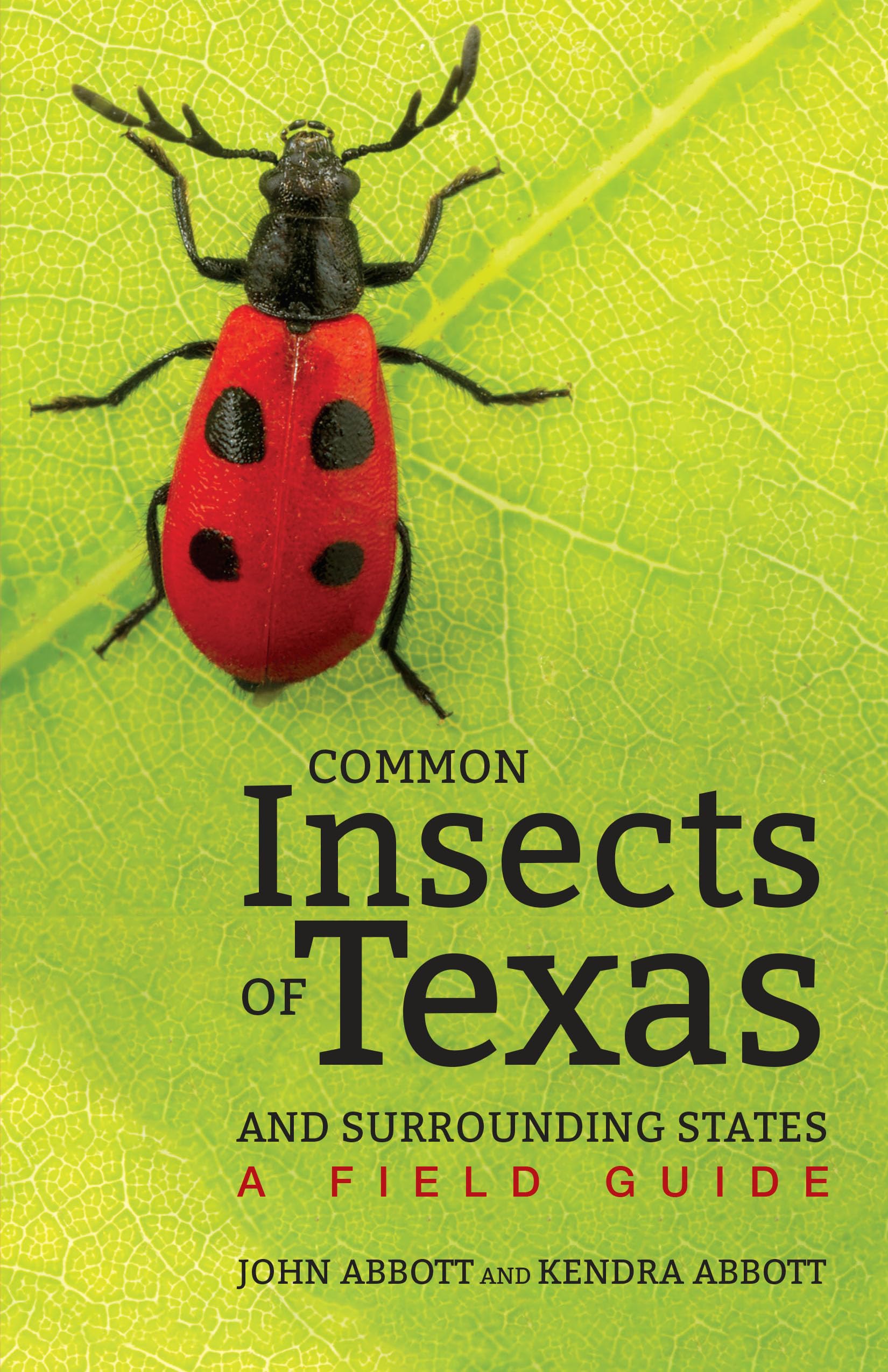
Thanks to its size and geographic position, Texas is home to nearly 30,000 species of insects, likely making its insect population the most diverse in the nation. Ranging from eastern and western to temperate and tropical species, this vast array of insects can be difficult to identify. In Common Insects of Texas and Surrounding States, John and Kendra Abbott have created the state's most comprehensive field guide to help readers recognize and understand these fascinating creatures.Containing 1,300 species and more than 2,700 photographs, this guide offers a wealth of information about the characteristics and behaviors of Texas's insects. Each chapter introduces an order with a discussion of general natural history and a description of other qualities helpful in distinguishing its various species, while every species' entry provides a state map showing where it is most likely to be found, a key displaying its seasonal distribution, information about its habitat, and corresponding photos. Featuring colored tabs for quick reference, a glossary, and information about other arthropods, this guide is the perfect companion for anyone wanting to identify and learn more about the many insects of Texas.
⚠️ WARNING (California Proposition 65):
This product may contain chemicals known to the State of California to cause cancer,
birth defects, or other reproductive harm.
For MAP (Minimum Advertised Price) violations and Intellectual Property (IP) or Trademark concerns, please contact:
support@ergodebooks.com
⚠️ California Proposition 65 Warning: Some products sold on this website may expose you to chemicals known to the State of California to cause cancer, birth defects, or other reproductive harm. For more information, visit www.P65Warnings.ca.gov.