If you have any questions, you are always welcome to contact us. We'll get back to you as soon as possible, withing 24 hours on weekdays.
Customer service
All questions about your order, return and delivery must be sent to our customer service team by e-mail at yourstore@yourdomain.com
Sale & Press
If you are interested in selling our products, need more information about our brand or wish to make a collaboration, please contact us at press@yourdomain.com
Help
If you have any questions, you are always welcome to contact us. We'll get back to you as soon as possible, withing 24 hours on weekdays.
Customer service
All questions about your order, return and delivery must be sent to our customer service team by e-mail at yourstore@yourdomain.com
Sale & Press
If you are interested in selling our products, need more information about our brand or wish to make a collaboration, please contact us at press@yourdomain.com
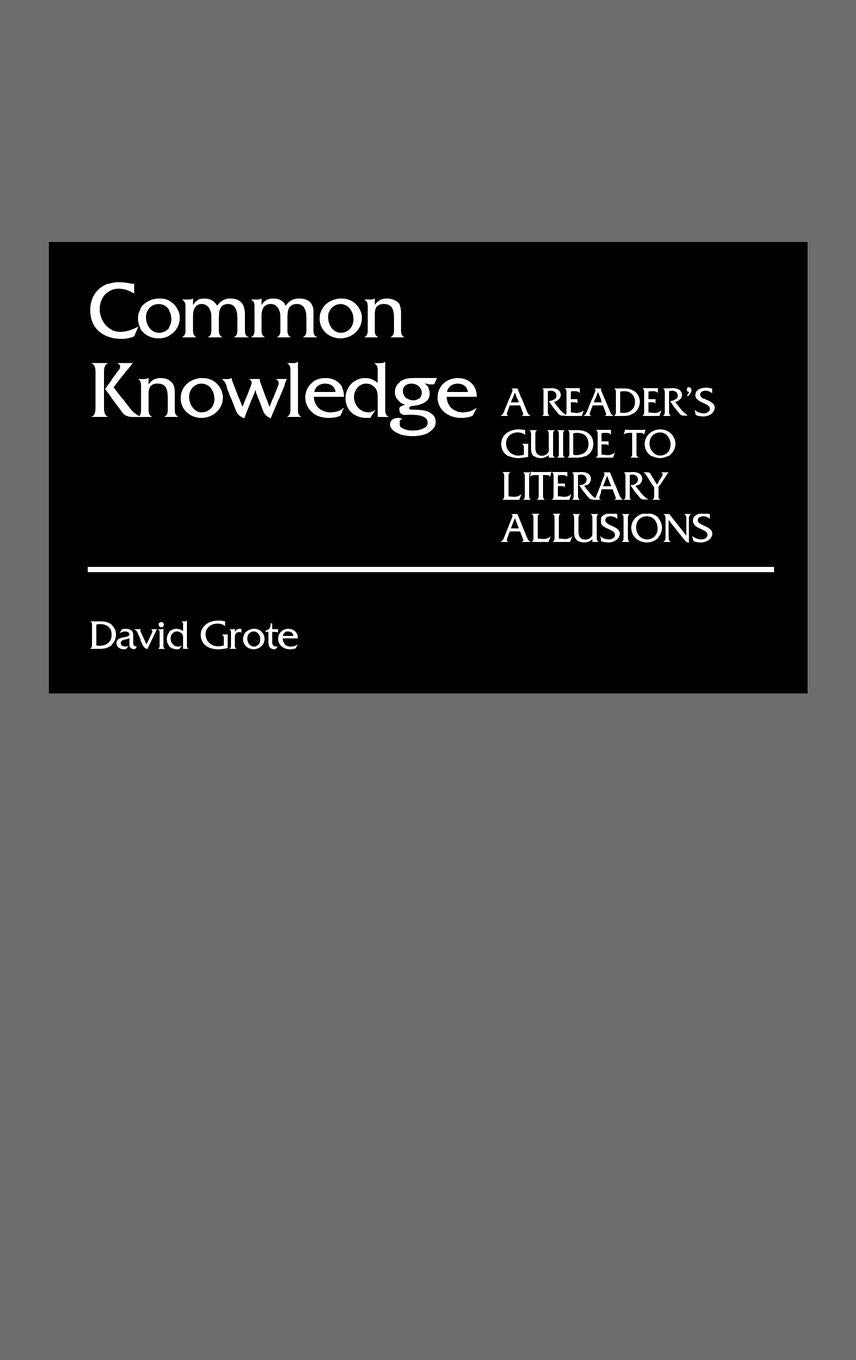
An aptly titled book that presents, from a staggering range of fields (e.g., mythology, religion, literature, history), names that reasonably welleducated persons might be expected to know.' . . . Included are figures who are common subjects or who have made their way into catch phrases or character types (e.g., Lothario). A good source for home or public libraries.'ChoiceIn his introduction, compiler Grote apologizes to the Dickensians, the Janeites, the Proustians, the Holmesians, and the Shakesperians' for the brevity of his entries, sure to disappoint these diehard fans of a single author. He need not, however, apologize to the general readers for whom his book is intended as a source for learning the significance of more than 4,000 names they might encounter. They are the names of historical persons, biblical personages, and mythical and literary characters. The entries are brief but adequately explain the person's origins in fact or literature. Wilson Library BulletinThis guide to common literary allusions is designed as a companion volume for the general reader. Grote has assembled the fundamental names in mythology, literature, religion, history, and popular culture as a reference for understanding their use in most general literature. The names included are those most likely to be encountered by the general reader, such as melancholy as Hamlet, or Phoenixlike. The entries are drawn primarily from literature, the Bible, and Greek and Roman mythology; a number of historical figures and names of significant historical events have also been included.
⚠️ WARNING (California Proposition 65):
This product may contain chemicals known to the State of California to cause cancer,
birth defects, or other reproductive harm.
For MAP (Minimum Advertised Price) violations and Intellectual Property (IP) or Trademark concerns, please contact:
support@ergodebooks.com
⚠️ California Proposition 65 Warning: Some products sold on this website may expose you to chemicals known to the State of California to cause cancer, birth defects, or other reproductive harm. For more information, visit www.P65Warnings.ca.gov.