
Title
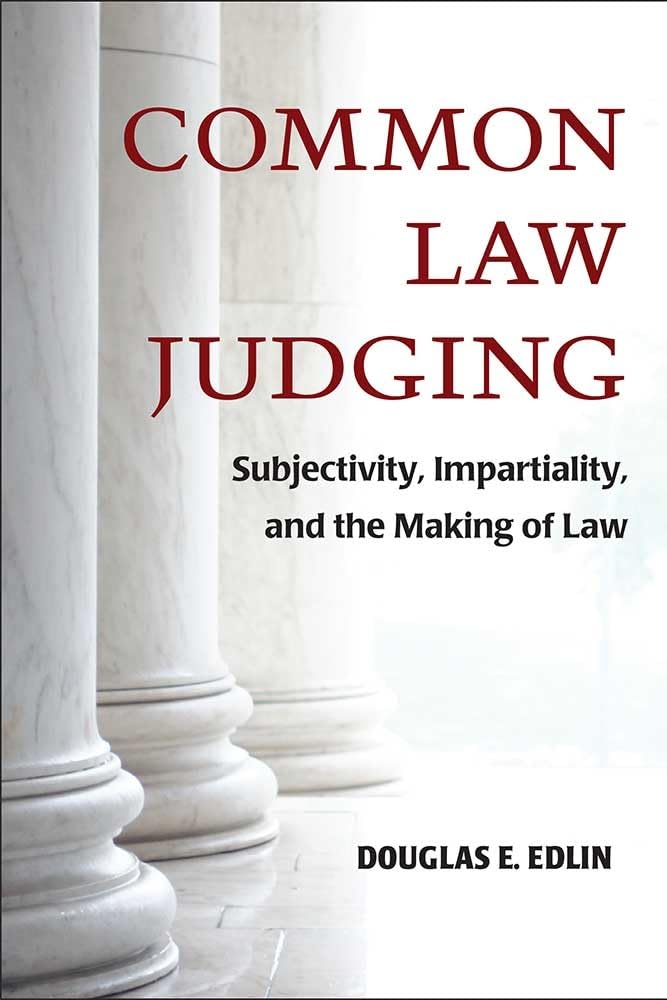
Common Law Judging: Subjectivity, Impartiality, and the Making of Law,Used
Sold by Ergodebooks, an authorized reseller.
Returns accepted within 30 days | support@ergodebooks.com
Shipping Information
- Free Standard Shipping — United States only
- Processing Time: 3–5 business days
- Estimated Delivery: 6–10 business days after dispatch
- Double-boxed, fully insured & discreetly packaged
- Tracking number sent via email once dispatched
Returns & Refund
Returns accepted within 30 days of delivery.
Damaged or Defective Item
Free return shipping + replacement or full refund
Wrong Item Received
Free return shipping + replacement or full refund
Change of Mind
Return shipping at customer's expense · 25% restocking fee applies
Payment Option

Are judges supposed to be objective? Citizens, scholars, and legal professionals commonly assume that subjectivity and objectivity are opposites, with the corollary that subjectivity is a vice and objectivity is a virtue. These assumptions underlie passionate debates over adherence to original intent and judicial activism.In Common Law Judging, Douglas Edlin challenges these widely held assumptions by reorienting the entire discussion. Rather than analyze judging in terms of objectivity and truth, he argues that we should instead approach the role of a judges individual perspective in terms of intersubjectivity and validity. Drawing upon Kantian aesthetic theory as well as case law, legal theory, and constitutional theory, Edlin develops a new conceptual framework for the respective roles of the individual judge and of the judiciary as an institution, as well as the relationship between them, as integral parts of the broader legal and political community. Specifically, Edlin situates a judges subjective responses within a form of legal reasoning and reflective judgment that must be communicated to different audiences.Edlin concludes that the individual values and perspectives of judges are indispensable both to their judgments in specific cases and to the independence of the courts. According to the common law tradition, judicial subjectivity is a virtue, not a vice.
⚠️ WARNING (California Proposition 65):
This product may contain chemicals known to the State of California to cause cancer, birth defects, or other reproductive harm.
For more information, please visit www.P65Warnings.ca.gov.