
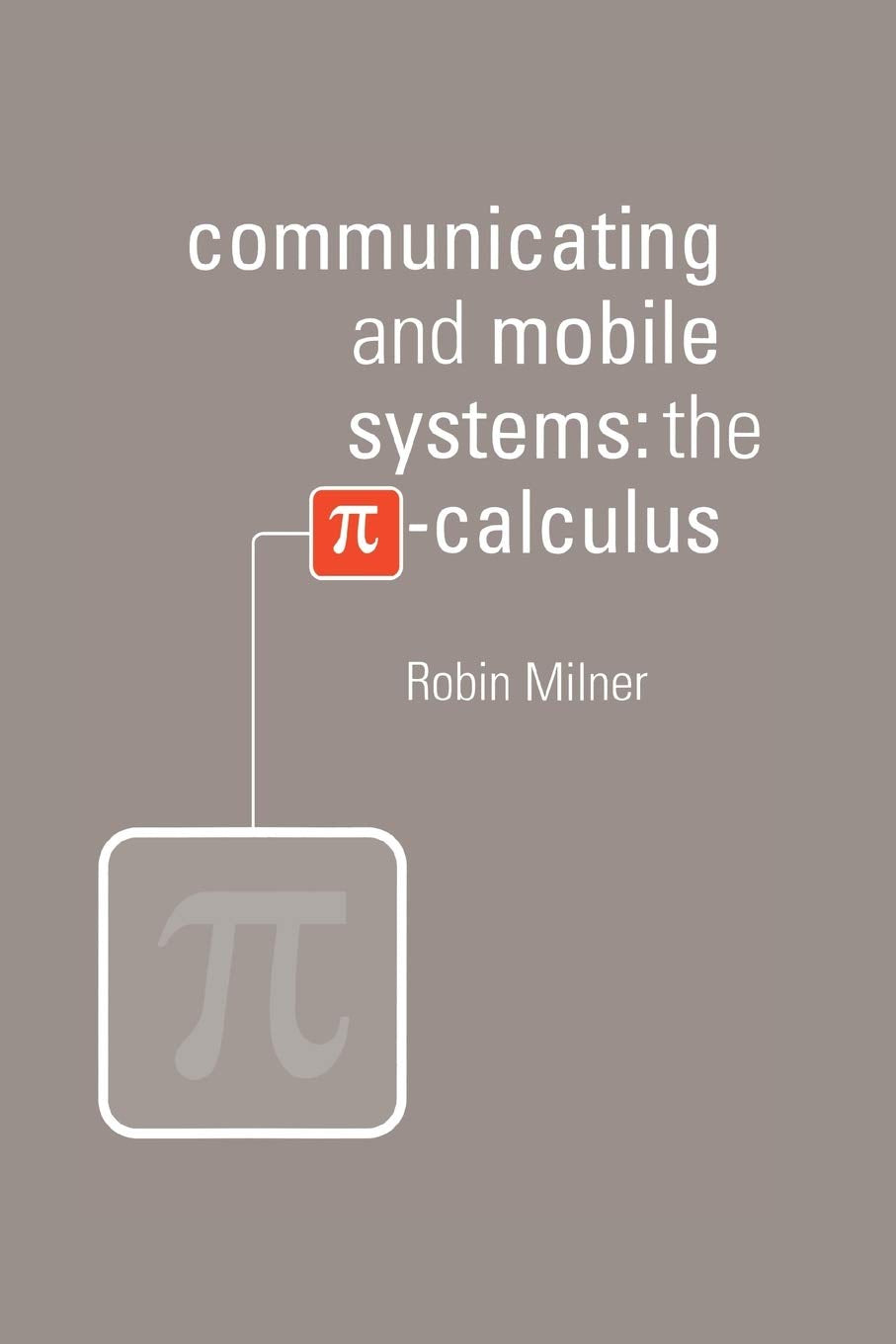
Title
Communicating and Mobile Systems: The PiCalculus,Used
Sold by Ergodebooks, an authorized reseller.
Returns accepted within 30 days | support@ergodebooks.com
Shipping Information
- Free Standard Shipping — United States only
- Processing Time: 3–5 business days
- Estimated Delivery: 6–10 business days after dispatch
- Double-boxed, fully insured & discreetly packaged
- Tracking number sent via email once dispatched
Returns & Refund
Returns accepted within 30 days of delivery.
Damaged or Defective Item
Free return shipping + replacement or full refund
Wrong Item Received
Free return shipping + replacement or full refund
Change of Mind
Return shipping at customer's expense · 25% restocking fee applies
Payment Option

Communication is a fundamental and integral part of computing, whether between different computers on a network, or between components within a single computer. In this book Robin Milner introduces a new way of modelling communication that reflects its position. He treats computers and their programs as themselves built from communicating parts, rather than adding communication as an extra level of activity. Everything is introduced by means of examples, such as mobile phones, job schedualers, vending machines, data structures, and the objects of objectoriented programming. But the aim of the book is to develop a theory, the picalculus, in which these things can be treated rigorously. The picalculus differs from other models of communicating behaviour mainly in its treatment of mobility. The movement of a piece of data inside a computer program is treated exactly the same as the transfer of a messageor indeed an entire computer programacross the internet. One can also describe networks which reconfigure themselves. The calculus is very simple but powerful; its most prominent ingredient is the notion of a name. Its theory has two important ingredients: the concept of behavioural (or observational) equivalence, and the use of a new theory of types to classify patterns of interactive behaviour. The internet, and its communication protocols, fall within the scope of the theory just as much as computer programs, data structures, algorithms and programming languages. This book is the first textbook on the subject; it has been longawaited by professionals and will be welcome by them, and their students.
⚠️ WARNING (California Proposition 65):
This product may contain chemicals known to the State of California to cause cancer, birth defects, or other reproductive harm.
For more information, please visit www.P65Warnings.ca.gov.