
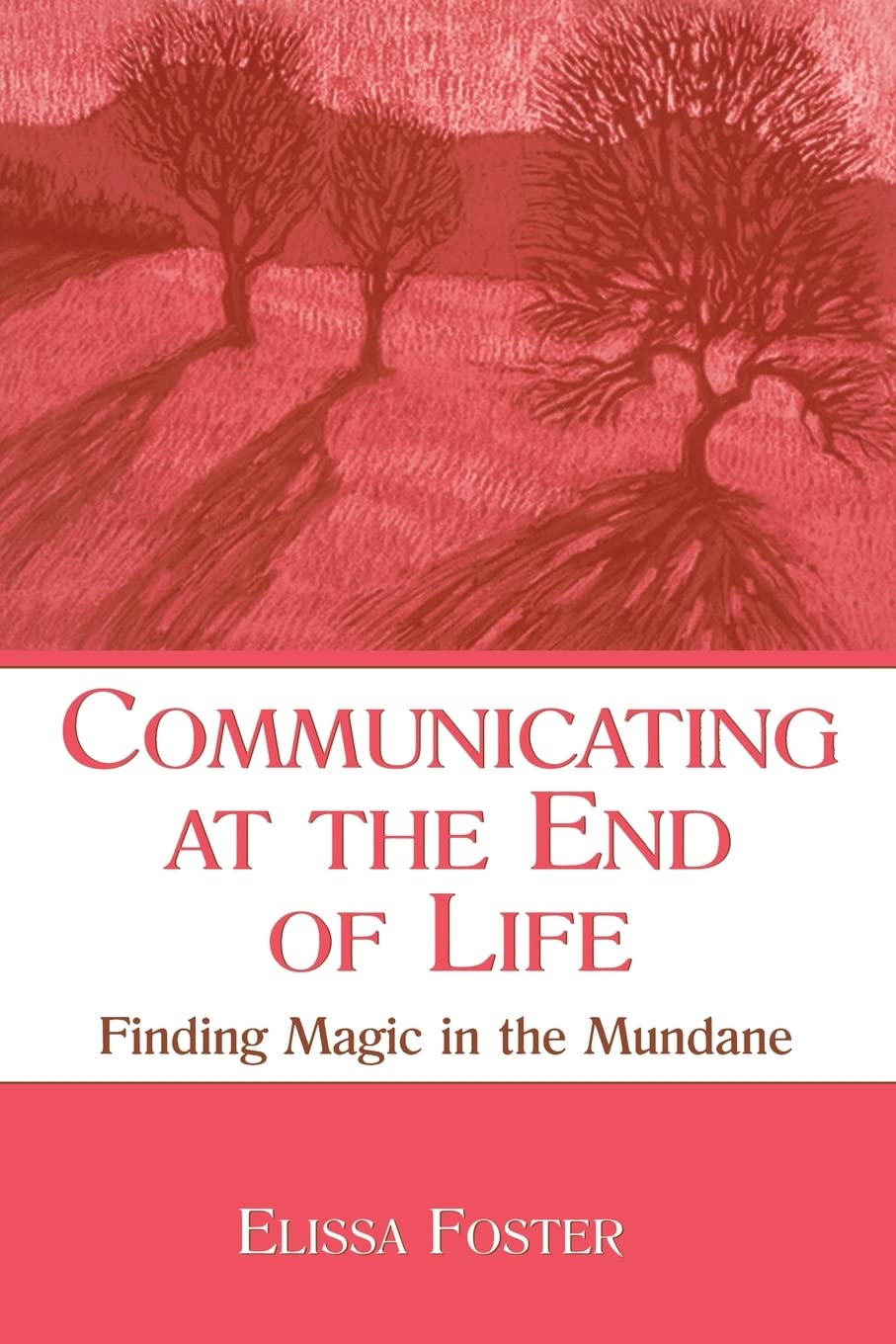
Title
Communicating at the End of Life (LEA's Series on Personal Relationships),New
Sold by Ergodebooks, an authorized reseller.
Returns accepted within 30 days | support@ergodebooks.com
Shipping Information
- Free Standard Shipping — United States only
- Processing Time: 3–5 business days
- Estimated Delivery: 6–10 business days after dispatch
- Double-boxed, fully insured & discreetly packaged
- Tracking number sent via email once dispatched
Returns & Refund
Returns accepted within 30 days of delivery.
Damaged or Defective Item
Free return shipping + replacement or full refund
Wrong Item Received
Free return shipping + replacement or full refund
Change of Mind
Return shipping at customer's expense · 25% restocking fee applies
Payment Option

This enlightening volume provides firsthand perspectives and ethnographic research on communication at the end of life, a topic that has gone largely understudied in communication literature. Author Elissa Fosters own experiences as a volunteer hospice caregiver form the basis of the book. Communicating at the End of Life recounts the stories of Foster and six other volunteers and their communicative experiences with dying patients, using communication theory and research findings to identify insights on the relationships they form throughout the process. What unfolds is a scholarly examination of a subject that is significant to every individual at some point in the life process.Organized chronologically to follow the course of Fosters involvement with hospice and the phases of the study, the book opens with Part 1, providing background and contextual information to help readers understand subsequent stories about communication between volunteers and patients. Part 2 of the volume emphasizes the adjustments required by the volunteers as they entered the world of hospice and the worlds of the patients. Part 3 underscores the importance of improvisation and finding balance within the role of volunteerin particular how to be fully present for patients as well as their family members. The volume concludes with Part 4, which addresses how volunteers coped with the death of their patients and what they learned from the experience of volunteering.Communicating at the End of Life is appropriate for scholars and advanced students studying personal relationships, health communication, gerontology, interpersonal communication, lifespan communication, and communication & aging. Its unique content offers precious and meaningful insights on the communication processes at a critical point in the life process.
⚠️ WARNING (California Proposition 65):
This product may contain chemicals known to the State of California to cause cancer, birth defects, or other reproductive harm.
For more information, please visit www.P65Warnings.ca.gov.