
Title
Communication and Organizational Crisis,Used
Sold by Ergodebooks, an authorized reseller.
Returns accepted within 30 days | support@ergodebooks.com
Shipping Information
- Free Standard Shipping — United States only
- Processing Time: 3–5 business days
- Estimated Delivery: 6–10 business days after dispatch
- Double-boxed, fully insured & discreetly packaged
- Tracking number sent via email once dispatched
Returns & Refund
Returns accepted within 30 days of delivery.
Damaged or Defective Item
Free return shipping + replacement or full refund
Wrong Item Received
Free return shipping + replacement or full refund
Change of Mind
Return shipping at customer's expense · 25% restocking fee applies
Payment Option

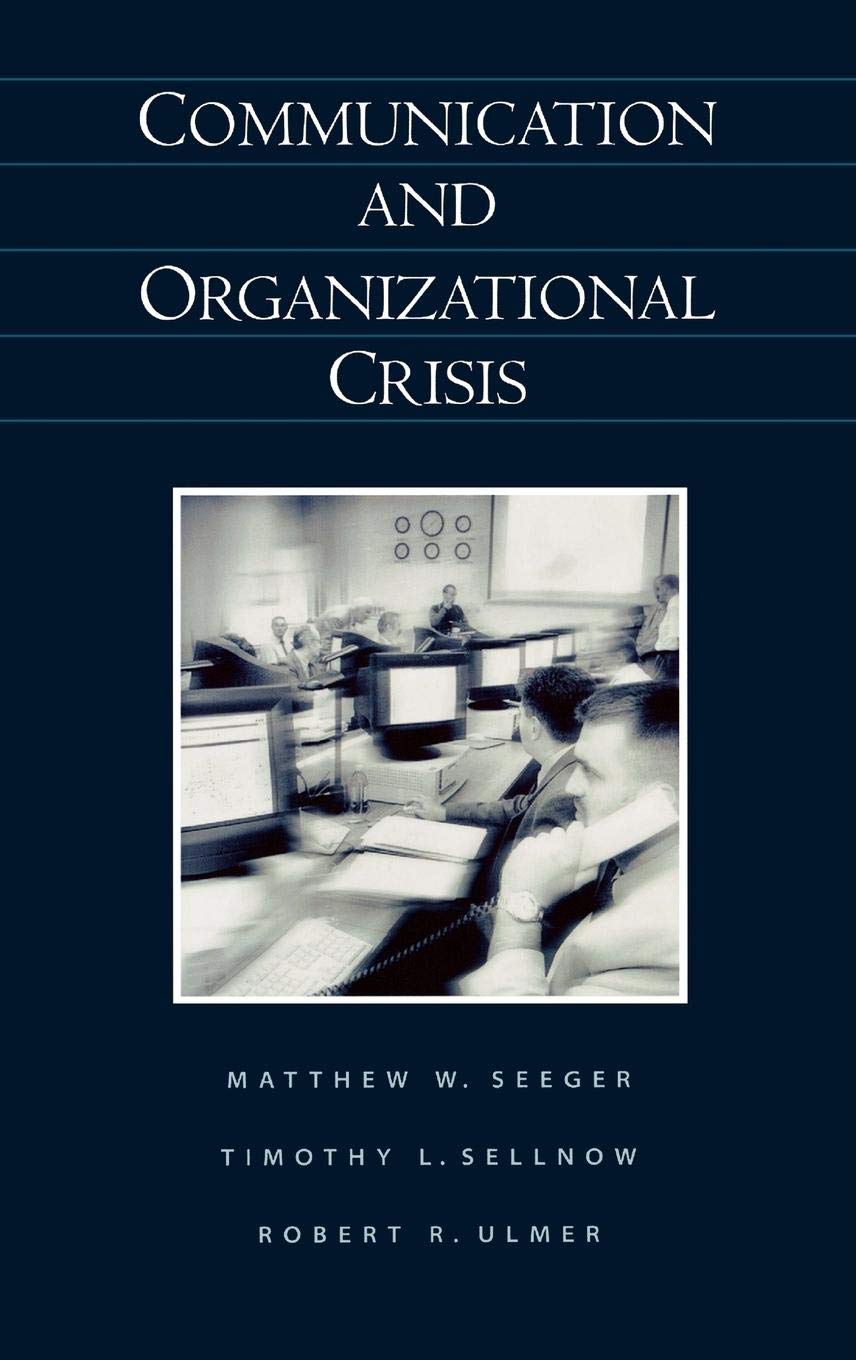
Crisis events are increasingly common. Their impacts are greaterand they are more widely reported in the mediathan ever before. They often symbolize tragedy and loss, but they are also the precipitating factors in radical, rapid, and frequently positive social change. Understanding the complex dynamics of these powerful events is imperative for both researchers and managers. Taking a broad view of organizational crisis, the authors synthesize a rich and diverse body of theory, research, and practice and apply it to every kind of crisis imaginable, from oil spills to nuclear disasters, airplane crashes, shuttle explosions, and corporate implosions such as Enron. The organization can be anything from a company to a federal bureaucracy or society. Organizational crisis is presented as a natural stage in organizational evolution, creating not only stress and threats but also opportunities for growth and development.Communication is viewed as the pivotal process in the creation and maintenance of organization, and its role is examined here at every stage, from incubation to avoidance, crisis management, and recovery. Researchers, crisis managers, and communications managers will find a wealth of applied theoretical orientations, including chaos theory, sensemaking, organizational learning theory, and more.
⚠️ WARNING (California Proposition 65):
This product may contain chemicals known to the State of California to cause cancer, birth defects, or other reproductive harm.
For more information, please visit www.P65Warnings.ca.gov.
- Q: What is the main focus of the book 'Communication and Organizational Crisis'? A: The book focuses on understanding the complexities of organizational crises, their impacts, and the pivotal role of communication in managing these events.
- Q: Who is the author of 'Communication and Organizational Crisis'? A: The author of the book is Mathew W. Seeger.
- Q: What topics are covered in this book? A: The book covers various types of crises, including oil spills, nuclear disasters, and corporate scandals, and discusses theories such as chaos theory and organizational learning.
- Q: What is the publication date of 'Communication and Organizational Crisis'? A: The book was published on December 30, 2003.
- Q: What is the condition of the book? A: The book is available in new condition.
- Q: How many pages does 'Communication and Organizational Crisis' have? A: The book has 312 pages.
- Q: What type of binding does this book have? A: The book is bound in hardcover.
- Q: What category does 'Communication and Organizational Crisis' fall under? A: The book falls under the category of Leadership & Motivation.
- Q: Is this book suitable for crisis managers? A: Yes, the book is suitable for crisis managers, researchers, and communications managers looking for theoretical and practical insights.
- Q: What makes this book valuable for understanding organizational crises? A: The book synthesizes a diverse body of theory and research, offering practical applications for managing crises effectively.