
Title
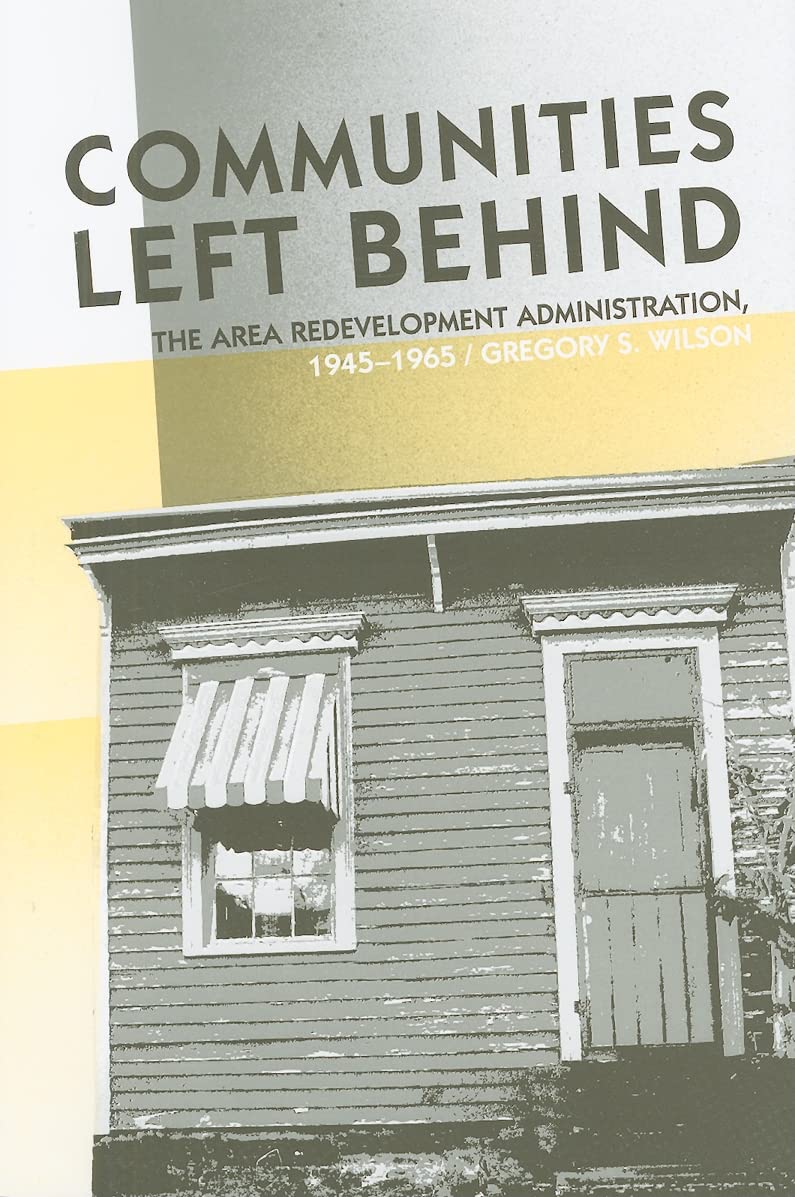
Communities Left Behind: The Area Redevelopment Administration, 19451965,Used
Processing time: 1-3 days
US Orders Ships in: 3-5 days
International Orders Ships in: 8-12 days
Return Policy: 15-days return on defective items
Payment Option

Throughout this terrific book, Wilson places this government agencyits creation, its lifespan and achievements, and its mixed legaciesin the broader context of postwar American history and, more specifically, the history of employment policy. Jason Scott Smith, author of Building New Deal Liberalism: The Political Economy of Public Works, 19331956With clarity and insight, Gregory S. Wilson recounts the story of the Area Redevelopment Administration and connects a nearly forgotten piece of American employment history to national and transnational developments in the making of social policy in the years between the New Deal and the Great Society. Communities Left Behind demonstrates how the United States has, since the Great Depression, tried but failed to address the nation's structural inequalities, and it reopens discussions about poverty and economic dislocation in a period when the country is facing new economic challenges.The ARA was created in 1961 and remained in operation until 1965. Its goal was to assist communities, especially economically distressed ones in rural or undeveloped areas of the country, in generating employment opportunities. Unstated in the creation of the ARA was its intention to serve as an economic development project mostly for Appalachia and the American South, where nearly all of its money was spent. Wilson argues that the ARA was doomed to fail from the beginning because of the requirement that federal officials not interfere with state and local priorities. It simply was not possible to implement a federal initiative in the South without running afoul of local interests. And, to further complicate matters, the issue of race loomed in the background: when ARA policies aimed to improve employment opportunities for black southerners, they were invariably sabotaged by racist politics.This ambivalent legacy of the ARA is alive today, Wilson suggests, as areas of the nation that have struggled economically since the agency's original creationincluding inner cities, Native American reservations, Appalachia, and the rural Southcontinue to founder.Gregory S. Wilson is associate professor of history at the University of Akron and coeditor of the Northeast Ohio Journal of History.
⚠️ WARNING (California Proposition 65):
This product may contain chemicals known to the State of California to cause cancer, birth defects, or other reproductive harm.
For more information, please visit www.P65Warnings.ca.gov.