
Title
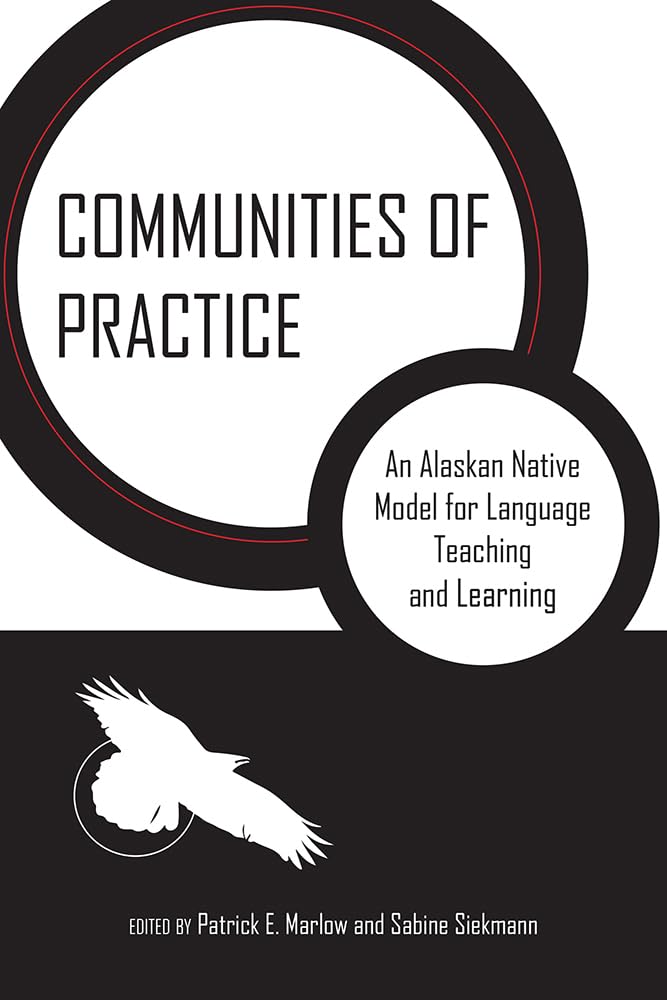
Communities of Practice: An Alaskan Native Model for Language Teaching and Learning,Used
Sold by Ergodebooks, an authorized reseller.
Returns accepted within 30 days | support@ergodebooks.com
Shipping Information
- Free Standard Shipping — United States only
- Processing Time: 3–5 business days
- Estimated Delivery: 6–10 business days after dispatch
- Double-boxed, fully insured & discreetly packaged
- Tracking number sent via email once dispatched
Returns & Refund
Returns accepted within 30 days of delivery.
Damaged or Defective Item
Free return shipping + replacement or full refund
Wrong Item Received
Free return shipping + replacement or full refund
Change of Mind
Return shipping at customer's expense · 25% restocking fee applies
Payment Option

Educators, scholars, and community activists recognize that immersion education is a key means to restoring Indigenous and other heritage languages. But language maintenance and revitalization involve many complex issues, foremost may be the lack of local professional development opportunities for potential language teachers.In Alaska, the Second Language Acquisition Teacher Education (SLATE) project was designed to enable Indigenous communities and schools to improve the quality of nativelanguage and Englishlanguage instruction and assessment by focusing on the elimination of barriers that have historically hindered degree completion for Indigenous and rural teachers. The Guided Research Collaborative (GRC) model, was employed to support the development of communities of practice through nearpeer mentoring and mutual scaffolding. Through this important new model, teachers of both the heritage language, in this case Central Yupik, and English were able to situate their professional development into a larger global context based on current notions of multilingualism.In Communities of Practice contributors show how the SLATE program was developed and implemented, providing an important model for improving secondlanguage instruction and assessment. Through an indepth analysis of the program, contributors show how this project can be successfully adapted in other communities via its commitment to local control in language programming and a model based on communitydriven research.Communities of Practice demonstrates how an initial cohort of Yupik and Englishlanguage teachers collaborated to negotiate and ultimately completed the SLATE program. In so doing, these educators enhanced the program and their own effectiveness as teachers through a greater understanding of language learning. It is these understandings that will ultimately allow heritage and Englishlanguage teachers to work together to foster their students success in any language.
⚠️ WARNING (California Proposition 65):
This product may contain chemicals known to the State of California to cause cancer, birth defects, or other reproductive harm.
For more information, please visit www.P65Warnings.ca.gov.