
Title
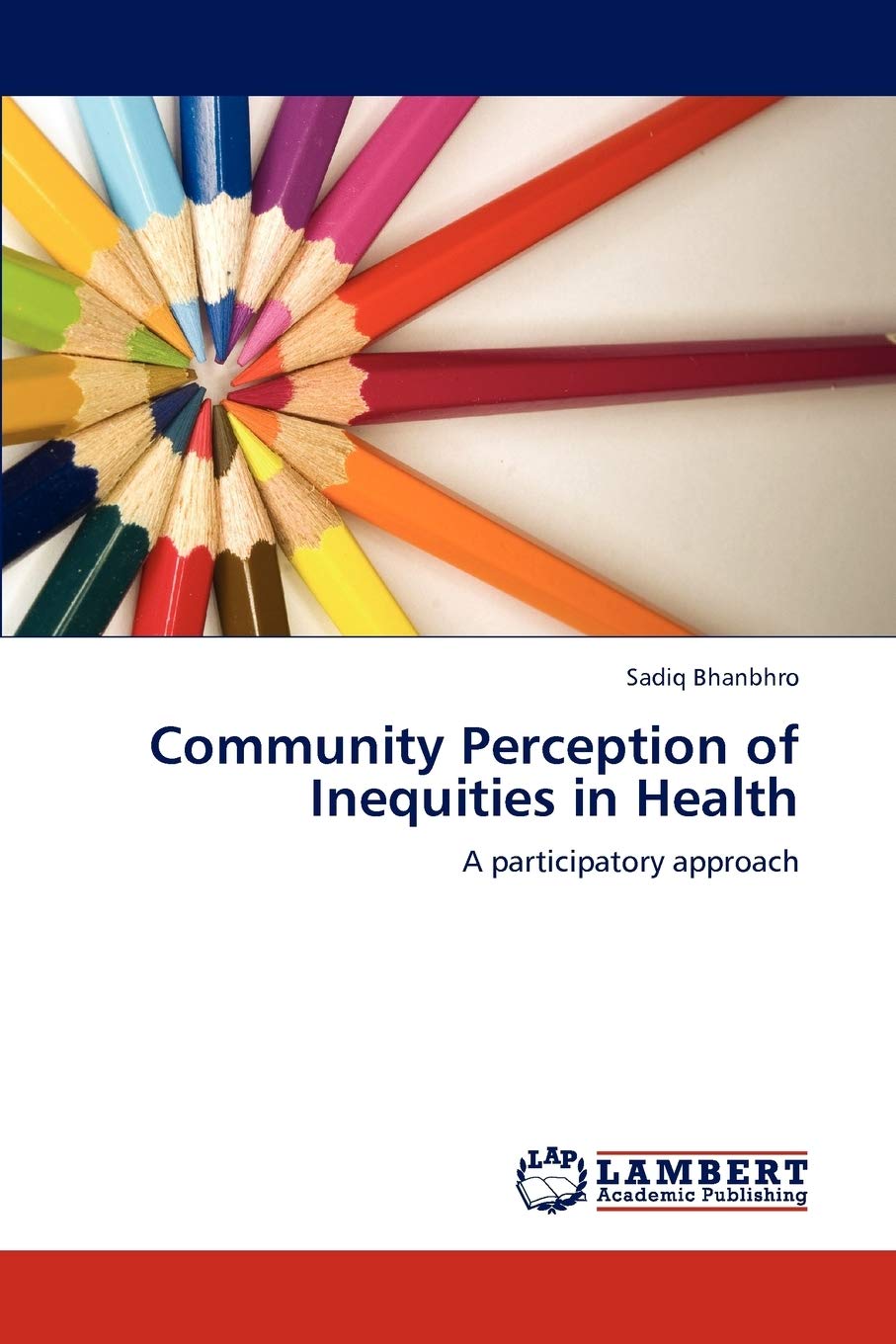
Community Perception of Inequities in Health: A participatory approach,Used
Sold by Ergodebooks, an authorized reseller.
Returns accepted within 30 days | support@ergodebooks.com
Shipping Information
- Free Standard Shipping — United States only
- Processing Time: 3–5 business days
- Estimated Delivery: 6–10 business days after dispatch
- Double-boxed, fully insured & discreetly packaged
- Tracking number sent via email once dispatched
Returns & Refund
Returns accepted within 30 days of delivery.
Damaged or Defective Item
Free return shipping + replacement or full refund
Wrong Item Received
Free return shipping + replacement or full refund
Change of Mind
Return shipping at customer's expense · 25% restocking fee applies
Payment Option

This dissertation is based on an analysis of Participatory Reflection and Action activity transcripts of six male and six female groups of a rural community. The objective was to explore various perspectives, views and motives held by the community related to inequities and their impact on health outcomes. The analysis found a range of different perspectives on inequities and their impact on health outcomes. Mainly participants perceived inequities in terms of differentials in health outcomes and unequal experiences related to health, which arise from uneven and inequitable distribution of resources and social interaction that has at its base an element of unfairness. The major forms of inequities were socioeconomic, based on place of residence and gender. The unfair and unnecessary inequities have huge impact on access to, affordability and lower utilisation of health care services that resulted in differences in morbidity and mortality between poor and rich, man and woman and urban and rural residents. This is a scoping study because this allows a better understanding about the community conception of inequity and its different aspects.
⚠️ WARNING (California Proposition 65):
This product may contain chemicals known to the State of California to cause cancer, birth defects, or other reproductive harm.
For more information, please visit www.P65Warnings.ca.gov.