
Title
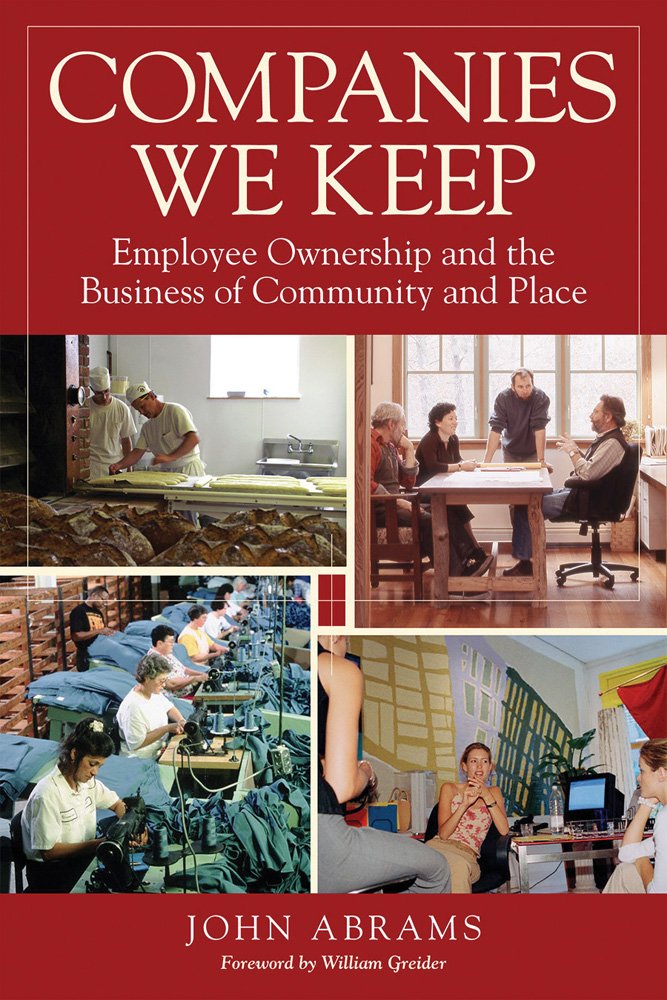
Companies We Keep: Employee Ownership and the Business of Community and Place, 2nd Edition,New
Processing time: 1-3 days
US Orders Ships in: 3-5 days
International Orders Ships in: 8-12 days
Return Policy: 15-days return on defective items
Payment Option

Part memoir and part examination of a new business model, the 2005 release of The Company We Keep marked the debut of an important new voice in the literature of American business. Now, in Companies We Keep, the revised and expanded edition of his 2005 work, John Abrams further develops his idea that companies flourish when they become centers of interdependence, or communities of enterprise.Thoroughly revised with an expanded focus on employee ownership and workplace democracy, Companies We Keep celebrates the idea that when employees share in the rewards as well as the responsibility for the decisions they make, better decisions result. This is an especially timely topic. Most of the baby boomer generationthe owners of millions of American businesses will retire within the next two decades. In 2001, 50,000 businesses changed hands. In 2005, that number rose to 350,000. Projections call for 750,000 ownership transitions in 2009. Employee ownershipin both the philosophical and the practical senseis gathering steam as businesses change hands, and Abrams examines some of the many ways this is done.Companies We Keep is structured around eight principlesfrom Sharing Ownership and Cultivating Workplace Democracy to Thinking Like Cathedral Builders and Committing to the Business of Placethat Abrams has discovered in the 32 years since he cofounded South Mountain Company on the island of Marthas Vineyard. Together, these principles reveal communities of enterprise as a potent force of change that canand will improve the way Americans do business.
⚠️ WARNING (California Proposition 65):
This product may contain chemicals known to the State of California to cause cancer, birth defects, or other reproductive harm.
For more information, please visit www.P65Warnings.ca.gov.
- Q: What is the main theme of 'Companies We Keep'? A: 'Companies We Keep' by John Abrams explores the concept of employee ownership and how businesses thrive when they operate as communities of interdependence. It emphasizes the benefits of shared responsibility and decision-making.
- Q: Who is the author of 'Companies We Keep'? A: The author of 'Companies We Keep' is John Abrams, who co-founded South Mountain Company and has over 30 years of experience in the field.
- Q: What is the publication date of the revised edition? A: The revised and expanded second edition of 'Companies We Keep' was published on November 8, 2008.
- Q: How many pages does 'Companies We Keep' have? A: 'Companies We Keep' contains 352 pages, providing an in-depth look at employee ownership and workplace democracy.
- Q: What are some key principles discussed in the book? A: The book outlines eight key principles including 'Sharing Ownership', 'Cultivating Workplace Democracy', and 'Committing to the Business of Place' that illustrate effective business models.
- Q: Is 'Companies We Keep' available in different formats? A: 'Companies We Keep' is available in paperback format, which is suitable for readers who prefer physical books.
- Q: What condition is the used book in? A: The used copies of 'Companies We Keep' are described as being in good condition, indicating that they may show some signs of wear but are still usable.
- Q: What category does 'Companies We Keep' fall under? A: 'Companies We Keep' is categorized under Environmental Economics, focusing on sustainable business practices.
- Q: Does the book provide practical examples of employee ownership? A: Yes, 'Companies We Keep' includes various examples and case studies that illustrate how employee ownership can be implemented in different business contexts.
- Q: What makes 'Companies We Keep' relevant today? A: 'Companies We Keep' is particularly relevant as many baby boomer business owners are retiring, leading to a significant transition in business ownership and an increased interest in employee ownership models.