
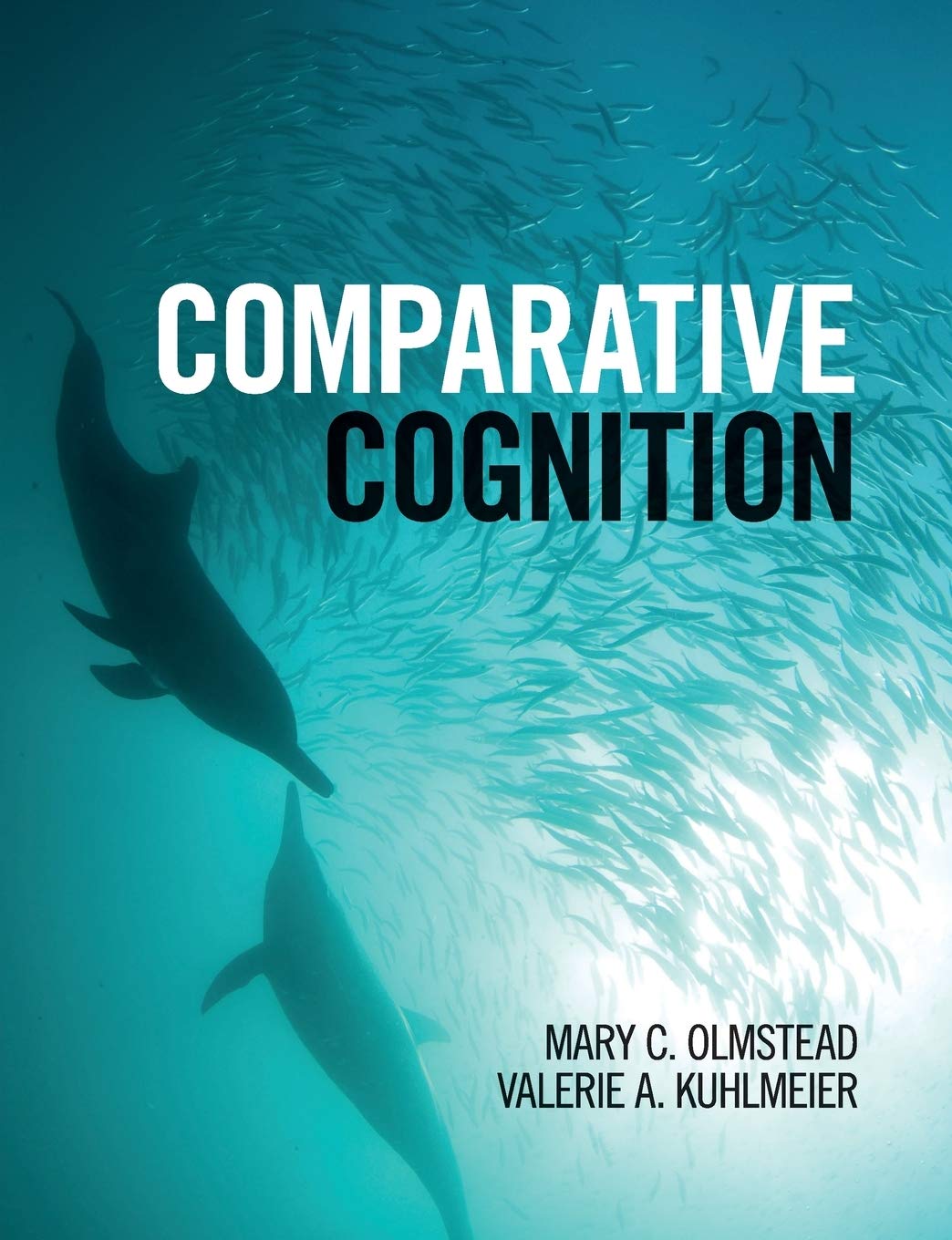
Title


Comparative Cognition
Sold by Ergodebooks, an authorized reseller.
Returns accepted within 30 days | support@ergodebooks.com
Shipping Information
- Free Standard Shipping — United States only
- Processing Time: 3–5 business days
- Estimated Delivery: 6–10 business days after dispatch
- Double-boxed, fully insured & discreetly packaged
- Tracking number sent via email once dispatched
Returns & Refund
Returns accepted within 30 days of delivery.
Damaged or Defective Item
Free return shipping + replacement or full refund
Wrong Item Received
Free return shipping + replacement or full refund
Change of Mind
Return shipping at customer's expense · 25% restocking fee applies
Payment Option

Integrating Developments From Psychology, Ethology And Neuroscience, This Is An Undergraduate Introduction To Cognitive Processes Across Species. The Authors Merge Classic Studies And Contemporary Research To Give Students A Full Picture Of The Evolving Field Of Comparative Cognition. Engaging Students In The Discipline From Its Roots In Animal Learning And Evolutionary Biology Through To Current Research, The Chapters Cover Both Controlled Laboratory And Comparative Crossspecies Studies In The Natural Environment. This Approach Provides Students With Complementary Ethological And Neurobiological Perspectives On Cognition. Feature Boxes Encourage Active And Engaged Learning, Giving A Deeper Understanding Of Topics Discussed In The Main Text. These Are Supported By Endofchapter Questions To Check Understanding And Encourage Wider Thinking Around Topics. Online Resources Include Solutions To Questions In The Book, Advanced Material, Powerpoint Lecture Slides And Additional Questions, All Available At Www.Cambridge.Org/Cognition.
⚠️ WARNING (California Proposition 65):
This product may contain chemicals known to the State of California to cause cancer, birth defects, or other reproductive harm.
For more information, please visit www.P65Warnings.ca.gov.
- Q: What is the total number of pages in 'Comparative Cognition'? A: This book has four hundred eighty-one pages. It provides a comprehensive overview of comparative cognition across various species.
- Q: What is the binding type of 'Comparative Cognition'? A: The binding type is paperback. This makes it lightweight and easy to handle for students.
- Q: What are the dimensions of 'Comparative Cognition'? A: The dimensions are seven point four four inches in length, one point one inches in width, and nine point six nine inches in height. These measurements make it a convenient size for reading.
- Q: Who is the author of 'Comparative Cognition'? A: The author is Mary C. Olmstead. She integrates insights from psychology, ethology, and neuroscience in this academic work.
- Q: What academic level is 'Comparative Cognition' suitable for? A: It is suitable for undergraduate students. The book serves as an introduction to cognitive processes across species.
- Q: How does 'Comparative Cognition' engage students? A: It includes feature boxes and end-of-chapter questions. These elements encourage active learning and deeper understanding of topics.
- Q: Are there any online resources available for 'Comparative Cognition'? A: Yes, online resources include solutions to questions in the book, advanced material, and PowerPoint lecture slides. They can be accessed at www.cambridge.org/cognition.
- Q: Does 'Comparative Cognition' cover both laboratory and natural environment studies? A: Yes, it covers both controlled laboratory studies and comparative cross-species studies in natural environments. This dual approach enriches the learning experience.
- Q: What topics are included in 'Comparative Cognition'? A: Topics include animal learning, evolutionary biology, and current research in cognitive processes. The book provides a well-rounded perspective on the field.
- Q: Is 'Comparative Cognition' suitable for beginners? A: Yes, it is suitable for beginners. The book is designed as an introductory text for undergraduate students.
- Q: How can I check my understanding while reading 'Comparative Cognition'? A: You can use the end-of-chapter questions provided in the book. They encourage wider thinking around the discussed topics.
- Q: What is the primary focus of 'Comparative Cognition'? A: The primary focus is on cognitive processes across different species. It integrates research from multiple disciplines for a comprehensive overview.
- Q: Are there any hazardous materials in 'Comparative Cognition'? A: No, there are no hazardous materials in this book. It is a safe educational resource for students.
- Q: What category does 'Comparative Cognition' fall under? A: It falls under the category of Psychology & Counseling. This classification highlights its academic relevance.
- Q: What makes 'Comparative Cognition' unique compared to other psychology books? A: Its integration of ethological and neurobiological perspectives on cognition sets it apart. It merges classic studies with contemporary research.