If you have any questions, you are always welcome to contact us. We'll get back to you as soon as possible, withing 24 hours on weekdays.
Customer service
All questions about your order, return and delivery must be sent to our customer service team by e-mail at yourstore@yourdomain.com
Sale & Press
If you are interested in selling our products, need more information about our brand or wish to make a collaboration, please contact us at press@yourdomain.com
Help
If you have any questions, you are always welcome to contact us. We'll get back to you as soon as possible, withing 24 hours on weekdays.
Customer service
All questions about your order, return and delivery must be sent to our customer service team by e-mail at yourstore@yourdomain.com
Sale & Press
If you are interested in selling our products, need more information about our brand or wish to make a collaboration, please contact us at press@yourdomain.com
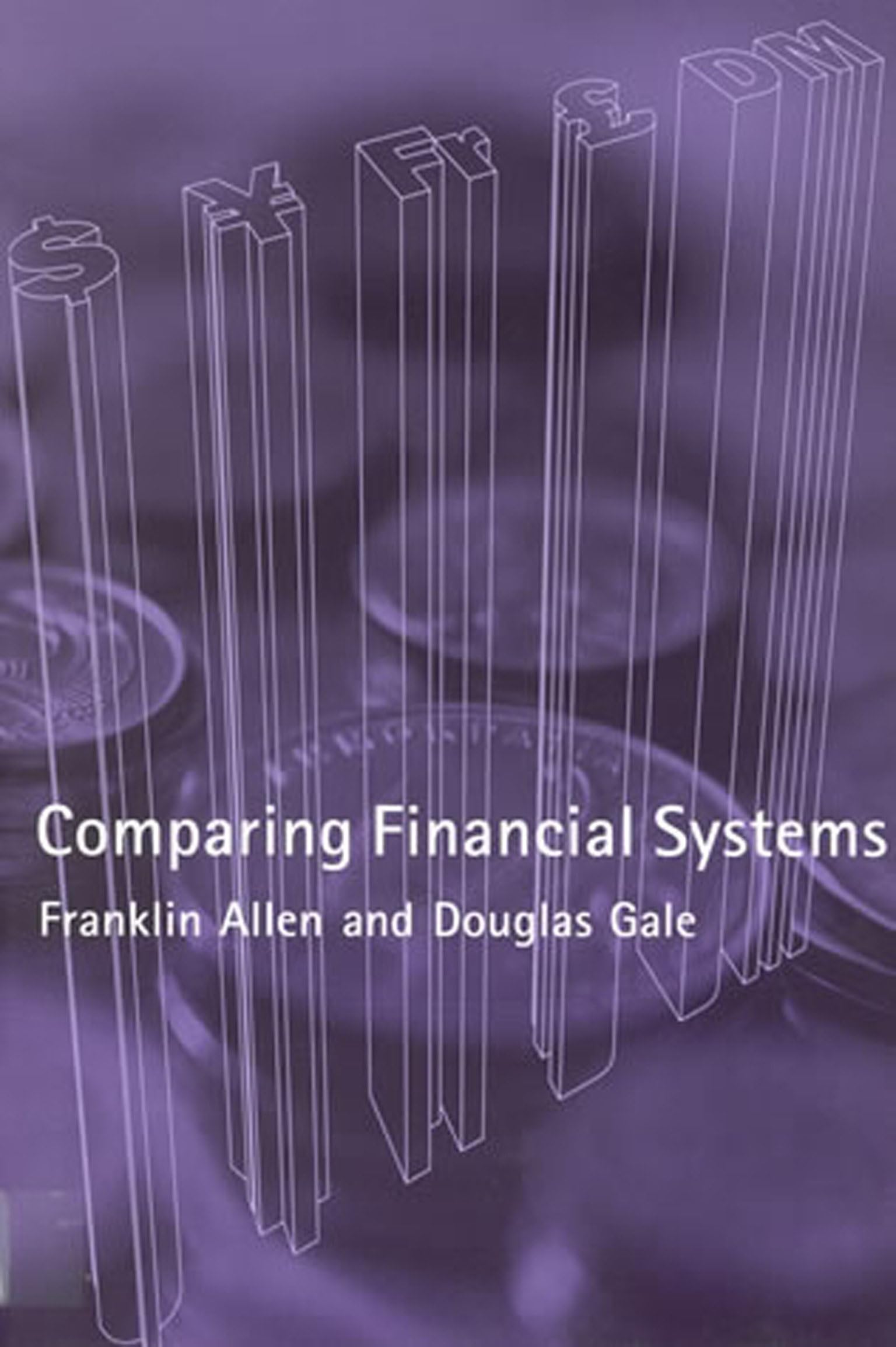
The authors argue that the view that marketbased systems are best is simplistic; a more nuanced approach is necessary.Financial systems are crucial to the allocation of resources in a modern economy. They channel household savings to the corporate sector and allocate investment funds among firms; they allow intertemporal smoothing of consumption by households and expenditures by firms; and they enable households and firms to share risks. These functions are common to the financial systems of most developed economies. Yet the form of these financial systems varies widely. In the United States and the United Kingdom competitive markets dominate the financial landscape, whereas in France, Germany, and Japan banks have traditionally played the most important role.Why do different countries have such different financial systems? Is one system better than all the others? Do different systems merely represent alternative ways of satisfying similar needs? Is the current trend toward marketbased systems desirable? Franklin Allen and Douglas Gale argue that the view that marketbased systems are best is simplistic. A more nuanced approach is necessary. For example, financial markets may be bad for risk sharing; competition in banking may be inefficient; financial crises can be good as well as bad; and separation of ownership and control can be optimal. Financial institutions are not simply veils, disguising the allocation mechanism without affecting it, but are crucial to overcoming market imperfections. An optimal financial system relies on both financial markets and financial intermediaries.
⚠️ WARNING (California Proposition 65):
This product may contain chemicals known to the State of California to cause cancer,
birth defects, or other reproductive harm.
For MAP (Minimum Advertised Price) violations and Intellectual Property (IP) or Trademark concerns, please contact:
support@ergodebooks.com
⚠️ California Proposition 65 Warning: Some products sold on this website may expose you to chemicals known to the State of California to cause cancer, birth defects, or other reproductive harm. For more information, visit www.P65Warnings.ca.gov.