
Title
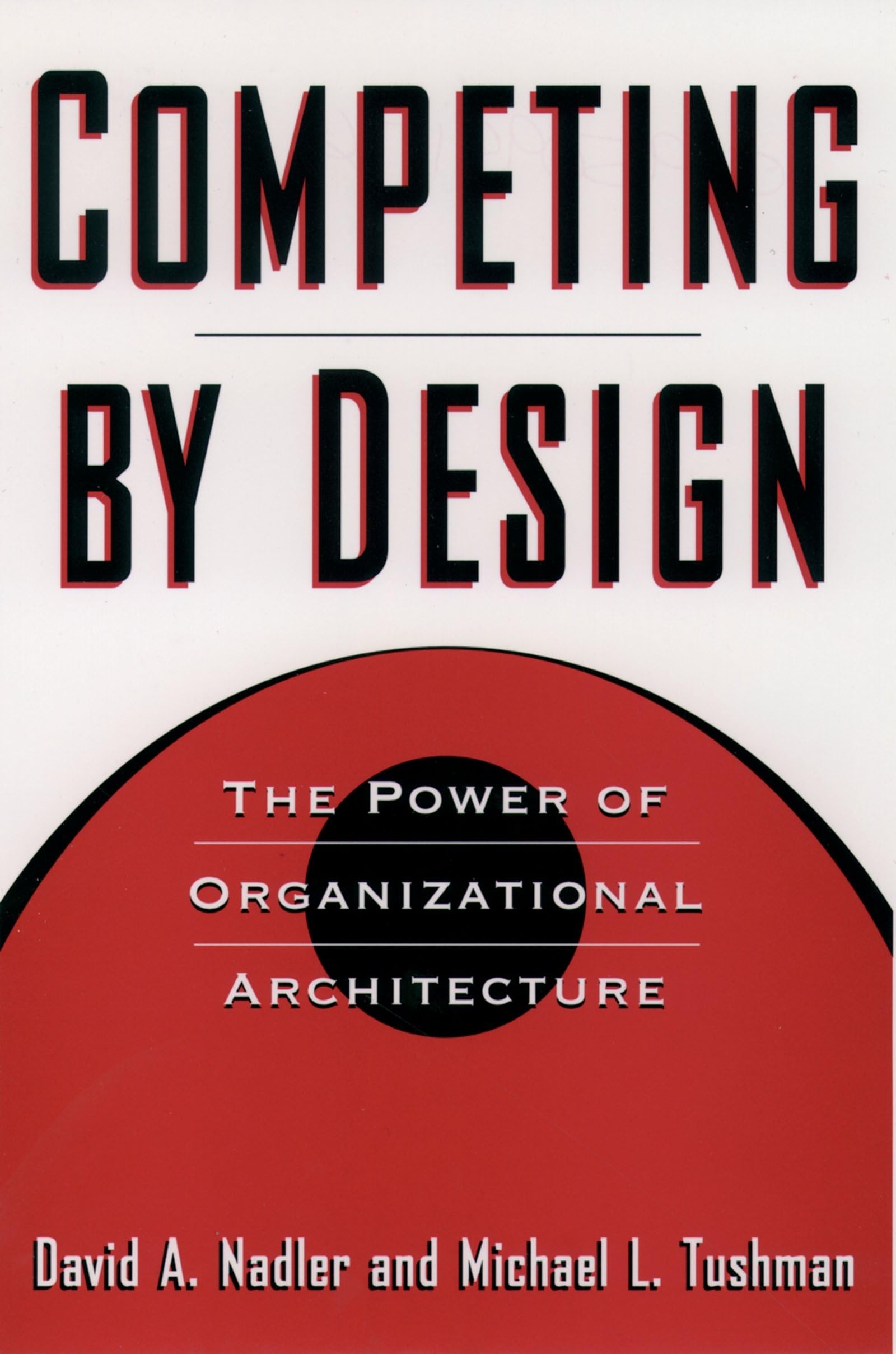
Competing by Design: The Power of Organizational Architecture,New
Sold by Ergodebooks, an authorized reseller.
Returns accepted within 30 days | support@ergodebooks.com
Shipping Information
- Free Standard Shipping — United States only
- Processing Time: 3–5 business days
- Estimated Delivery: 6–10 business days after dispatch
- Double-boxed, fully insured & discreetly packaged
- Tracking number sent via email once dispatched
Returns & Refund
Returns accepted within 30 days of delivery.
Damaged or Defective Item
Free return shipping + replacement or full refund
Wrong Item Received
Free return shipping + replacement or full refund
Change of Mind
Return shipping at customer's expense · 25% restocking fee applies
Payment Option

If the defining goal of modernday business can be isolated to just one item, it would be the search for competitive advantage. And, as everyone in business knows, it's a lot harder than it used to be. On the one hand, competition is more intense than evertechnological innovation, consumer expectations, government deregulation, all combine to create more opportunities for new competitors to change the basic rules of the game. On the other hand, most of the old reliable sources of competitive advantage are drying up: the hallowed strategies employed by GM, IBM, and AT&T to maintain their seemingly unassailable positions of dominance in the 1960s and 70s are as obsolete as the calvary charge. So in this volatile, unstable environment, where can competitive advantage be found?As David Nadler and Michael Tushman show, the last remaining source of truly sustainable competitive advantage lies in 'organizational capabilities': the unique ways each organization structures its work and motivates its people to achieve clearly articulated strategic objectives. For too long, too many managers have thought about 'organization' merely in terms of rearranging the boxes and lines on an organizational chartbut as Competing by Design clearly illustrates, organizational strength is found far beyond onedimensional diagrams. Managers must, argue Nadler and Tushman, understand the concepts and learn the skills involved in designing their organization to exploit their inherent strengths. All the reengineering, restructuring, and downsizing in the world will merely destabilize a company if the change doesn't address the fundamental patterns of performanceand if the change doesn't recognize the unique core competencies of that company. In this landmark volume, the authors draw upon specific cases to illustrate the design process in practice as they provide a set of powerful, yet simple tools, for using strategic organization design to gain competitive advantage. They present a design process, explore key decisions managers face, and list the guiding principles for incorporating the design function as a continuing and integral process in organizations that are looking to the future.In 1918, Henry Ford's Dearborn assembly plant was the model of the new assemblyline technology. Today, the assembly plant is an aging relic, but, incredibly, the organizational architecture it spawned lives on in steep hierarchies, centralized bureaucracies, and narrowly defined jobs. As companies are coming to realize they can't compete successfully in the 21st century with organizations based on 19th century ideas, Competing by Design shows clearly and persuasively whyand, most importantly howto harness the power of organizational architecture to unleash the competitive strengths embedded in each organization.
⚠️ WARNING (California Proposition 65):
This product may contain chemicals known to the State of California to cause cancer, birth defects, or other reproductive harm.
For more information, please visit www.P65Warnings.ca.gov.