
Title
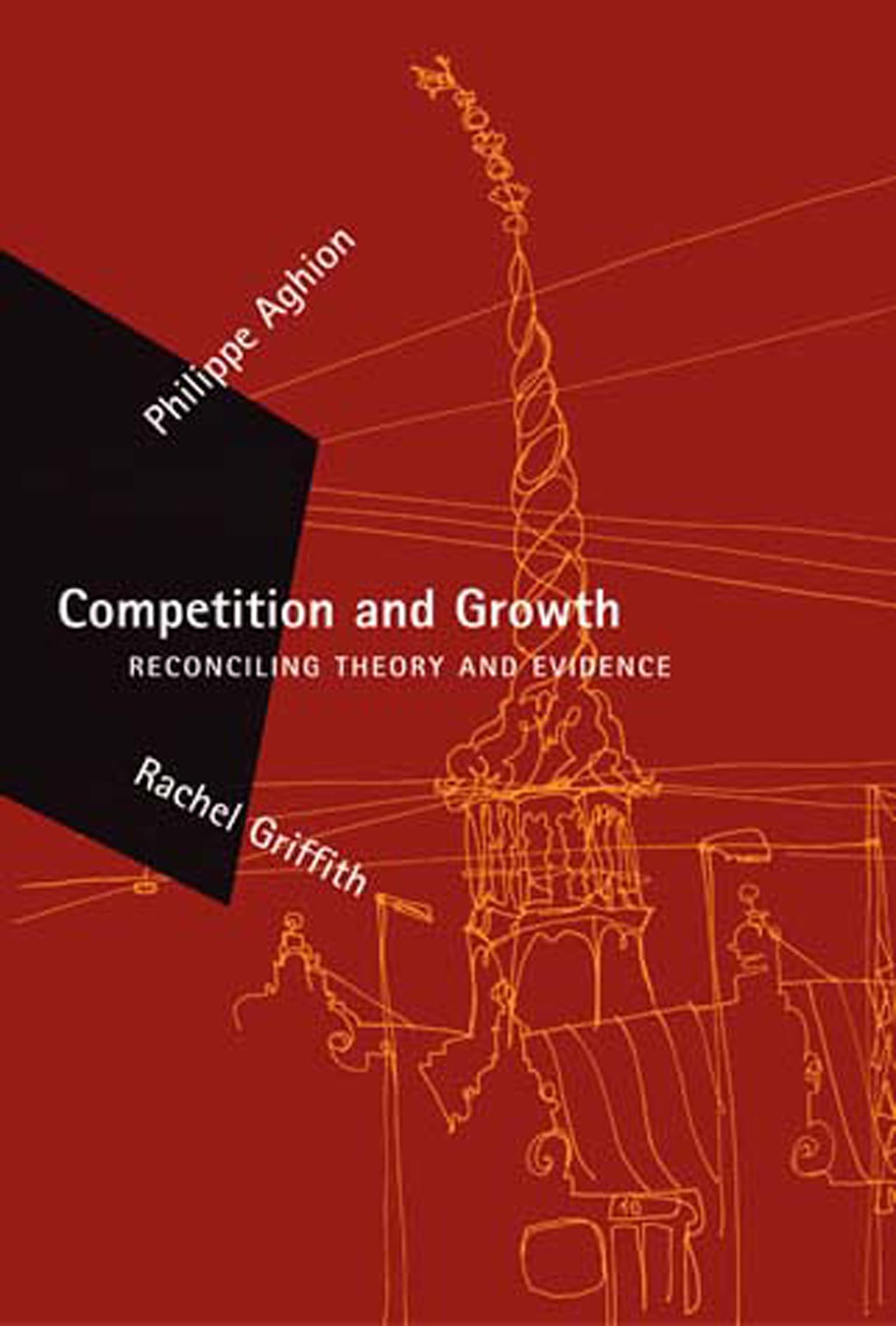
Competition and Growth: Reconciling Theory and Evidence (Zeuthen Lectures),New
Sold by Ergodebooks, an authorized reseller.
Returns accepted within 30 days | support@ergodebooks.com
Shipping Information
- Free Standard Shipping — United States only
- Processing Time: 3–5 business days
- Estimated Delivery: 6–10 business days after dispatch
- Double-boxed, fully insured & discreetly packaged
- Tracking number sent via email once dispatched
Returns & Refund
Returns accepted within 30 days of delivery.
Damaged or Defective Item
Free return shipping + replacement or full refund
Wrong Item Received
Free return shipping + replacement or full refund
Change of Mind
Return shipping at customer's expense · 25% restocking fee applies
Payment Option

Though competition occupies a prominent place in the history of economic thought, among economists today there is still a limited, and sometimes contradictory, understanding of its impact. In Competition and Growth, Philippe Aghion and Rachel Griffith offer the first serious attempt to provide a unified and coherent account of the effect competition policy and deregulated entry has on economic growth.The book takes the form of a dialogue between an applied theorist calling on 'Schumpeterian growth' models and a microeconometrician employing new techniques to gauge competition and entry. In each chapter, theoretical models are systematically confronted with empirical data, which either invalidates the models or suggests changes in the modeling strategy. Aghion and Griffith note a fundamental divorce between theorists and empiricists who previously worked on these questions. On one hand, existing models in industrial organization or new growth economics all predict a negative effect of competition on innovation and growth: namely, that competition is bad for growth because it reduces the monopoly rents that reward successful innovators. On the other hand, common wisdom and recent empirical studies point to a positive effect of competition on productivity growth. To reconcile theory and evidence, the authors distinguish between pre and postinnovation rents, and propose that innovation may be a way to escape competition, an idea that they confront with microeconomic data. The book's detailed analysis should aid scholars and policy makers in understanding how the benefits of tougher competition can be achieved while at the same time mitigating the negative effects competition and imitation may have on some sectors or industries.
⚠️ WARNING (California Proposition 65):
This product may contain chemicals known to the State of California to cause cancer, birth defects, or other reproductive harm.
For more information, please visit www.P65Warnings.ca.gov.