If you have any questions, you are always welcome to contact us. We'll get back to you as soon as possible, withing 24 hours on weekdays.
Customer service
All questions about your order, return and delivery must be sent to our customer service team by e-mail at yourstore@yourdomain.com
Sale & Press
If you are interested in selling our products, need more information about our brand or wish to make a collaboration, please contact us at press@yourdomain.com
Help
If you have any questions, you are always welcome to contact us. We'll get back to you as soon as possible, withing 24 hours on weekdays.
Customer service
All questions about your order, return and delivery must be sent to our customer service team by e-mail at yourstore@yourdomain.com
Sale & Press
If you are interested in selling our products, need more information about our brand or wish to make a collaboration, please contact us at press@yourdomain.com
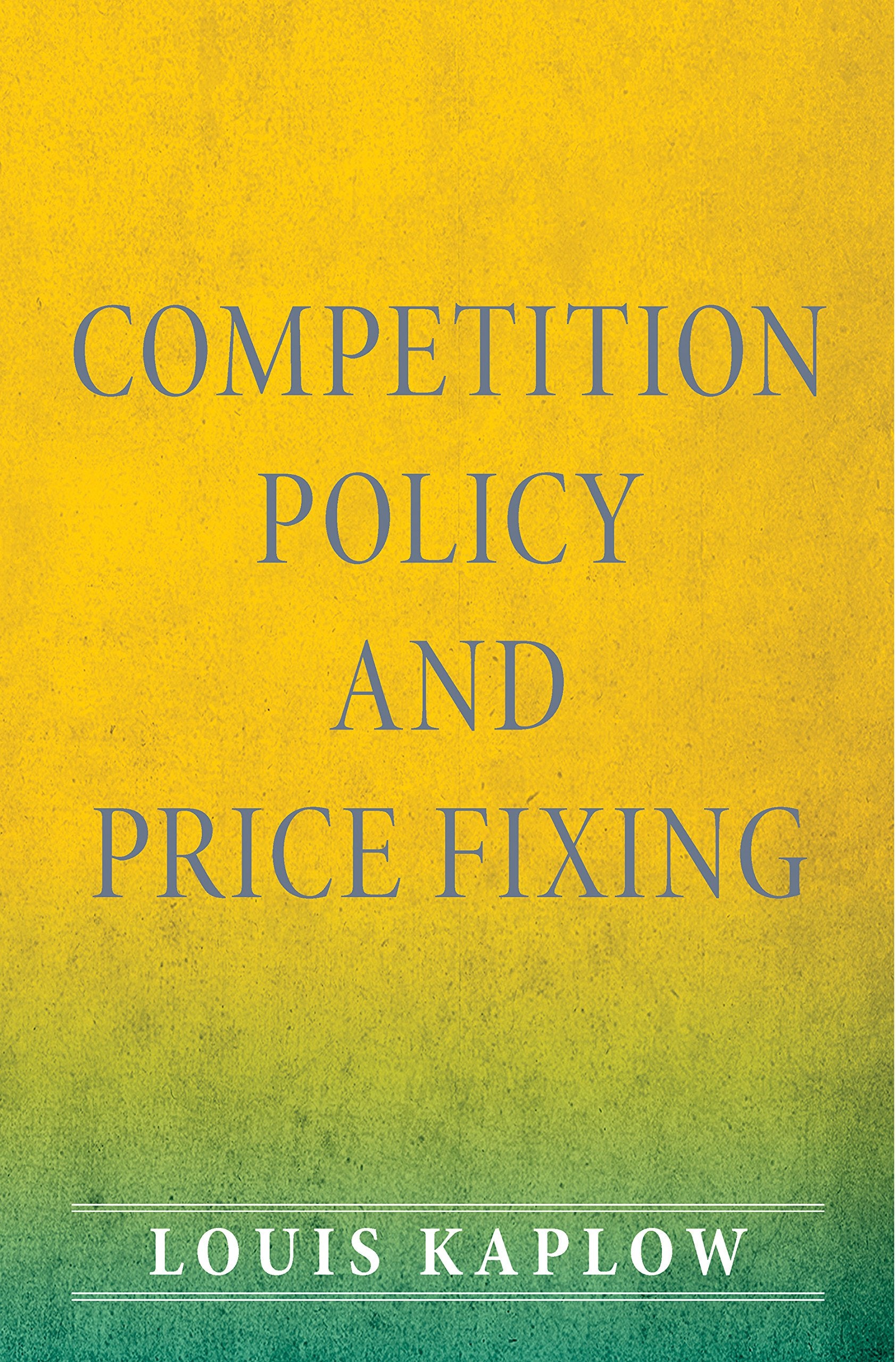
Throughout the world, the rule against price fixing is competition law's most important and least controversial prohibition. Yet there is far less consensus than meets the eye on what constitutes price fixing, and prevalent understandings conflict with the teachings of oligopoly theory that supposedly underlie modern competition policy.Competition Policy and Price Fixing provides the needed analytical foundation. It offers a fresh, indepth exploration of competition law's horizontal agreement requirement, presents a systematic analysis of how best to address the problem of coordinated oligopolistic price elevation, and compares the resulting direct approach to the orthodox prohibition.In doing so, Louis Kaplow elaborates the relevant benefits and costs of potential solutions, investigates how coordinated price elevation is best detected in light of the error costs associated with different types of proof, and examines appropriate sanctions. Existing literature devotes remarkably little attention to these key subjects and instead concerns itself with limiting penalties to certain sorts of interfirm communications. Challenging conventional wisdom, Kaplow shows how this circumscribed view is less well grounded in the statutes, principles, and precedents of competition law than is a more direct, functional proscription. More important, by comparison to the communicationsbased prohibition, he explains how the direct approach targets situations that involve both greater social harm and less risk of chilling desirable behaviorand is also easier to apply.
⚠️ WARNING (California Proposition 65):
This product may contain chemicals known to the State of California to cause cancer,
birth defects, or other reproductive harm.
For MAP (Minimum Advertised Price) violations and Intellectual Property (IP) or Trademark concerns, please contact:
support@ergodebooks.com
⚠️ California Proposition 65 Warning: Some products sold on this website may expose you to chemicals known to the State of California to cause cancer, birth defects, or other reproductive harm. For more information, visit www.P65Warnings.ca.gov.