
Title
Competitive Archaeology in Jordan: Narrating Identity from the Ottomans to the Hashemites,Used
Sold by Ergodebooks, an authorized reseller.
Returns accepted within 30 days | support@ergodebooks.com
Shipping Information
- Free Standard Shipping — United States only
- Processing Time: 3–5 business days
- Estimated Delivery: 6–10 business days after dispatch
- Double-boxed, fully insured & discreetly packaged
- Tracking number sent via email once dispatched
Returns & Refund
Returns accepted within 30 days of delivery.
Damaged or Defective Item
Free return shipping + replacement or full refund
Wrong Item Received
Free return shipping + replacement or full refund
Change of Mind
Return shipping at customer's expense · 25% restocking fee applies
Payment Option

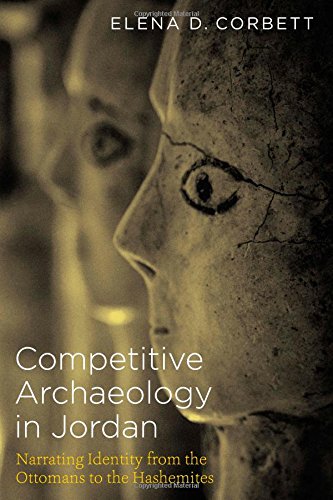
An examination of archaeology in Jordan and Palestine, Competitive Archaeology in Jordan explores how antiquities have been used to build narratives and national identities. Tracing Jordanian history, and the importance of Jerusalem within that history, Corbett analyzes how both foreign and indigenous powers have engaged in a competition over ownership of antiquities and the power to craft history and geography based on archaeological artifacts. She begins with the Ottoman and British Empiresunder whose rule the institutions and borders of modern Jordan began to take shapeasking how they used antiquities in varying ways to advance their imperial projects. Corbett continues through the Mandate era and the era of independence of an expanded Hashemite Kingdom, examining how the Hashemites and other factions, both within and beyond Jordan, have tried to define national identity by drawing upon antiquities.Competitive Archaeology in Jordan traces a complex history through the lens of archaeology's power as a modern science to create and give value to spaces, artifacts, peoples, narratives, and academic disciplines. It thus considers the role of archaeology in realizing Jordan's modernitydrawing its map; delineating sacred and secular spaces; validating taxonomies of citizens; justifying legal frameworks and institutions of state; determining logos of the nation for display on stamps, currency, and in museums; and writing history. Framing Jordan's history in this way, Corbett illustrates the manipulation of archaeology by governments, institutions, and individuals to craft narratives, draw borders, and create national identities.
⚠️ WARNING (California Proposition 65):
This product may contain chemicals known to the State of California to cause cancer, birth defects, or other reproductive harm.
For more information, please visit www.P65Warnings.ca.gov.