
Title
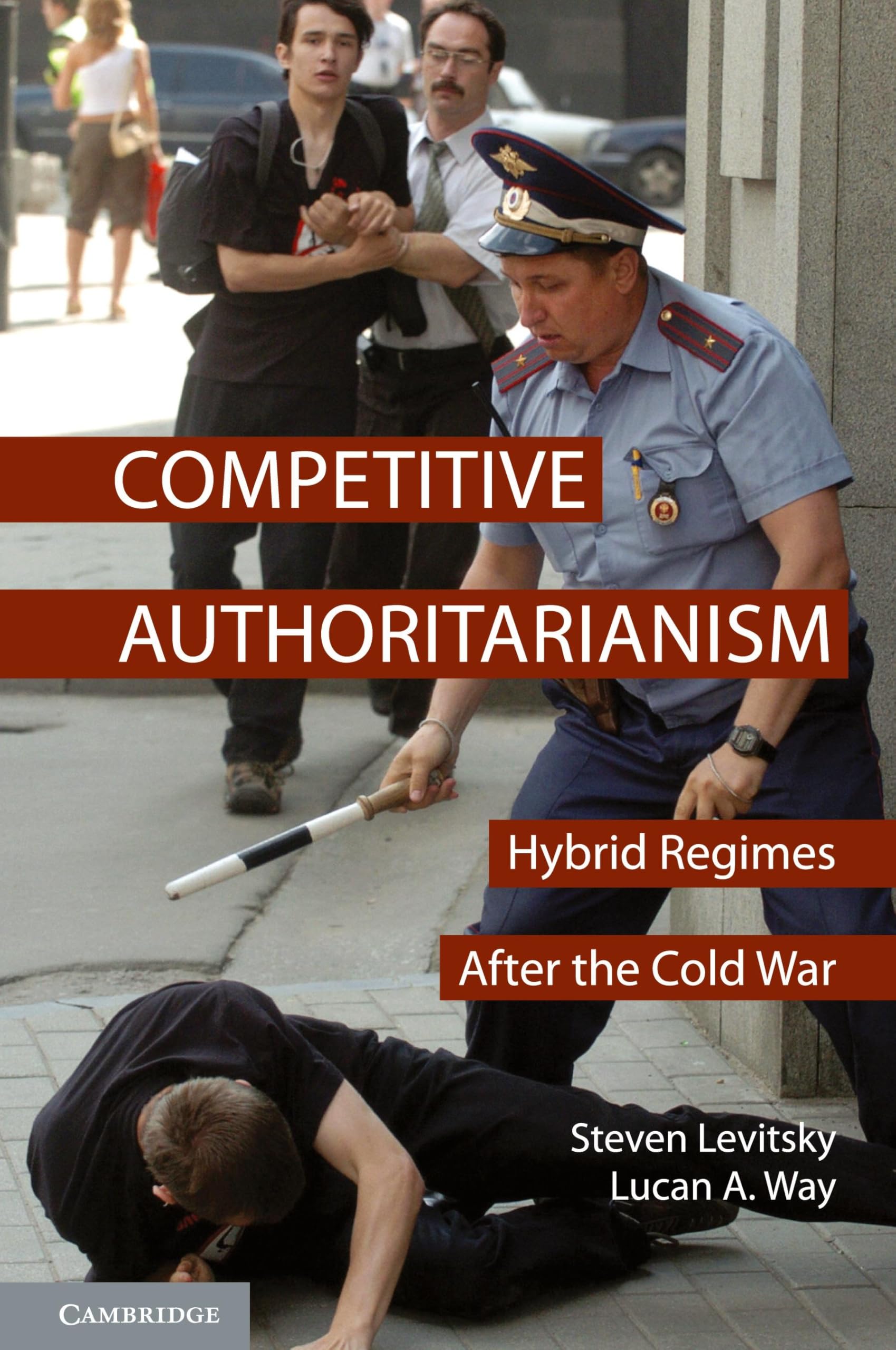
Competitive Authoritarianism: Hybrid Regimes after the Cold War (Problems of International Politics),Used
Sold by Ergodebooks, an authorized reseller.
Returns accepted within 30 days | support@ergodebooks.com
Shipping Information
- Free Standard Shipping — United States only
- Processing Time: 3–5 business days
- Estimated Delivery: 6–10 business days after dispatch
- Double-boxed, fully insured & discreetly packaged
- Tracking number sent via email once dispatched
Returns & Refund
Returns accepted within 30 days of delivery.
Damaged or Defective Item
Free return shipping + replacement or full refund
Wrong Item Received
Free return shipping + replacement or full refund
Change of Mind
Return shipping at customer's expense · 25% restocking fee applies
Payment Option

Competitive authoritarian regimes in which autocrats submit to meaningful multiparty elections but engage in serious democratic abuse proliferated in the postCold War era. Based on a detailed study of 35 cases in Africa, Asia, Latin America, and postcommunist Eurasia, this book explores the fate of competitive authoritarian regimes between 1990 and 2008. It finds that where social, economic, and technocratic ties to the West were extensive, as in Eastern Europe and the Americas, the external cost of abuse led incumbents to cede power rather than crack down, which led to democratization. Where ties to the West were limited, external democratizing pressure was weaker and countries rarely democratized. In these cases, regime outcomes hinged on the character of state and ruling party organizations. Where incumbents possessed developed and cohesive coercive party structures, they could thwart opposition challenges, and competitive authoritarian regimes survived; where incumbents lacked such organizational tools, regimes were unstable but rarely democratized.
⚠️ WARNING (California Proposition 65):
This product may contain chemicals known to the State of California to cause cancer, birth defects, or other reproductive harm.
For more information, please visit www.P65Warnings.ca.gov.