
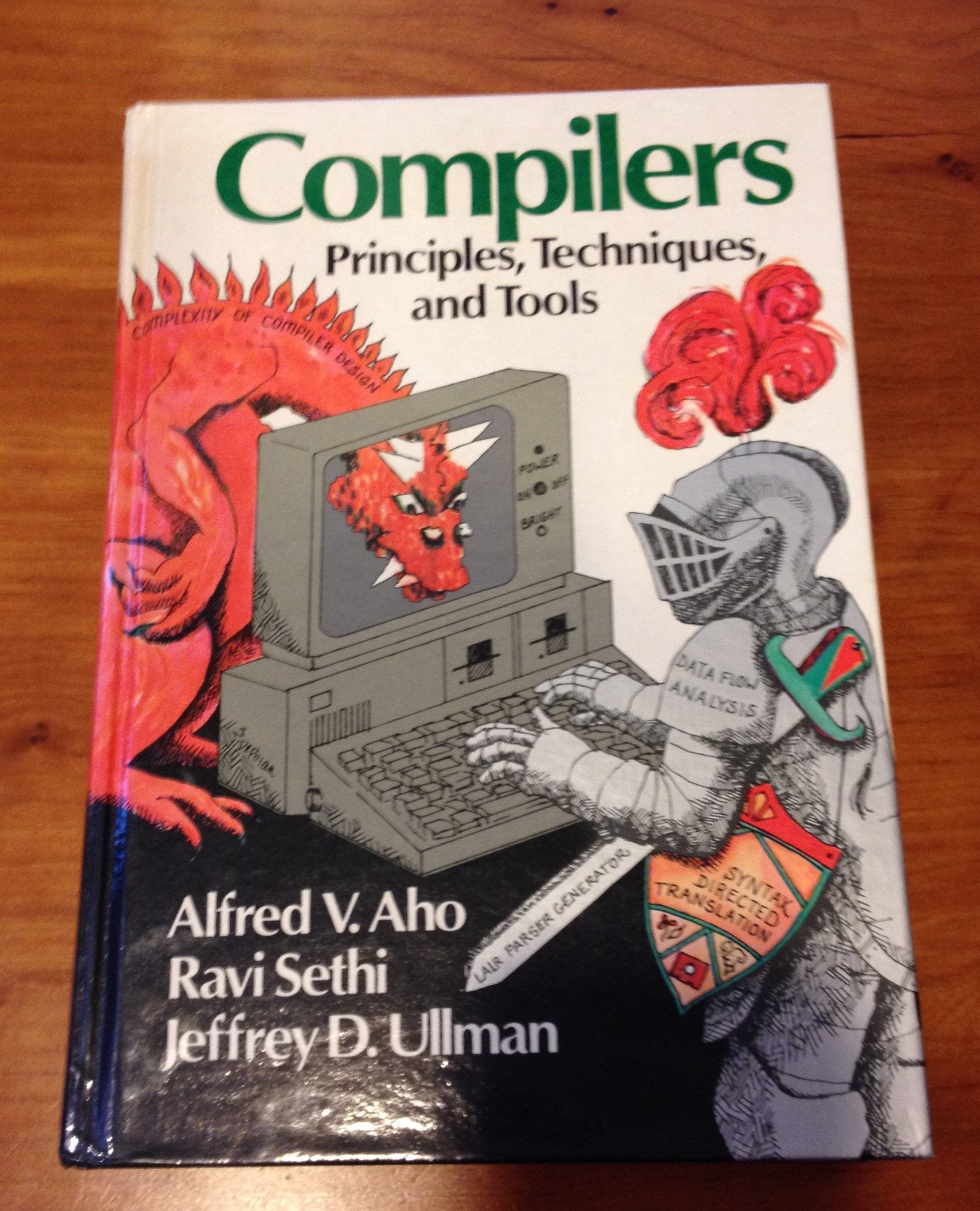
Title


Compilers: Principles, Techniques, and Tools,Used
Sold by Ergodebooks, an authorized reseller.
Returns accepted within 30 days | support@ergodebooks.com
Shipping Information
- Free Standard Shipping — United States only
- Processing Time: 3–5 business days
- Estimated Delivery: 6–10 business days after dispatch
- Double-boxed, fully insured & discreetly packaged
- Tracking number sent via email once dispatched
Returns & Refund
Returns accepted within 30 days of delivery.
Damaged or Defective Item
Free return shipping + replacement or full refund
Wrong Item Received
Free return shipping + replacement or full refund
Change of Mind
Return shipping at customer's expense · 25% restocking fee applies
Payment Option

This introduction to compilers is the direct descendant of the wellknown book by Aho and Ullman, Principles of Compiler Design. The authors present updated coverage of compilers based on research and techniques that have been developed in the field over the past few years. The book provides a thorough introduction to compiler design and covers topics such as contextfree grammars, fine state machines, and syntaxdirected translation. 0201100886B04062001
⚠️ WARNING (California Proposition 65):
This product may contain chemicals known to the State of California to cause cancer, birth defects, or other reproductive harm.
For more information, please visit www.P65Warnings.ca.gov.
- Q: What are the dimensions of the book? A: The book measures six point seven five inches in length, one point five inches in width, and nine point five inches in height.
- Q: How many pages does this book have? A: This book contains seven hundred ninety six pages, providing an extensive exploration of compiler design.
- Q: What type of binding does the book have? A: The book features a hardcover binding, ensuring durability and longevity for repeated use.
- Q: Who is the author of 'Compilers: Principles, Techniques, and Tools'? A: The author of this book is Alfred V. Aho, a well-respected figure in the field of computer science.
- Q: What topics are covered in this book? A: The book covers a variety of topics including context-free grammars, finite state machines, and syntax-directed translation.
- Q: Is this book suitable for beginners in compiler design? A: Yes, the book is designed to provide a thorough introduction to compiler design, making it suitable for beginners.
- Q: Can I use this book for advanced studies in compilers? A: Yes, this book includes updated coverage of recent research and techniques, making it useful for advanced studies.
- Q: Is this book appropriate for self-study? A: Yes, it is suitable for self-study, as it provides comprehensive explanations and exercises.
- Q: What is the target audience for this book? A: The target audience includes computer science students and professionals interested in compiler design.
- Q: How should I care for this hardcover book? A: To maintain the book's condition, store it in a dry place and avoid exposing it to direct sunlight.
- Q: Can I clean the book if it gets dirty? A: Yes, you can gently wipe the cover with a damp cloth, but avoid soaking it to prevent damage.
- Q: What if the book arrives damaged? A: If the book arrives damaged, you should contact the seller for a return or replacement.
- Q: Is there a warranty for this book? A: Books typically do not come with a warranty, but you can check the seller's return policy.
- Q: How should I store this book? A: Store the book upright on a shelf or in a bookcase to prevent bending or damaging the spine.
- Q: What if I have questions while studying this book? A: If you have questions, consider consulting online forums or study groups focused on compiler design.
- Q: Is this book part of a series? A: No, this book is a standalone text but is often referenced alongside other works in the field of compiler design.