
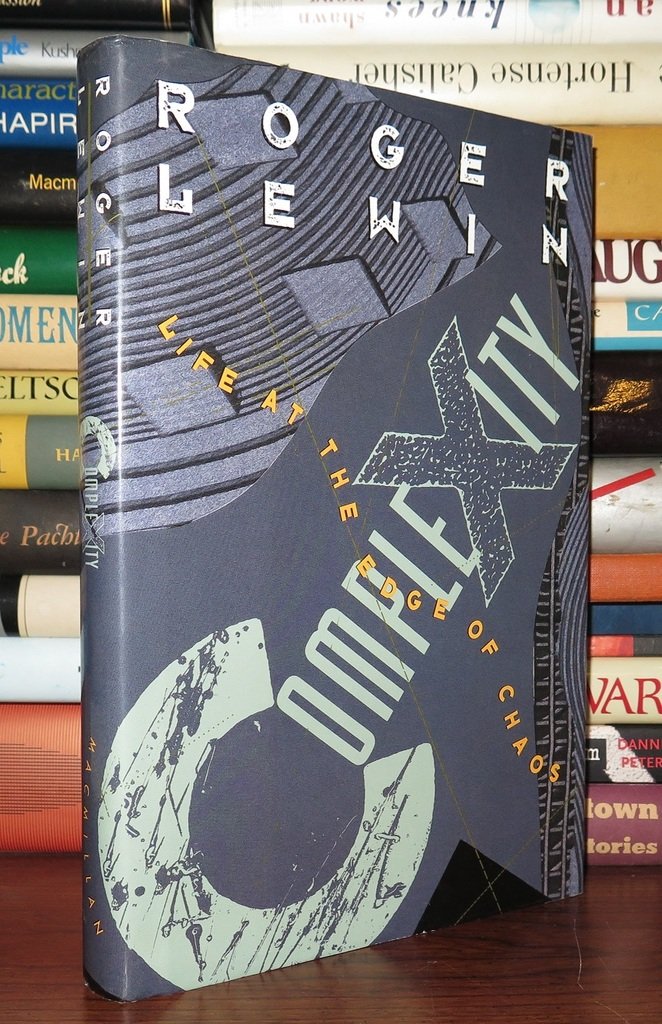
Title
Complexity: Life at the Edge of Chaos,Used
Sold by Ergodebooks, an authorized reseller.
Returns accepted within 30 days | support@ergodebooks.com
Shipping Information
- Free Standard Shipping — United States only
- Processing Time: 3–5 business days
- Estimated Delivery: 6–10 business days after dispatch
- Double-boxed, fully insured & discreetly packaged
- Tracking number sent via email once dispatched
Returns & Refund
Returns accepted within 30 days of delivery.
Damaged or Defective Item
Free return shipping + replacement or full refund
Wrong Item Received
Free return shipping + replacement or full refund
Change of Mind
Return shipping at customer's expense · 25% restocking fee applies
Payment Option

Put together one of the world's best science writers with one of the universe's most fascinating subjects and you are bound to produce a wonderful book. . . . The subject of complexity is vital and controversial. This book is important and beautifully done.'Stephen Jay Gould'[Complexity] is that curious mix of complication and organization that we find throughout the natural and human worlds: the workings of a cell, the structure of the brain, the behavior of the stock market, the shifts of political power. . . . It is time science . . . thinks about meaning as well as counting information. . . . This is the core of the complexity manifesto. Read it, think about it . . . but don't ignore it.'Ian Stewart, NatureThis second edition has been brought up to date with an essay entitled 'On the Edge in the Business World' and an interview with John Holland, author of Emergence: From Chaos to Order.
⚠️ WARNING (California Proposition 65):
This product may contain chemicals known to the State of California to cause cancer, birth defects, or other reproductive harm.
For more information, please visit www.P65Warnings.ca.gov.
- Q: What is the page count of the book? A: The book has two hundred forty-two pages. This length provides a comprehensive exploration of complexity in various contexts.
- Q: What are the physical dimensions of the book? A: The book measures nine point twenty-one inches in length, six inches in width, and zero point sixty-seven inches in height. These dimensions make it easy to handle and read.
- Q: What type of binding does this book have? A: The book is available in paperback binding. This makes it flexible and lightweight for portability.
- Q: Who is the author of this book? A: The author of the book is Roger Lewin. He is recognized for his expertise in science writing and complexity.
- Q: What is the genre of this book? A: The book falls under the category of History and Philosophy. It delves into the concept of complexity in various systems.
- Q: How do I read and understand this book? A: To read this book, simply open it and start with the introduction. It is suitable for anyone interested in science and philosophy.
- Q: Is this book suitable for beginners in complexity science? A: Yes, this book is suitable for beginners. It provides clear explanations of complex concepts in an accessible manner.
- Q: What themes are covered in this book? A: The book covers themes such as organization, complication, and the dynamics of complex systems. It explores these themes across different domains.
- Q: How should I store this book to keep it in good condition? A: Store the book in a cool, dry place upright on a shelf. This prevents warping and damage to the binding.
- Q: Can this book be cleaned if it gets dirty? A: Yes, you can clean the book. Use a dry cloth to gently wipe the cover and pages, avoiding moisture.
- Q: What if I receive a damaged copy of the book? A: If you receive a damaged copy, you should contact the retailer for a return or exchange. Most sellers have a return policy in place.
- Q: Are there any specific recommendations for reading this book? A: It is recommended to take notes while reading to better understand key concepts. Engaging with the material will enhance comprehension.
- Q: Does this book include illustrations or diagrams? A: No, the book does not specifically mention illustrations or diagrams. It focuses on text to convey complex ideas.
- Q: Is this book suitable for academic study? A: Yes, this book is suitable for academic study. It provides insights that are valuable for students in science and philosophy.
- Q: What is the intended audience for this book? A: The intended audience includes students, educators, and anyone interested in the study of complexity. It's designed for a broad readership.