
Title
Composing Social Identity In Written Language,Used
Sold by Ergodebooks, an authorized reseller.
Returns accepted within 30 days | support@ergodebooks.com
Shipping Information
- Free Standard Shipping — United States only
- Processing Time: 3–5 business days
- Estimated Delivery: 6–10 business days after dispatch
- Double-boxed, fully insured & discreetly packaged
- Tracking number sent via email once dispatched
Returns & Refund
Returns accepted within 30 days of delivery.
Damaged or Defective Item
Free return shipping + replacement or full refund
Wrong Item Received
Free return shipping + replacement or full refund
Change of Mind
Return shipping at customer's expense · 25% restocking fee applies
Payment Option

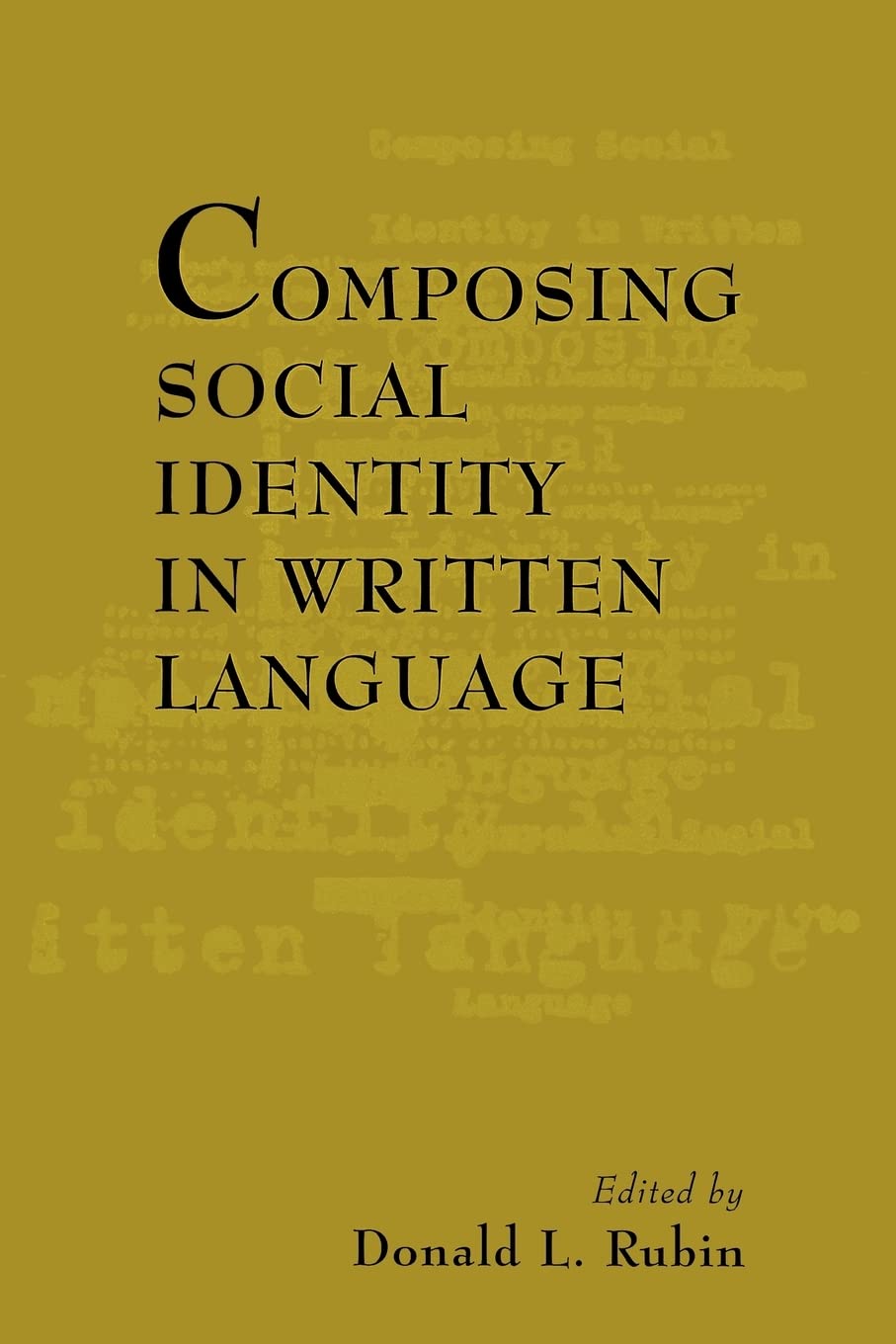
This volume constitutes a unique contribution to the literature on literacy and culture in several respects. It links together aspects of social variation that have not often been thus juxtaposed: ethnicity/nationality, gender, and participant role relations. The unifying theme of this collection of papers is that all of these factors are aspects of writers' identities identities which are simultaneously expressed and constructed in text.The topic of social identity and writing can be approached from a variety of scholarly avenues, including humanistic, critical, and historical perspectives. The papers in the present volume make reference to and contribute to such humanistic perspectives; however, this book lies squarely within the tradition of social science. It draws primarily upon the disciplines of linguistics, discourse analysis, anthropology, social and cognitive psychology, and education studies.The constituent topics of social identity, style, and writing themselves lie at the intersections of several related fields of scholarship. Writing remains of peak interest to educators from many fields, and is still a 'hot' topic. The instructional ramifications of the particular issues addressed in this volume are of vital concern to educational systems adjusting to the realities of our multicultural society. This publication, therefore, should attract a substantial and diverse readership of scholars, educators, and policymakers affiliated with many fields including applied linguistics, composition and rhetoric, communication studies, dialect studies, discourse analysis, English composition, English/language arts education, ethnic studies, language behavior, literacy, sociolinguistics, stylistics, women's studies, and writing research and instruction.
⚠️ WARNING (California Proposition 65):
This product may contain chemicals known to the State of California to cause cancer, birth defects, or other reproductive harm.
For more information, please visit www.P65Warnings.ca.gov.