
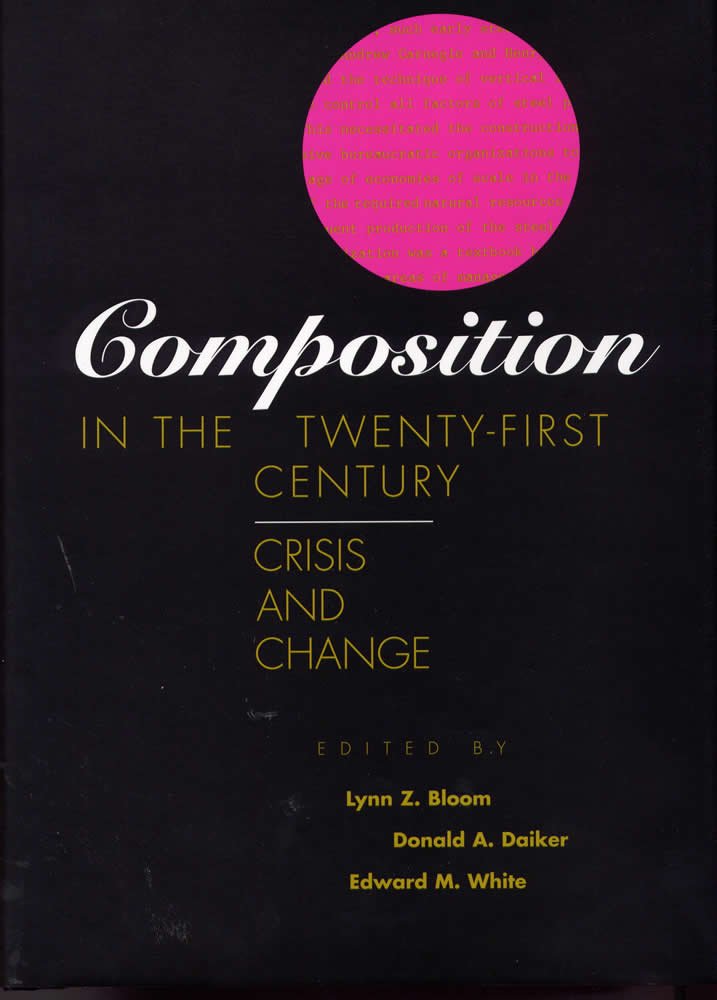
Title
Composition In The Twentyfirst Century: Crisis And Change,Used
Sold by Ergodebooks, an authorized reseller.
Returns accepted within 30 days | support@ergodebooks.com
Shipping Information
- Free Standard Shipping — United States only
- Processing Time: 3–5 business days
- Estimated Delivery: 6–10 business days after dispatch
- Double-boxed, fully insured & discreetly packaged
- Tracking number sent via email once dispatched
Returns & Refund
Returns accepted within 30 days of delivery.
Damaged or Defective Item
Free return shipping + replacement or full refund
Wrong Item Received
Free return shipping + replacement or full refund
Change of Mind
Return shipping at customer's expense · 25% restocking fee applies
Payment Option

The essays in this book, stemming from a national conference of the same name, focus on the single subject required of nearly all college studentscomposition.Despite its pervasiveness and its significance, composition has an unstable status within the curriculum. Writing programs and writing faculty are besieged by academic, political, and financial concerns that have not been well understood or addressed.At many institutions, composition functions paradoxically as both the gateway to academic success and as the gatekeeper, reducing access to academic work and opportunity for those with limited facility in English. Although writing programs are expected to provide services that range from instruction in correct grammar to assistingor resistingpolitical correctness, expanding programs and shrinking faculty get caught in the crossfire. The bottom line becomes the firing line as forces outside the classroom determine funding and seek to define what composition should do.In search of that definition, the contributors ask and answer a series of specific and salient questions: What implicationsintellectual, political, and institutionalwill forces outside the classroom have on the quality and delivery of composition in the twentyfirst century? How will faculty and administrators identify and address these issues? What policies and practices ought we propose for the century to come?This book features sixteen position papers by distinguished scholars and researchers in composition and rhetoric; most of the papers are followed by invited responses by other notable compositionists. In all, twentyfive contributors approach composition from a wide variety of contemporary perspectives: rhetorical, historical, social, cultural, political, intellectual, economic, structural, administrative, and developmental. They propose solutions applicable to pedagogy, research, graduate training of composition teachers, academic administration, and public and social policy. In a very real sense, then, this is the only book to offer a map to the future of composition.
⚠️ WARNING (California Proposition 65):
This product may contain chemicals known to the State of California to cause cancer, birth defects, or other reproductive harm.
For more information, please visit www.P65Warnings.ca.gov.
- Q: What is the length and width of the book? A: The book measures seven point zero one inches in length and one point one four inches in width.
- Q: How many pages does 'Composition in the Twenty-First Century' have? A: This book contains three hundred twenty pages.
- Q: What is the binding type of this book? A: The book is bound in hardcover, ensuring durability and longevity.
- Q: Who is the author of this book? A: The author of 'Composition in the Twenty-First Century' is Lynn Z. Bloom.
- Q: What category does this book fall under? A: This book is categorized under Rhetoric.
- Q: What topics does this book cover? A: The book addresses composition, academic success, and the challenges of writing programs.
- Q: Is this book suitable for college students? A: Yes, this book is particularly relevant for college students studying composition.
- Q: Can this book be used for graduate training of composition teachers? A: Yes, it includes solutions applicable to the graduate training of composition teachers.
- Q: What type of essays are included in the book? A: The book features sixteen position papers by distinguished scholars and researchers.
- Q: How should I care for this hardcover book? A: To keep the book in good condition, store it in a dry place and avoid exposure to direct sunlight.
- Q: Is this book intended for adults only? A: No, the content is suitable for anyone interested in composition, including educators and students.
- Q: What should I do if my book arrives damaged? A: If the book arrives damaged, contact the seller for return or exchange options.
- Q: What if I have questions about the book's content? A: You can reach out to the publisher or refer to academic resources related to the book.
- Q: Is there a warranty on this book? A: Typically, books do not come with a warranty; however, check with the seller for their policy.
- Q: Does this book discuss political correctness in writing? A: Yes, it addresses the challenges of political correctness within writing programs.
- Q: How does this book propose to address composition issues? A: The contributors propose various policies and practices for improving composition in the future.