
Title
Computational Explorations in Cognitive Neuroscience: Understanding the Mind by Simulating the Brain,Used
Sold by Ergodebooks, an authorized reseller.
Returns accepted within 30 days | support@ergodebooks.com
Shipping Information
- Free Standard Shipping — United States only
- Processing Time: 3–5 business days
- Estimated Delivery: 6–10 business days after dispatch
- Double-boxed, fully insured & discreetly packaged
- Tracking number sent via email once dispatched
Returns & Refund
Returns accepted within 30 days of delivery.
Damaged or Defective Item
Free return shipping + replacement or full refund
Wrong Item Received
Free return shipping + replacement or full refund
Change of Mind
Return shipping at customer's expense · 25% restocking fee applies
Payment Option

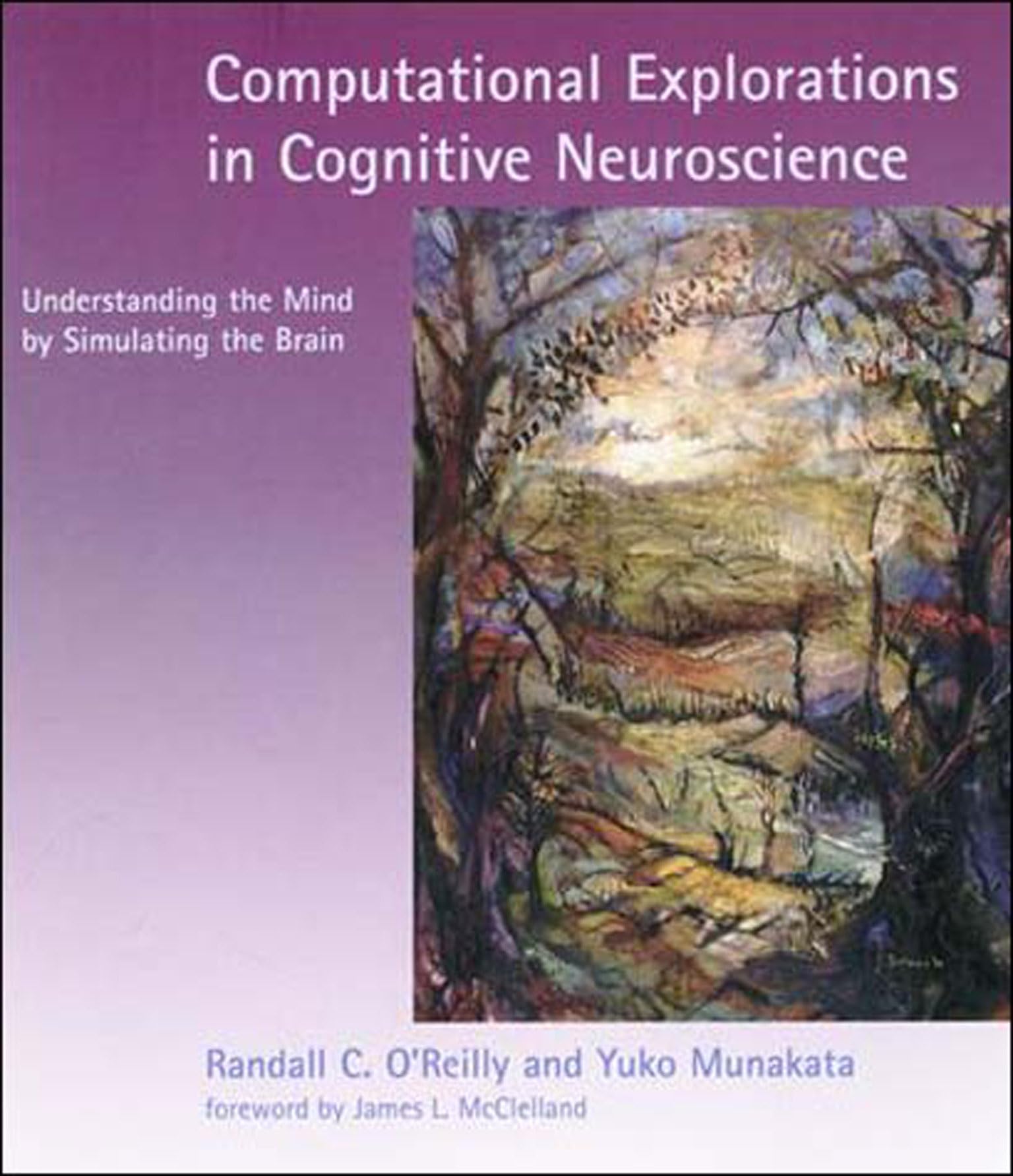
This text, based on a course taught by Randall O'Reilly and Yuko Munakata over the past several years, provides an indepth introduction to the main ideas in the computational cognitive neuroscience.The goal of computational cognitive neuroscience is to understand how the brain embodies the mind by using biologically based computational models comprising networks of neuronlike units. This text, based on a course taught by Randall O'Reilly and Yuko Munakata over the past several years, provides an indepth introduction to the main ideas in the field. The neural units in the simulations use equations based directly on the ion channels that govern the behavior of real neurons, and the neural networks incorporate anatomical and physiological properties of the neocortex. Thus the text provides the student with knowledge of the basic biology of the brain as well as the computational skills needed to simulate largescale cognitive phenomena.The text consists of two parts. The first part covers basic neural computation mechanisms: individual neurons, neural networks, and learning mechanisms. The second part covers largescale brain area organization and cognitive phenomena: perception and attention, memory, language, and higherlevel cognition. The second part is relatively selfcontained and can be used separately for mechanistically oriented cognitive neuroscience courses. Integrated throughout the text are more than forty different simulation models, many of them fullscale researchgrade models, with friendly interfaces and accompanying exercises. The simulation software (PDP++, available for all major platforms) and simulations can be downloaded free of charge from the Web. Exercise solutions are available, and the text includes full information on the software.
⚠️ WARNING (California Proposition 65):
This product may contain chemicals known to the State of California to cause cancer, birth defects, or other reproductive harm.
For more information, please visit www.P65Warnings.ca.gov.