
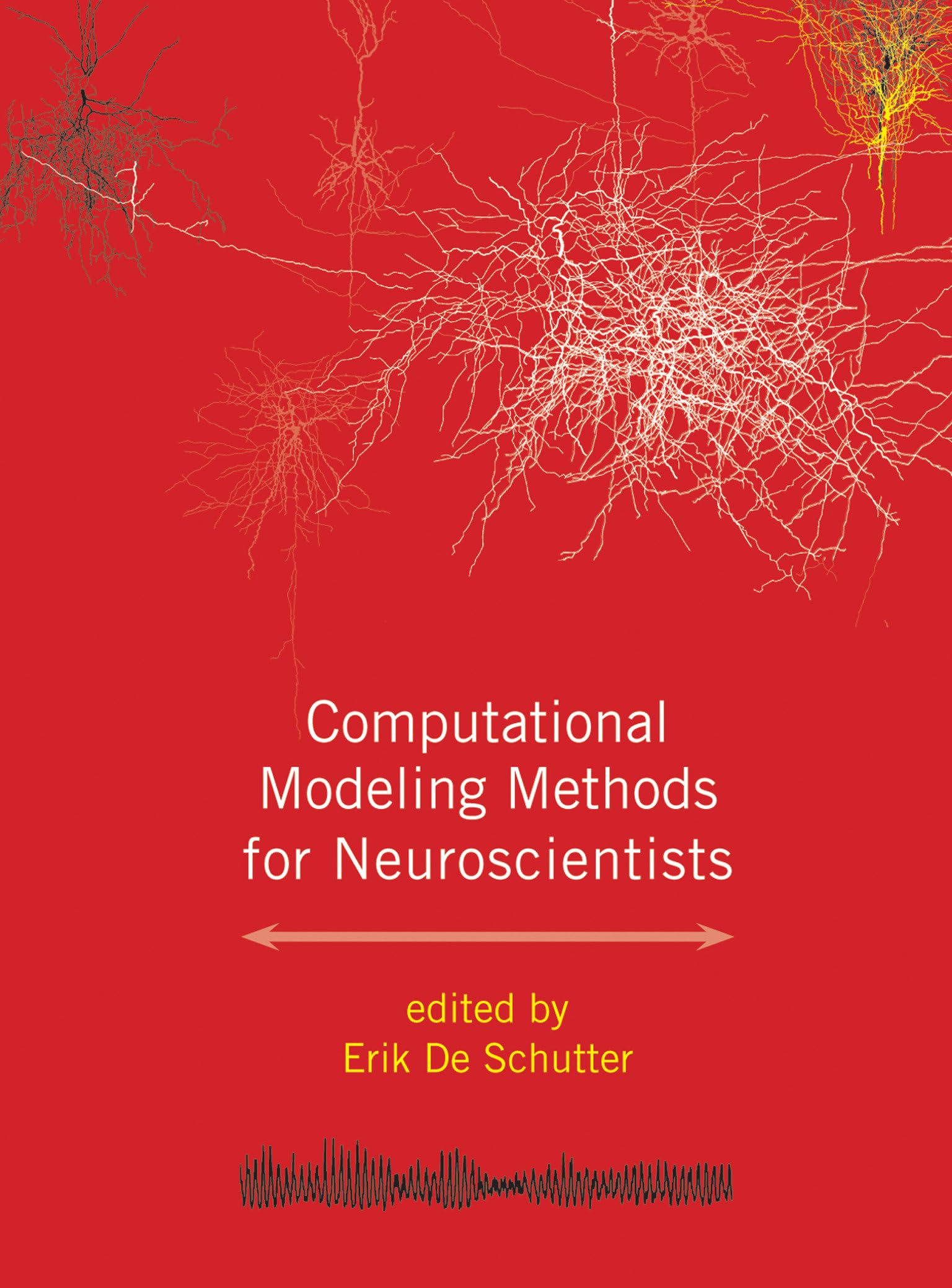
Computational Modeling Methods For Neuroscientists (Computational Neuroscience Series),Used
$32.51
Title
Computational Modeling Methods For Neuroscientists (Computational Neuroscience Series),Used
Free Standard Shipping Across USA
Quantity
Sold by Ergodebooks, an authorized reseller.
Returns accepted within 30 days | support@ergodebooks.com
Shipping Information
- Free Standard Shipping — United States only
- Processing Time: 3–5 business days
- Estimated Delivery: 6–10 business days after dispatch
- Double-boxed, fully insured & discreetly packaged
- Tracking number sent via email once dispatched
Returns & Refund
Returns accepted within 30 days of delivery.
Damaged or Defective Item
Free return shipping + replacement or full refund
Wrong Item Received
Free return shipping + replacement or full refund
Change of Mind
Return shipping at customer's expense · 25% restocking fee applies
All returns require a Return Authorization (RA) number before sending.
View Full Return & Refund Policy
Payment Option

Computational Modeling Methods For Neuroscientists (Computational Neuroscience Series)
⚠️ WARNING (California Proposition 65):
This product may contain chemicals known to the State of California to cause cancer, birth defects, or other reproductive harm.
For more information, please visit www.P65Warnings.ca.gov.
- Q: How many pages does this book have? A: This book has four hundred nineteen pages. It provides comprehensive coverage of computational modeling methods in neuroscience.
- Q: What is the binding type of this book? A: The binding type is hardcover. This makes it durable and suitable for frequent use in academic settings.
- Q: What are the dimensions of this book? A: The dimensions are approximately nine point twenty-five inches by seven point zero six inches by one point zero two inches. These measurements make it portable yet substantial.
- Q: Who is the author of this book? A: The author is Erik De Schutter. He is recognized for his work in the field of computational neuroscience.
- Q: What topics does this book cover? A: This book covers a range of computational modeling methods in neuroscience. It includes topics from molecular interactions to large neural networks.
- Q: Is this book suitable for beginners? A: Yes, this book is suitable for beginners. It is intended for experimental neuroscientists and graduate students with little formal training in mathematics.
- Q: How do I apply the methods discussed in this book? A: To apply the methods, read through the chapters and follow the presented methodological approaches. The book emphasizes practical application with examples.
- Q: Can this book help with data-driven modeling? A: Yes, this book focuses on data-driven modeling methods. It's particularly useful for scientists looking to integrate experimental work with data analysis.
- Q: Is this book useful for theoretical scientists? A: Yes, it is useful for theoretical scientists. It provides insights for those wanting to start using data-driven modeling methods.
- Q: What should I do if the book arrives damaged? A: If the book arrives damaged, contact the seller for a return or exchange. Most sellers have policies in place for such situations.
- Q: What if I have trouble understanding the mathematical concepts? A: If you have trouble, refer to the introductory chapter that explains the necessary mathematical methods. This chapter is designed to make the content accessible.
- Q: How can I keep this book in good condition? A: To keep the book in good condition, store it upright in a cool, dry place and avoid exposing it to direct sunlight. Handle it carefully to prevent damage.
- Q: Is this book appropriate for undergraduates? A: Yes, this book is appropriate for undergraduates. It offers foundational knowledge for those studying neuroscience or related fields.
- Q: What makes this book different from other neuroscience books? A: This book emphasizes practical methodologies rather than theoretical accounts. It provides comprehensive and accessible content tailored for experimentalists.
- Q: Are the mathematical sections easy to follow? A: Yes, the mathematical sections are kept at an introductory level. The book is designed to be understandable for readers with minimal math background.