If you have any questions, you are always welcome to contact us. We'll get back to you as soon as possible, withing 24 hours on weekdays.
Customer service
All questions about your order, return and delivery must be sent to our customer service team by e-mail at yourstore@yourdomain.com
Sale & Press
If you are interested in selling our products, need more information about our brand or wish to make a collaboration, please contact us at press@yourdomain.com
Help
If you have any questions, you are always welcome to contact us. We'll get back to you as soon as possible, withing 24 hours on weekdays.
Customer service
All questions about your order, return and delivery must be sent to our customer service team by e-mail at yourstore@yourdomain.com
Sale & Press
If you are interested in selling our products, need more information about our brand or wish to make a collaboration, please contact us at press@yourdomain.com
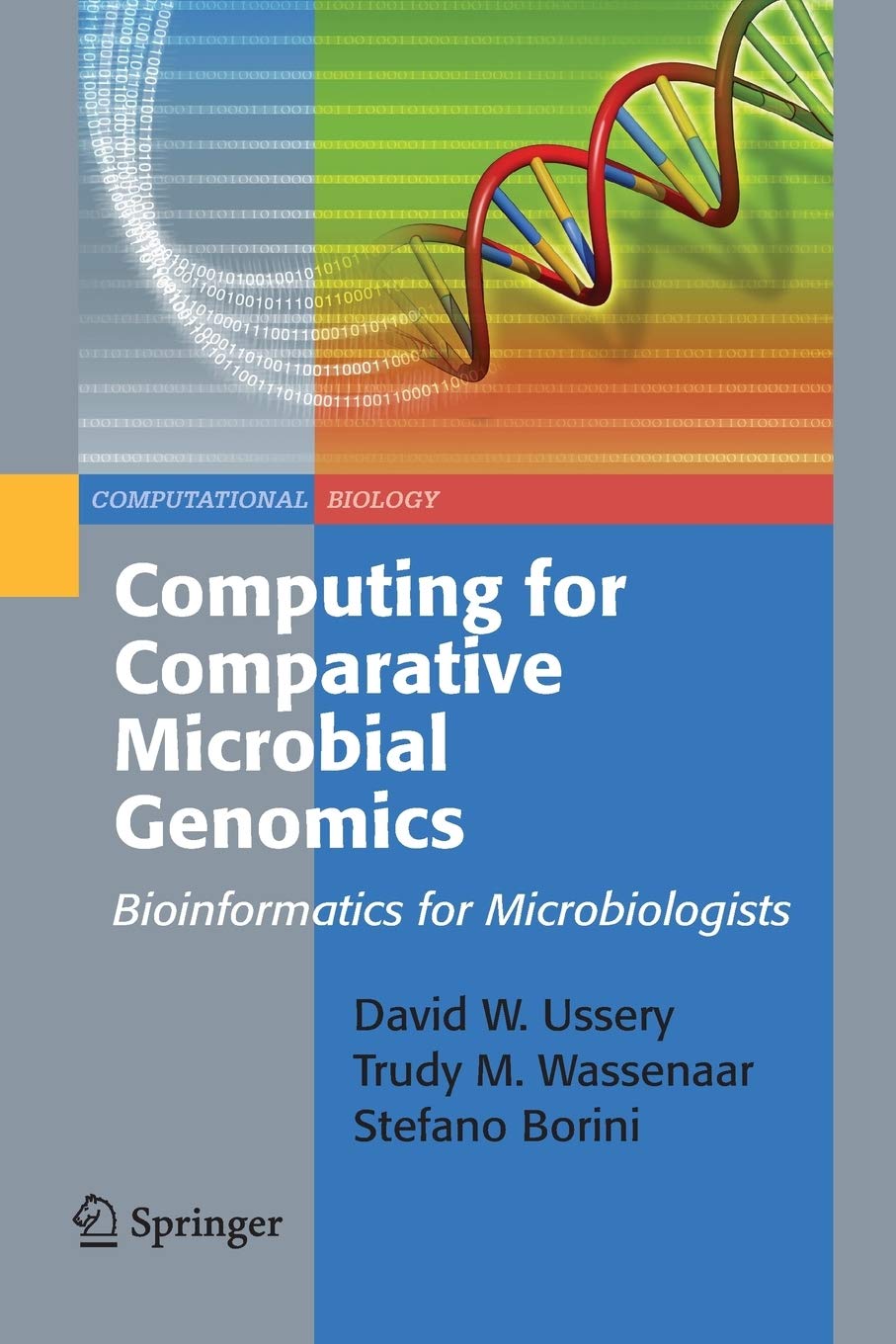
Overview and Goals This book describes how to visualize and compare bacterial genomes. Sequencing technologies are becoming so inexpensive that soon going for a cup of coffee will be more expensive than sequencing a bacterial genome. Thus, there is a very real and pressing need for highthroughput computational methods to compare hundreds and thousands of bacterial genomes. It is a long road from molecular biology to systems biology, and in a sense this text can be thought of as a path bridging these ? elds. The goal of this book is to p vide a coherent set of tools and a methodological framework for starting with raw DNA sequences and producing fully annotated genome sequences, and then using these to build up and test models about groups of interacting organisms within an environment or ecological niche. Organization and Features The text is divided into four main parts: Introduction, Comparative Genomics, Transcriptomics and Proteomics, and ? nally Microbial Communities. The ? rst ? ve chapters are introductions of various sorts. Each of these chapters represents an introduction to a speci? c scienti? c ? eld, to bring all readers up to the same basic level before proceeding on to the methods of comparing genomes. First, a brief overview of molecular biology and of the concept of sequences as biological inf mation are given.
⚠️ WARNING (California Proposition 65):
This product may contain chemicals known to the State of California to cause cancer,
birth defects, or other reproductive harm.
For MAP (Minimum Advertised Price) violations and Intellectual Property (IP) or Trademark concerns, please contact:
support@ergodebooks.com
⚠️ California Proposition 65 Warning: Some products sold on this website may expose you to chemicals known to the State of California to cause cancer, birth defects, or other reproductive harm. For more information, visit www.P65Warnings.ca.gov.