If you have any questions, you are always welcome to contact us. We'll get back to you as soon as possible, withing 24 hours on weekdays.
Customer service
All questions about your order, return and delivery must be sent to our customer service team by e-mail at yourstore@yourdomain.com
Sale & Press
If you are interested in selling our products, need more information about our brand or wish to make a collaboration, please contact us at press@yourdomain.com
Help
If you have any questions, you are always welcome to contact us. We'll get back to you as soon as possible, withing 24 hours on weekdays.
Customer service
All questions about your order, return and delivery must be sent to our customer service team by e-mail at yourstore@yourdomain.com
Sale & Press
If you are interested in selling our products, need more information about our brand or wish to make a collaboration, please contact us at press@yourdomain.com
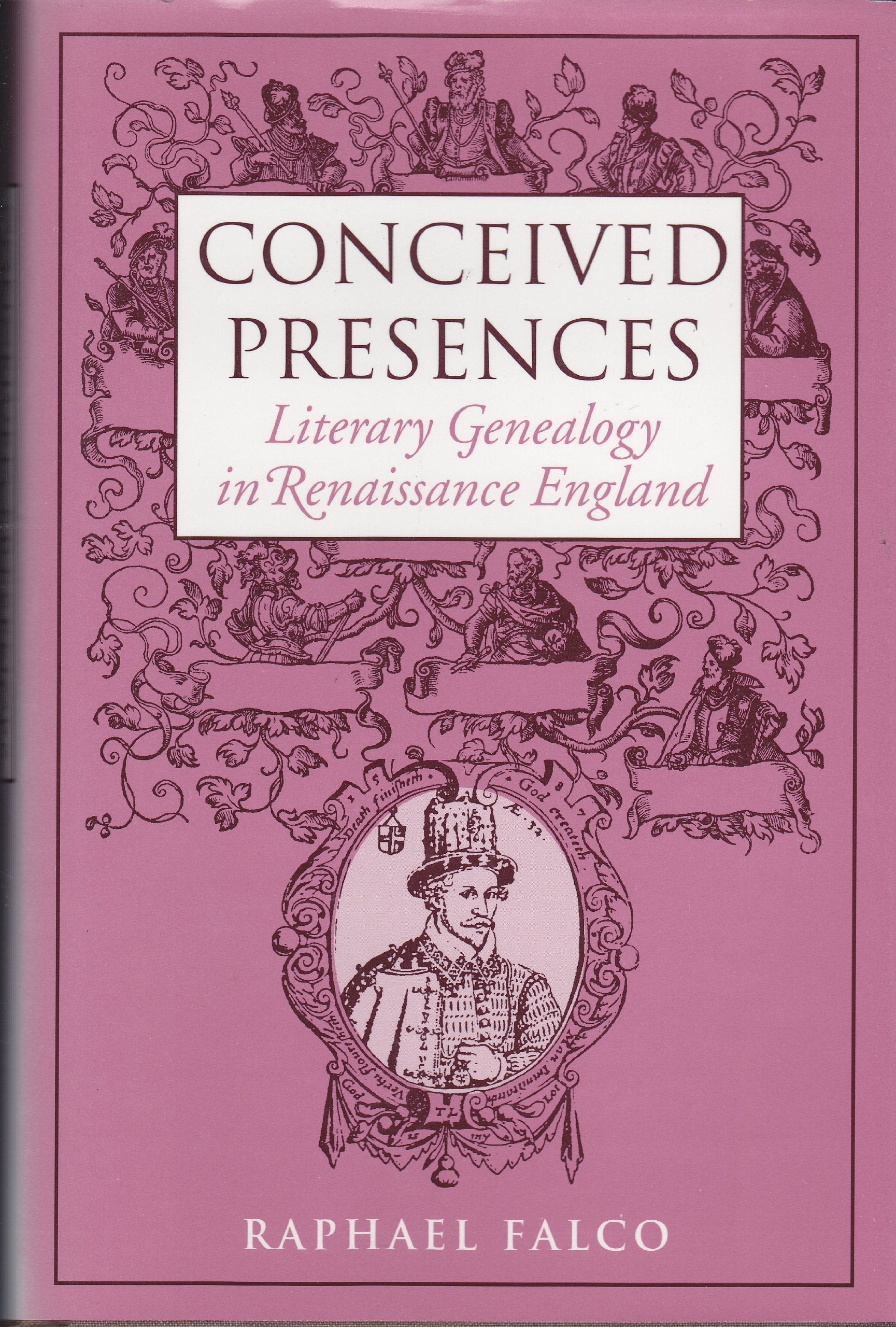
This study explores the manner in which English Renaissance poets invented a poetic genealogy. The title comes from Franciscus Junius, who in 1638 used the term "conceived presence" to describe the ancient masters whose paintings had been lost but who nonetheless remained important forebears of the tradition of visual art.Raphael Falco applies the notion of "conceived presences" to late sixteenthcentury poets intent on establishing a national literature. They too conceived the presence of the forebears, both ancient and modern. As Falco demonstrates, Elizabethan and Jacobean poets saw Philip Sidney as their most important modern precursor and placed him at the root of their family tree.The book's introduction examines the use of heraldic and genealogical rhetoric in relation to theories of the origins of poetry. Subsequent chapters provide close studies of Sidney, Edmund Spenser, Ben Jonson, and John Milton. Falco demonstrates a thorough knowledge of the most recent Renaissance criticism, both historicist and linguistic. His book reveals a promising synthesis of critical approaches, a New Humanism in which theoretical perspectives and philological research combine to shed light on the aesthetic ambitions of English Renaissance poets.
⚠️ WARNING (California Proposition 65):
This product may contain chemicals known to the State of California to cause cancer,
birth defects, or other reproductive harm.
For MAP (Minimum Advertised Price) violations and Intellectual Property (IP) or Trademark concerns, please contact:
support@ergodebooks.com
⚠️ California Proposition 65 Warning: Some products sold on this website may expose you to chemicals known to the State of California to cause cancer, birth defects, or other reproductive harm. For more information, visit www.P65Warnings.ca.gov.