If you have any questions, you are always welcome to contact us. We'll get back to you as soon as possible, withing 24 hours on weekdays.
Customer service
All questions about your order, return and delivery must be sent to our customer service team by e-mail at yourstore@yourdomain.com
Sale & Press
If you are interested in selling our products, need more information about our brand or wish to make a collaboration, please contact us at press@yourdomain.com
Help
If you have any questions, you are always welcome to contact us. We'll get back to you as soon as possible, withing 24 hours on weekdays.
Customer service
All questions about your order, return and delivery must be sent to our customer service team by e-mail at yourstore@yourdomain.com
Sale & Press
If you are interested in selling our products, need more information about our brand or wish to make a collaboration, please contact us at press@yourdomain.com
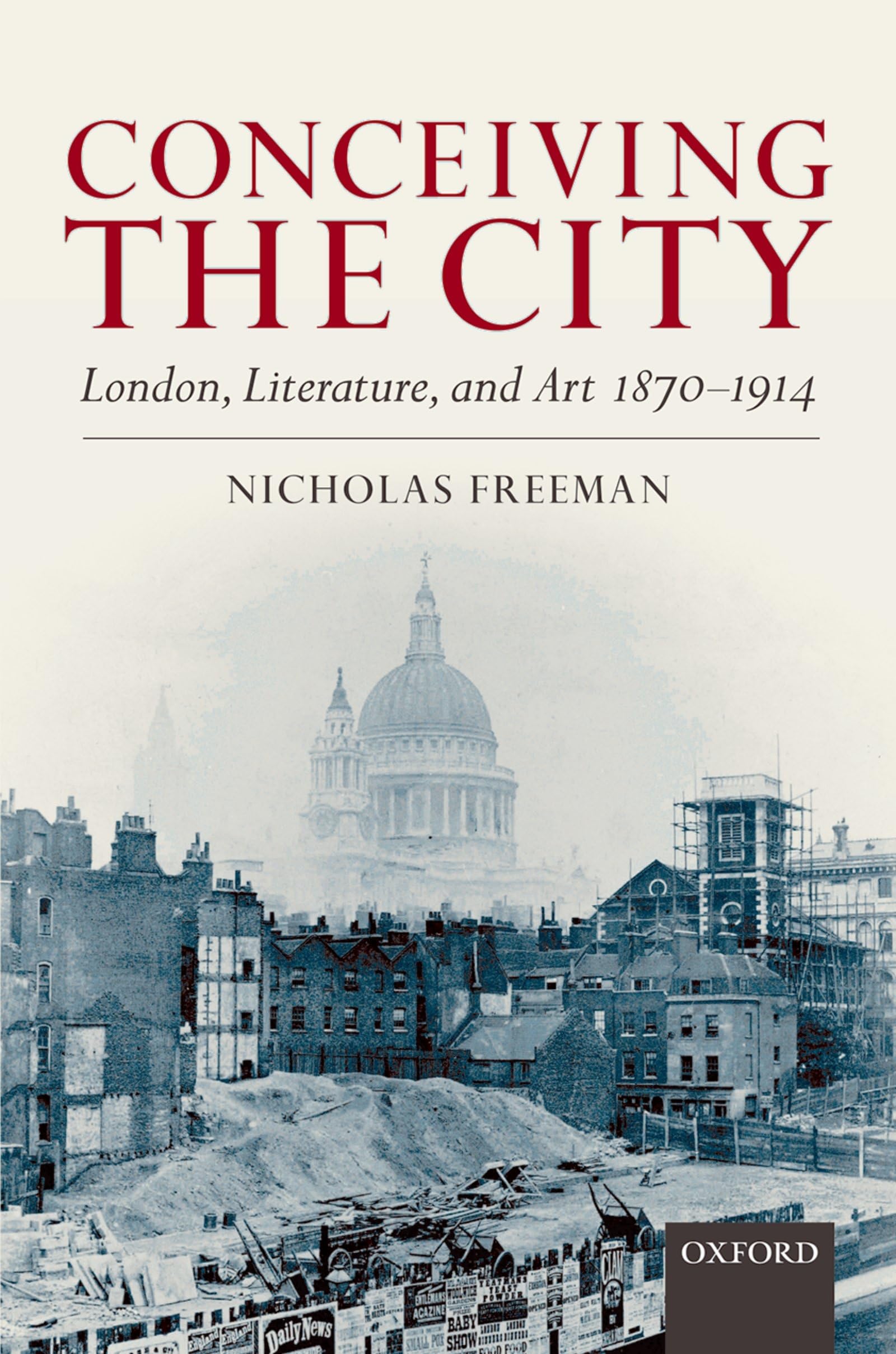
Conceiving the City is an innovative study of the ways in which a generation of lateVictorian novelists, poets, painters, and theoreticians attempted to represent London in literature and art. Breaking away from the language and style of Dickens and the static panorama paintings of William Powell Frith, major figures such as Henry James and J. M. Whistler, and, crucially, lesscelebrated authors such as Arthur Machen, Edwin Pugh, and George Egerton bent realism into exciting new shapes. In the naturalism of George Gissing and Arthur Morrison, the fragmentary impressions of Ford Madox Ford, and the brooding mystery of Alvin Langdon Coburn's photogravures, London emerged as a focus for dynamic, explicitly modern art. Although many of these insights would be dismissed or at least downplayed by subsequent generations, the ideas evolved during the period from 1870 to 1914 anticipate not only the work of high modernists such as Eliot and Woolf, but also that of later urban theorists such as Foucault and de Certeau, and the novels and travelogues of contemporary London writers Peter Ackroyd and Iain Sinclair. Nicholas Freeman recovers a sense of lateVictorian London as a subject for dynamic theoretical and aesthetic experiments, and shows, in stimulating analyses of Conan Doyle, H. G. Wells, Arthur Symons, and others how much of our understanding of urban space we owe to eminent (and not so eminent) Victorian figures. Written in a clear and accessible style, the book restores a muchneeded historical perspective to our engagement with the metropolis.
⚠️ WARNING (California Proposition 65):
This product may contain chemicals known to the State of California to cause cancer,
birth defects, or other reproductive harm.
For MAP (Minimum Advertised Price) violations and Intellectual Property (IP) or Trademark concerns, please contact:
support@ergodebooks.com
⚠️ California Proposition 65 Warning: Some products sold on this website may expose you to chemicals known to the State of California to cause cancer, birth defects, or other reproductive harm. For more information, visit www.P65Warnings.ca.gov.