
Title
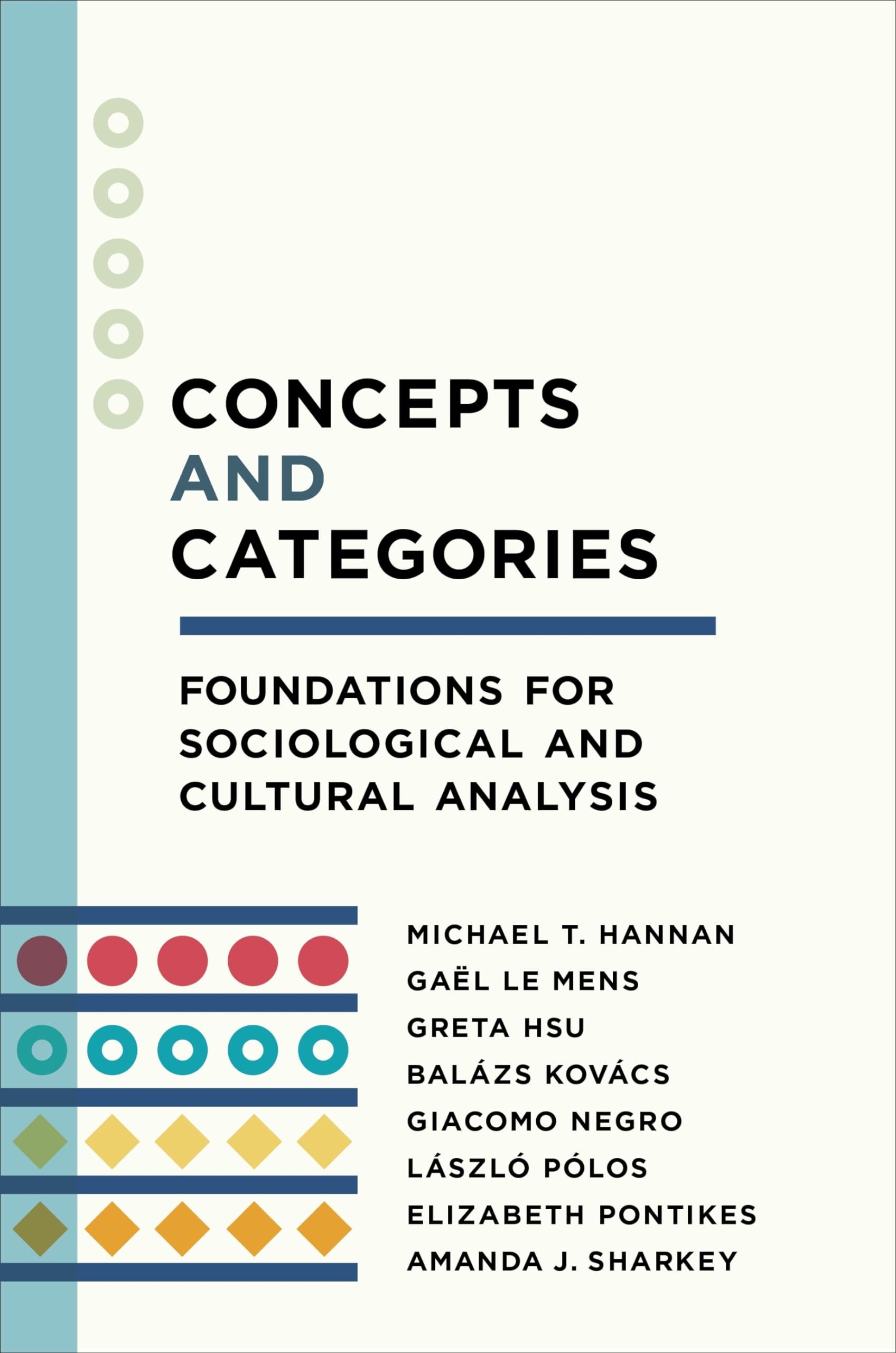
Concepts And Categories: Foundations For Sociological And Cultural Analysis (The Middle Range Series),Used
Sold by Ergodebooks, an authorized reseller.
Returns accepted within 30 days | support@ergodebooks.com
Shipping Information
- Free Standard Shipping — United States only
- Processing Time: 3–5 business days
- Estimated Delivery: 6–10 business days after dispatch
- Double-boxed, fully insured & discreetly packaged
- Tracking number sent via email once dispatched
Returns & Refund
Returns accepted within 30 days of delivery.
Damaged or Defective Item
Free return shipping + replacement or full refund
Wrong Item Received
Free return shipping + replacement or full refund
Change of Mind
Return shipping at customer's expense · 25% restocking fee applies
Payment Option

Why do people like books, music, or movies that adhere consistently to genre conventions? Why is it hard for politicians to take positions that cross ideological boundaries? Why do we have dramatically different expectations of companies that are categorized as social media platforms as opposed to news media sites? The answers to these questions require an understanding of how people use basic concepts in their everyday lives to give meaning to objects, other people, and social situations and actions.In this book, a team of sociologists presents a groundbreaking model of concepts and categorization that can guide sociological and cultural analysis of a wide variety of social situations. Drawing on research in various fields, including cognitive science, computational linguistics, and psychology, the book develops an innovative view of concepts. It argues that concepts have meanings that are probabilistic rather than sharp, occupying fuzzy, overlapping positions in a conceptual space. Measurements of distances in this space reveal our mental representations of categories. Using this model, important yet commonplace phenomena such as our routine buying decisions can be quantified in terms of the cognitive distance between concepts. Concepts and Categories provides an essential set of formal theoretical tools and illustrates their application using an eclectic set of methodologies, from microlevel controlled experiments to macrolevel language processing. It illuminates how explicit attention to concepts and categories can give us a new understanding of everyday situations and interactions.
⚠️ WARNING (California Proposition 65):
This product may contain chemicals known to the State of California to cause cancer, birth defects, or other reproductive harm.
For more information, please visit www.P65Warnings.ca.gov.