
Title
Conceptual Spaces: The Geometry of Thought (Bradford Books),Used
Sold by Ergodebooks, an authorized reseller.
Returns accepted within 30 days | support@ergodebooks.com
Shipping Information
- Free Standard Shipping — United States only
- Processing Time: 3–5 business days
- Estimated Delivery: 6–10 business days after dispatch
- Double-boxed, fully insured & discreetly packaged
- Tracking number sent via email once dispatched
Returns & Refund
Returns accepted within 30 days of delivery.
Damaged or Defective Item
Free return shipping + replacement or full refund
Wrong Item Received
Free return shipping + replacement or full refund
Change of Mind
Return shipping at customer's expense · 25% restocking fee applies
Payment Option

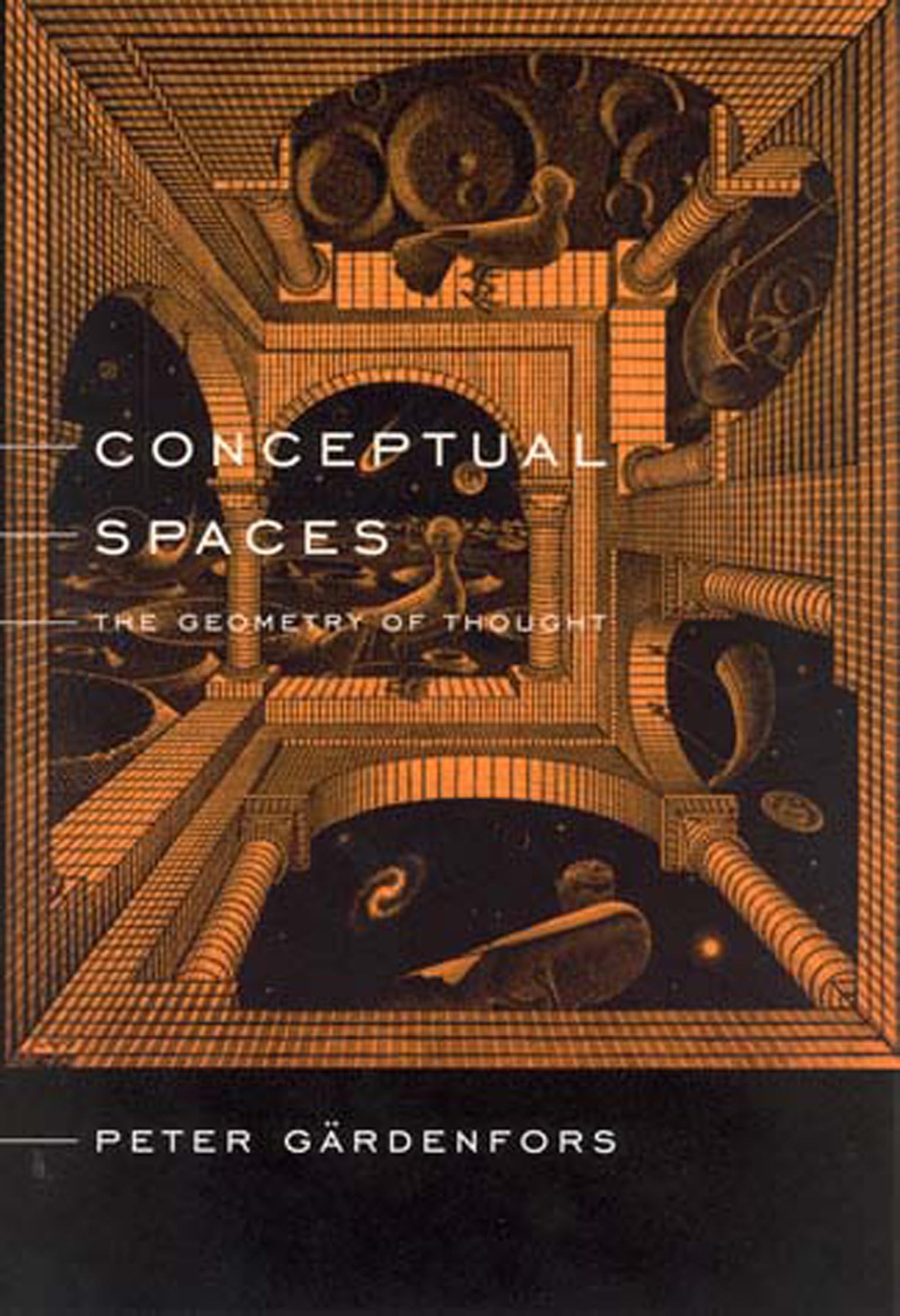
Within cognitive science, two approaches currently dominate the problem of modeling representations. The symbolic approach views cognition as computation involving symbolic manipulation. Connectionism, a special case of associationism, models associations using artificial neuron networks. Peter Grdenfors offers his theory of conceptual representations as a bridge between the symbolic and connectionist approaches.Symbolic representation is particularly weak at modeling concept learning, which is paramount for understanding many cognitive phenomena. Concept learning is closely tied to the notion of similarity, which is also poorly served by the symbolic approach. Grdenfors's theory of conceptual spaces presents a framework for representing information on the conceptual level. A conceptual space is built up from geometrical structures based on a number of quality dimensions. The main applications of the theory are on the constructive side of cognitive science: as a constructive model the theory can be applied to the development of artificial systems capable of solving cognitive tasks. Grdenfors also shows how conceptual spaces can serve as an explanatory framework for a number of empirical theories, in particular those concerning concept formation, induction, and semantics. His aim is to present a coherent research program that can be used as a basis for more detailed investigations.
⚠️ WARNING (California Proposition 65):
This product may contain chemicals known to the State of California to cause cancer, birth defects, or other reproductive harm.
For more information, please visit www.P65Warnings.ca.gov.