
Title
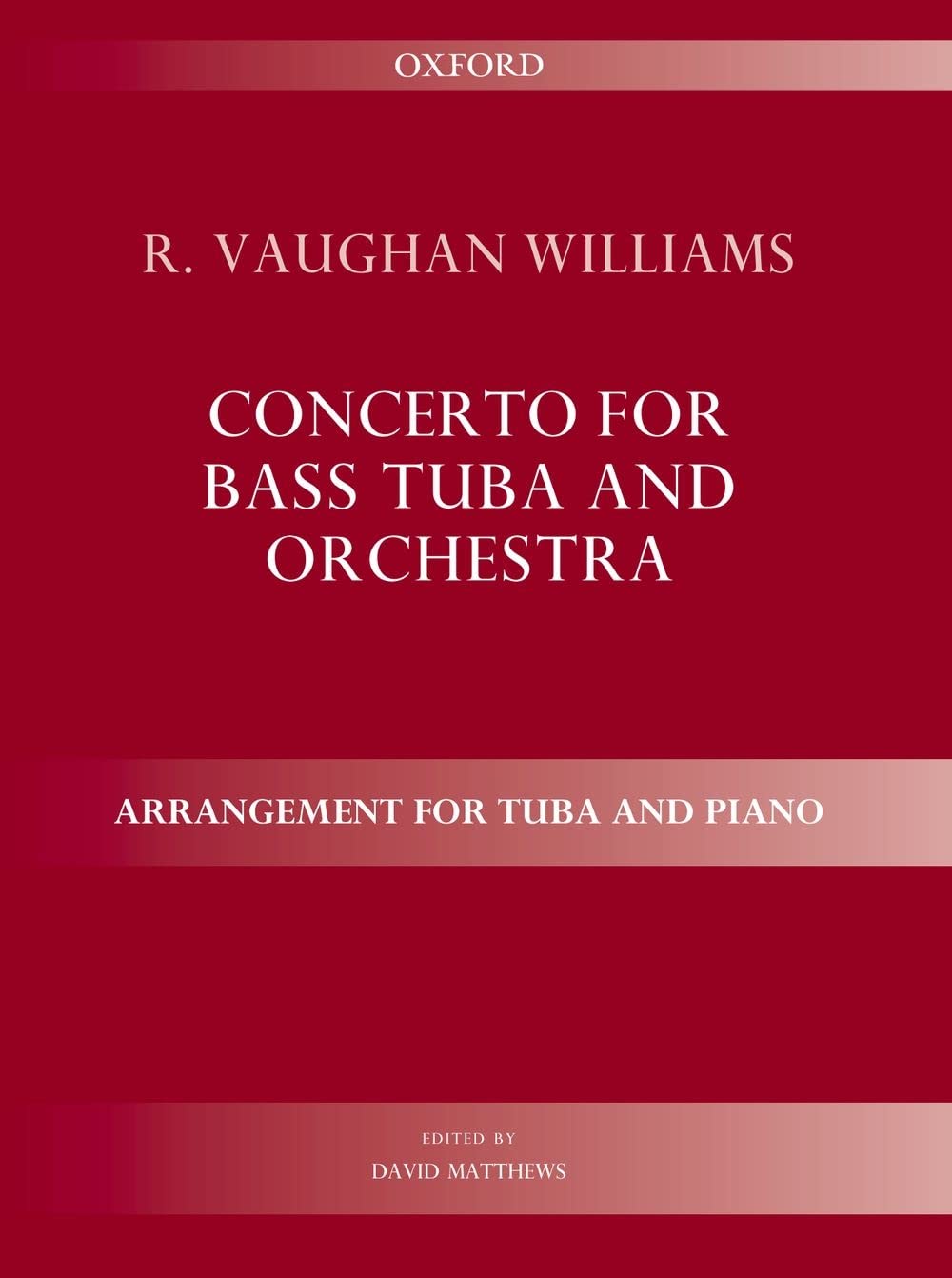
Oxford University Press Concerto for Bass Tuba and Orchestra - Musical Score
Sold by Ergodebooks, an authorized reseller.
Returns accepted within 30 days | support@ergodebooks.com
Shipping Information
- Free Standard Shipping — United States only
- Processing Time: 3–5 business days
- Estimated Delivery: 6–10 business days after dispatch
- Double-boxed, fully insured & discreetly packaged
- Tracking number sent via email once dispatched
Returns & Refund
Returns accepted within 30 days of delivery.
Damaged or Defective Item
Free return shipping + replacement or full refund
Wrong Item Received
Free return shipping + replacement or full refund
Change of Mind
Return shipping at customer's expense · 25% restocking fee applies
Payment Option

The Concerto for Bass Tuba and Orchestra is a landmark composition, originally composed in 1953-4 to commemorate the 50th anniversary of the London Symphony Orchestra (LSO). Written for the principal tuba player, Philip Catelinet, this concerto is the first major work dedicated to the bass tuba, establishing itself as a quintessential piece in the brass repertoire.
This new edition of the concerto is meticulously crafted from all extant sources, providing an authoritative version for performers and scholars alike. It includes comprehensive textual notes and an insightful discussion of the editorial methods used in its preparation. Key enhancements to this edition involve the incorporation of two distinct sets of phrasing for the Romanza, one derived from the initial publication and influenced by Catelinet, while the other is based on Vaughan Williams's manuscript. Additionally, the original cadenza for the first movement has been reinstated, adding historical depth and performance context. The tuba and piano arrangement has been revised, reflecting extensive research conducted by David Matthews, ensuring clarity and precision in performance.
Key Features:- First major concerto specifically composed for the bass tuba, ensuring its significance in brass music.
- New edition based on all available sources, guaranteeing accuracy and fidelity to the original work.
- Includes detailed textual notes and editorial discussions for enhanced understanding.
- Features two sets of phrasing for the Romanza, providing performers with interpretative options.
- Restores the original cadenza to the first movement, enriching the performance experience.
- Updated tuba and piano arrangement, informed by contemporary research for improved playability.
- Published by Oxford University Press, USA, a reputable source in classical music publishing.
This edition of the Concerto for Bass Tuba and Orchestra is ideal for professional tuba players, music educators, and students seeking to deepen their understanding of brass repertoire. Its scholarly approach and historical authenticity make it a valuable resource for performance and study, ensuring that it remains relevant for future generations of musicians. This work not only celebrates the bass tuba's unique voice but also enhances the overall orchestral experience.
⚠️ WARNING (California Proposition 65):
This product may contain chemicals known to the State of California to cause cancer, birth defects, or other reproductive harm.
For more information, please visit www.P65Warnings.ca.gov.
- Q: How many pages does the Concerto for Bass Tuba and Orchestra have? A: This edition contains thirty-six pages. It includes the full score and essential notes for performance.
- Q: What is the binding type of this music score? A: The binding type is sheet music. This makes it easy to handle during practice and performances.
- Q: What are the dimensions of the sheet music? A: The dimensions are approximately twelve inches in length, nine inches in height, and one-tenth of an inch in width. These measurements ensure the score is portable and easy to store.
- Q: Who is the author of this concerto? A: The concerto was composed by Ralph Vaughan Williams. He is a renowned composer known for his contributions to classical music.
- Q: Is this concerto suitable for beginners? A: Yes, this concerto can be suitable for intermediate players. While the piece has complexity, it offers valuable learning opportunities for developing musicians.
- Q: How do I play the Concerto for Bass Tuba and Orchestra? A: To play this concerto, follow the score provided. It is designed for bass tuba with orchestral accompaniment, enhancing performance skills.
- Q: How should I store the sheet music? A: Store the sheet music flat or in a protective folder. Keeping it dry and away from direct sunlight will help preserve its quality.
- Q: Is there any special care needed for this music score? A: No special care is required. Just handle it carefully to avoid tears and keep it in a safe, dry place.
- Q: Can I return the sheet music if I don't like it? A: Yes, you can return the sheet music within a specified period if it is unused. Check the return policy for exact details.
- Q: What if the music arrives damaged? A: If the music arrives damaged, you should contact customer support for assistance. They can guide you through the return or exchange process.
- Q: How does this concerto compare to other works for tuba? A: This concerto is unique as it was the first major work written for bass tuba. It stands out among other compositions in its genre.
- Q: Is the orchestral arrangement included in this edition? A: Yes, the orchestral arrangement is included. It has been revised based on recent research to ensure accuracy.
- Q: What notable features are in this edition? A: This edition includes two sets of phrasing for the Romanza and the original cadenza for the first movement. These additions enhance the performance experience.
- Q: Does this score include editorial notes? A: Yes, there are full textual notes and a discussion of the editorial method included. This provides valuable context for performers.
- Q: Is this concerto recognized in classical music? A: Yes, it is recognized as an outstanding work for the bass tuba. It remains a significant piece in the classical repertoire.