
Title
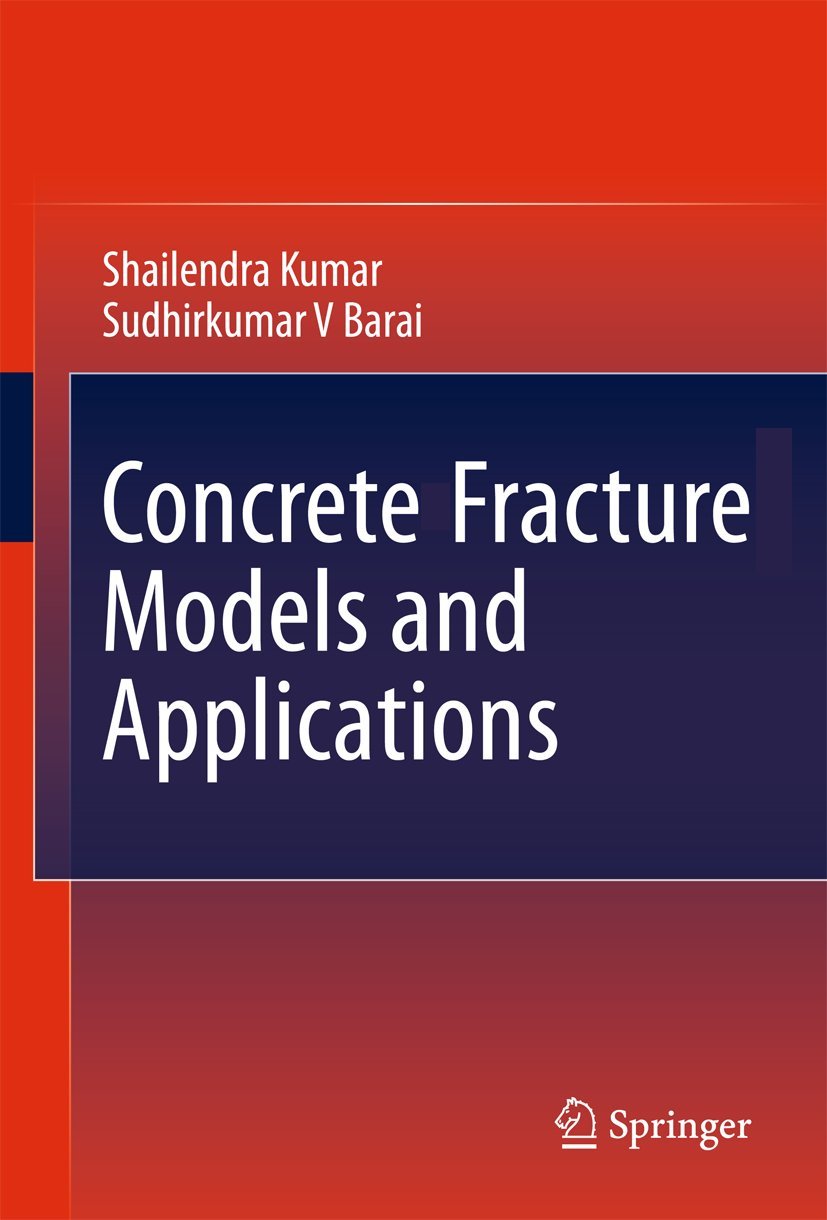
Concrete Fracture Models and Applications,Used
Sold by Ergodebooks, an authorized reseller.
Returns accepted within 30 days | support@ergodebooks.com
Shipping Information
- Free Standard Shipping — United States only
- Processing Time: 3–5 business days
- Estimated Delivery: 6–10 business days after dispatch
- Double-boxed, fully insured & discreetly packaged
- Tracking number sent via email once dispatched
Returns & Refund
Returns accepted within 30 days of delivery.
Damaged or Defective Item
Free return shipping + replacement or full refund
Wrong Item Received
Free return shipping + replacement or full refund
Change of Mind
Return shipping at customer's expense · 25% restocking fee applies
Payment Option

Cementitious materials, rocks and fibrereinforced composites commonly termed as quasibrittle, need a different fracture mechanics approach to model the crack propagation study because of the presence of significant size of fracture process zone ahead of the cracktip. Recent studies show that concrete structures manifest three important stages in fracture process: crack initiation, stable crack propagation and unstable fracture or failure. Fracture Mechanics concept can better explain the above various stages including the concepts of ductility, sizeeffect, strain softening and postcracking behavior of concrete and concrete structures.The book presents a basic introduction on the various nonlinear concrete fracture models considering the respective fracture parameters. To this end, a thorough stateoftheart review on various aspects of the material behavior and development of different concrete fracture models is presented. The development of cohesive crack model for standard test geometries using commonly used softening functions is shown and extensive studies on the behavior of cohesive crack fracture parameters are also carried out. The subsequent chapter contains the extensive study on the doubleK and doubleG fracture parameters in which some recent developments on the related fracture parameters are illustrated including introduction of weight function method to DoubleK Fracture Model and formulization of sizeeffect behavior of the doubleK fracture parameters. The application of weight function approach for determining of the KRcurve associated with cohesive stress distribution in the fracture process zone is also presented. Available test data are used to validate the new approach. Further, effect of specimen geometry, loading condition, sizeeffect and softening function on various fracture parameters is investigated. Towards the end, a comparative study between different fracture parameters obtained from various models is presented.
⚠️ WARNING (California Proposition 65):
This product may contain chemicals known to the State of California to cause cancer, birth defects, or other reproductive harm.
For more information, please visit www.P65Warnings.ca.gov.