If you have any questions, you are always welcome to contact us. We'll get back to you as soon as possible, withing 24 hours on weekdays.
Customer service
All questions about your order, return and delivery must be sent to our customer service team by e-mail at yourstore@yourdomain.com
Sale & Press
If you are interested in selling our products, need more information about our brand or wish to make a collaboration, please contact us at press@yourdomain.com
Help
If you have any questions, you are always welcome to contact us. We'll get back to you as soon as possible, withing 24 hours on weekdays.
Customer service
All questions about your order, return and delivery must be sent to our customer service team by e-mail at yourstore@yourdomain.com
Sale & Press
If you are interested in selling our products, need more information about our brand or wish to make a collaboration, please contact us at press@yourdomain.com
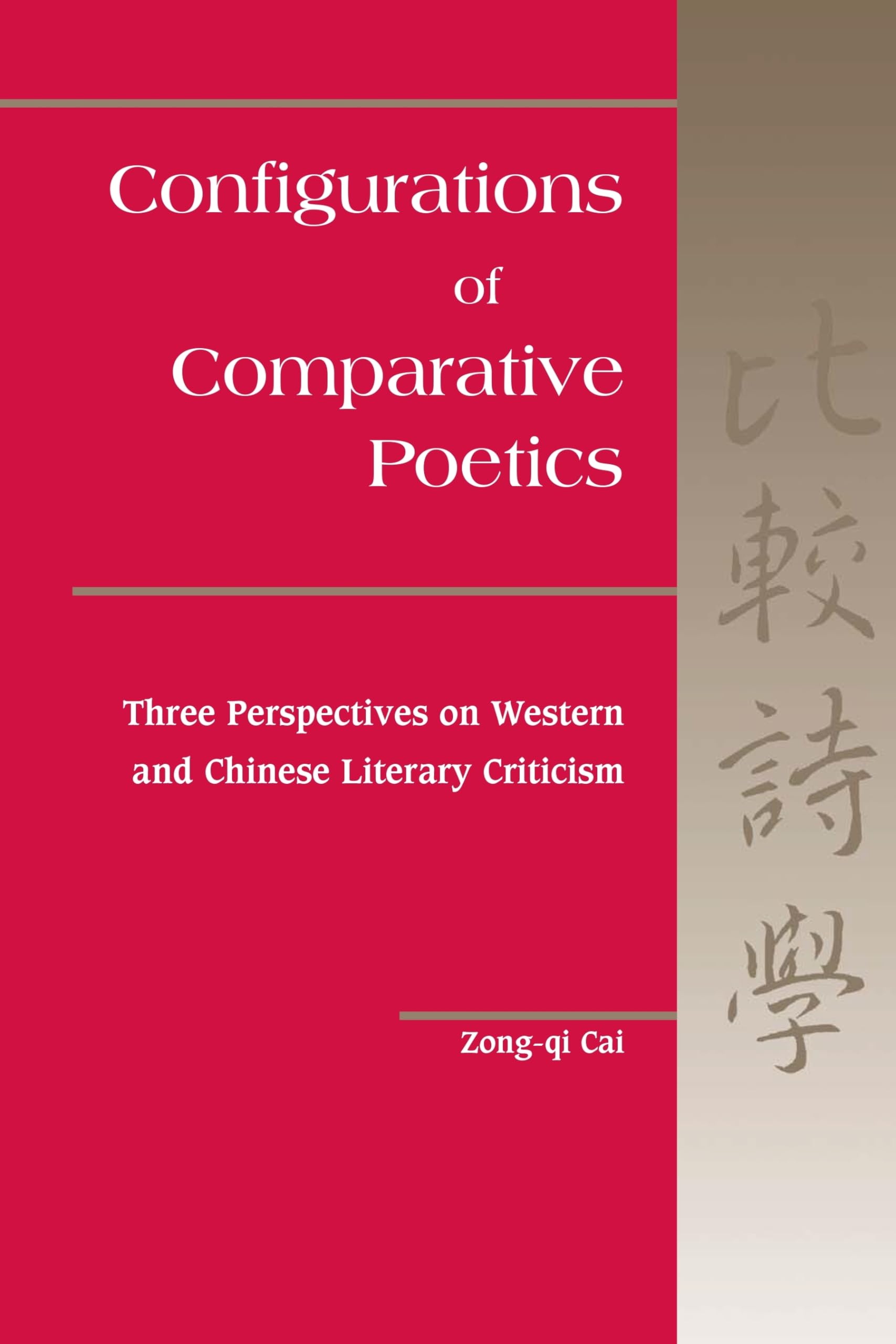
This comprehensive comparative study of Western and Chinese poetics begins with broad examinations of the two traditions over more than two and a half millennia. From these parallel surveys, a series of important theoretical questions arises: How do Western and Chinese critics conceptualize the nature, origin, and function of literature? What are the fundamental differences, if any, in their ways of thinking about literature? Can we account for these differences by examining Western truthbased and Chinese processbased cosmological paradigms? What are the major distinctive concepts of literature developed within Western and Chinese poetics? How have these concepts impacted the development of the two traditions at various times? After considering a wide range of major critical texts, Configurations of Comparative Poetics presents bold and cogent answers to these questions while shedding light on the distinctive orientations of Western and Chinese poetics.The second half of the book features four comparative case studies: Plato and Confucius on poetry; Wordsworth and Liu Xie on the creative process; the twentiethcentury 'Imagists' and their earlier Chinese counterparts on the relationship of the Chinese written character to poetics; and Derrida and the Madhyamika Buddhists on language and ontotheology. The author not only identifies an array of critical concerns shared by Western and Chinese critics, but also differentiates the conceptual models used by each and traces them to cosmological paradigms.
⚠️ WARNING (California Proposition 65):
This product may contain chemicals known to the State of California to cause cancer,
birth defects, or other reproductive harm.
For MAP (Minimum Advertised Price) violations and Intellectual Property (IP) or Trademark concerns, please contact:
support@ergodebooks.com
⚠️ California Proposition 65 Warning: Some products sold on this website may expose you to chemicals known to the State of California to cause cancer, birth defects, or other reproductive harm. For more information, visit www.P65Warnings.ca.gov.