If you have any questions, you are always welcome to contact us. We'll get back to you as soon as possible, withing 24 hours on weekdays.
Customer service
All questions about your order, return and delivery must be sent to our customer service team by e-mail at yourstore@yourdomain.com
Sale & Press
If you are interested in selling our products, need more information about our brand or wish to make a collaboration, please contact us at press@yourdomain.com
Help
If you have any questions, you are always welcome to contact us. We'll get back to you as soon as possible, withing 24 hours on weekdays.
Customer service
All questions about your order, return and delivery must be sent to our customer service team by e-mail at yourstore@yourdomain.com
Sale & Press
If you are interested in selling our products, need more information about our brand or wish to make a collaboration, please contact us at press@yourdomain.com
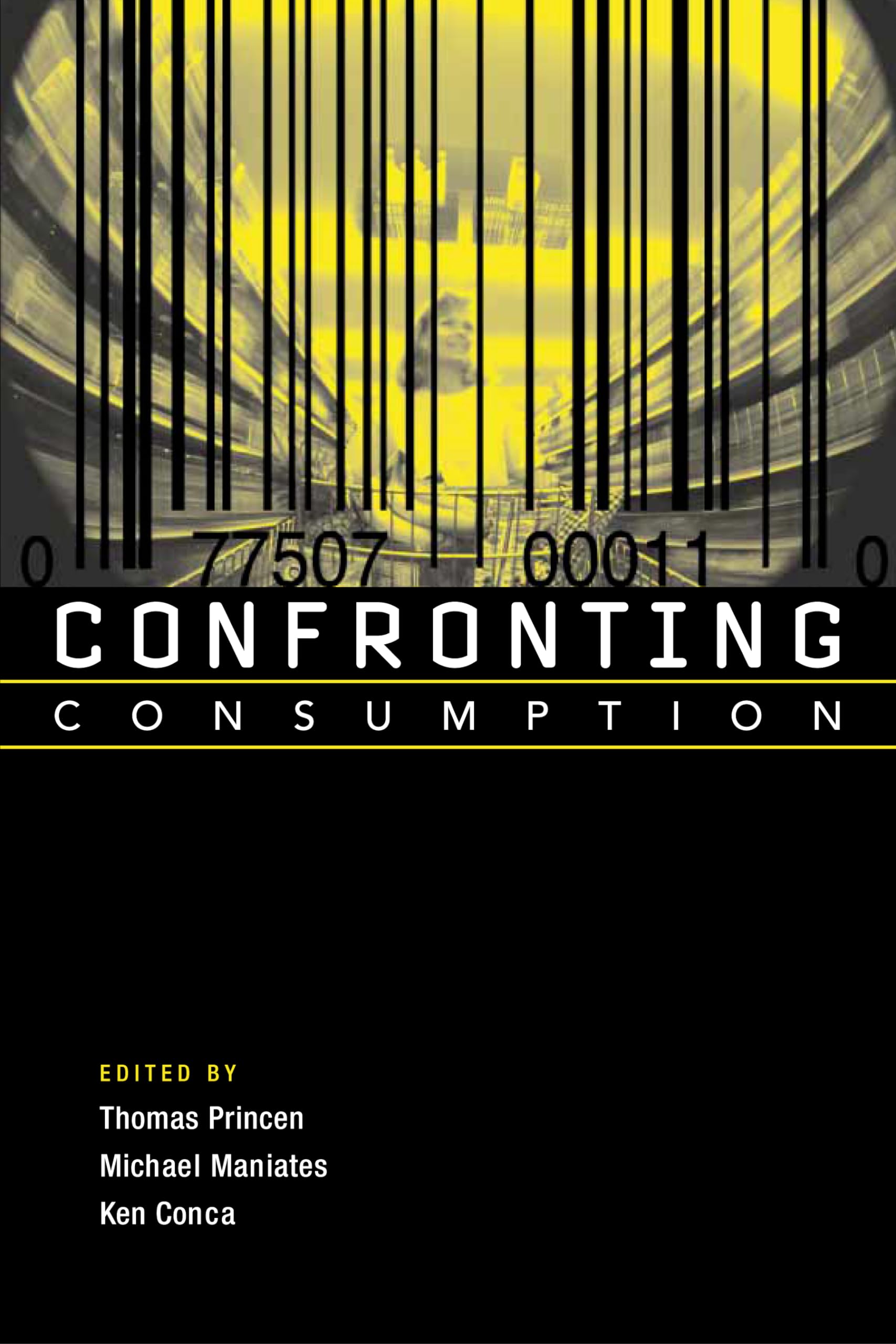
Comforting terms such as sustainable development and green production frame environmental debate by stressing technology (not green enough), economic growth (not enough in the right places), and population (too large). Concern about consumption emerges, if at all, in benign ways; as calls for green purchasing or more recycling, or for small changes in production processes. Many academics, policymakers, and journalists, in fact, accept the economists' view of consumption as nothing less than the purpose of the economy. Yet many people have a troubled, intuitive understanding that tinkering at the margins of production and purchasing will not put society on an ecologically and socially sustainable path.Confronting Consumption places consumption at the center of debate by conceptualizing the consumption problem and documenting diverse efforts to confront it. In Part 1, the book frames consumption as a problem of political and ecological economy, emphasizing core concepts of individualization and commoditization. Part 2 develops the idea of distancing and examines transnational chains of consumption in the context of economic globalization. Part 3 describes citizen action through local currencies, home power, voluntary simplicity, adbusting, and product certification. Together, the chapters propose cautious consuming and better producing as an activist and policy response to environmental problems. The book concludes that confronting consumption must become a driving focus of contemporary environmental scholarship and activism.
⚠️ WARNING (California Proposition 65):
This product may contain chemicals known to the State of California to cause cancer,
birth defects, or other reproductive harm.
For MAP (Minimum Advertised Price) violations and Intellectual Property (IP) or Trademark concerns, please contact:
support@ergodebooks.com
⚠️ California Proposition 65 Warning: Some products sold on this website may expose you to chemicals known to the State of California to cause cancer, birth defects, or other reproductive harm. For more information, visit www.P65Warnings.ca.gov.