If you have any questions, you are always welcome to contact us. We'll get back to you as soon as possible, withing 24 hours on weekdays.
Customer service
All questions about your order, return and delivery must be sent to our customer service team by e-mail at yourstore@yourdomain.com
Sale & Press
If you are interested in selling our products, need more information about our brand or wish to make a collaboration, please contact us at press@yourdomain.com
Help
If you have any questions, you are always welcome to contact us. We'll get back to you as soon as possible, withing 24 hours on weekdays.
Customer service
All questions about your order, return and delivery must be sent to our customer service team by e-mail at yourstore@yourdomain.com
Sale & Press
If you are interested in selling our products, need more information about our brand or wish to make a collaboration, please contact us at press@yourdomain.com
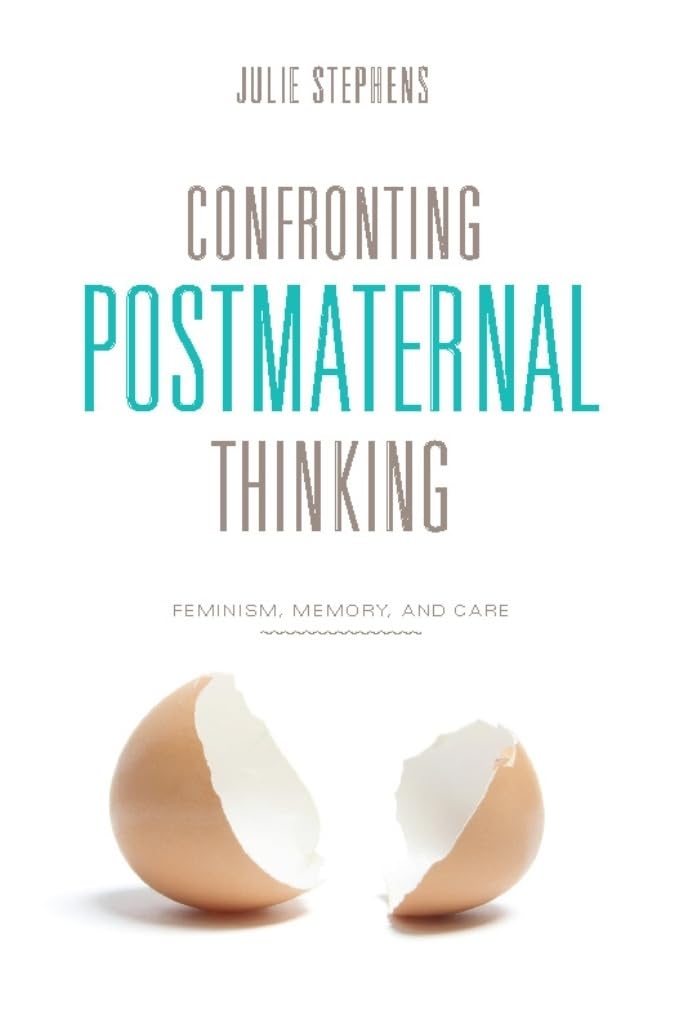
There is a deep cultural anxiety around public expressions of maternalism and the application of maternal values to society as a whole. Julie Stephens examines why postmaternal thinking has become so influential in recent decades and why there has been a growing unease with maternal forms of subjectivity and maternalist perspectives. In moving beyond policy definitions, which emphasize the priority given to women's claims as employees over their political claims as mothers, Stephens details an elaborate process of cultural forgetting that has accompanied this repudiation of the maternal.Reclaiming an alternative feminist position through an investigation of oral history, life narratives, Web blogs, and other rich and varied sources, Stephens confronts the core claims of postmaternal thought and challenges dominant representations of feminism as having forgotten motherhood. Deploying the interpretive framework of memory studies, she examines the political structures of forgetting surrounding the maternal and the weakening of nurture and care in the public domain. She views the promotion of an illusory, selfsufficient individualism as a form of social unmothering that is profoundly connected to this ethos. In rejecting both traditional maternalism and the new postmaternalism, Stephens challenges prevailing paradigms and makes way for an alternative feminist maternalism centering on a politics of care.
⚠️ WARNING (California Proposition 65):
This product may contain chemicals known to the State of California to cause cancer,
birth defects, or other reproductive harm.
For MAP (Minimum Advertised Price) violations and Intellectual Property (IP) or Trademark concerns, please contact:
support@ergodebooks.com
⚠️ California Proposition 65 Warning: Some products sold on this website may expose you to chemicals known to the State of California to cause cancer, birth defects, or other reproductive harm. For more information, visit www.P65Warnings.ca.gov.