If you have any questions, you are always welcome to contact us. We'll get back to you as soon as possible, withing 24 hours on weekdays.
Customer service
All questions about your order, return and delivery must be sent to our customer service team by e-mail at yourstore@yourdomain.com
Sale & Press
If you are interested in selling our products, need more information about our brand or wish to make a collaboration, please contact us at press@yourdomain.com
Help
If you have any questions, you are always welcome to contact us. We'll get back to you as soon as possible, withing 24 hours on weekdays.
Customer service
All questions about your order, return and delivery must be sent to our customer service team by e-mail at yourstore@yourdomain.com
Sale & Press
If you are interested in selling our products, need more information about our brand or wish to make a collaboration, please contact us at press@yourdomain.com
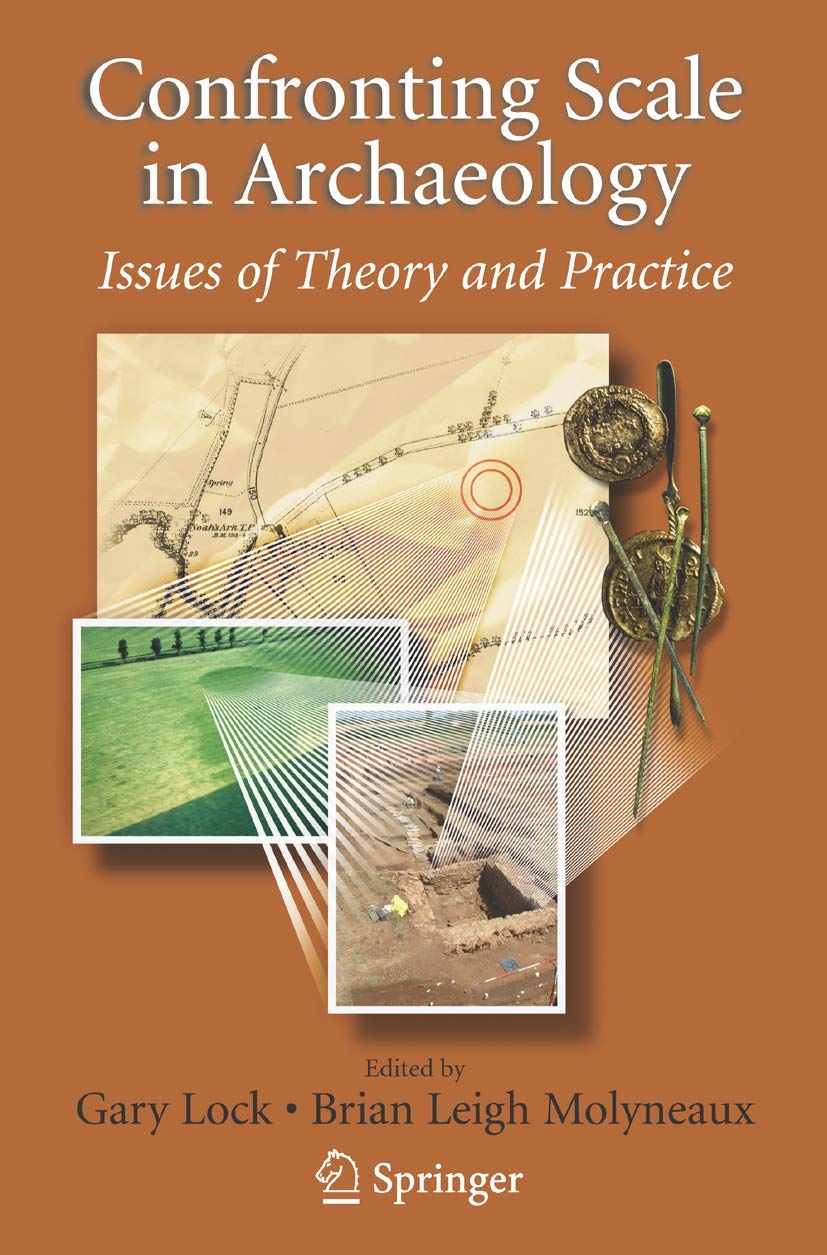
Archaeological analysis operates on a continuum of scale from the microscopic analysis of a single artifact to regional interpretations of cultural adaptations over thousands of years. A common assumption is that shifting from one scale to another in space and time is a seamless process. Scale in this sense is invisible, a mere mathematical abstraction. Yet, issues of scale exist at the fundamental level of archaeological interpretation. The traditional analytical debate in archaeology between advocates of the socalled processual and postprocessual approaches ranges around the question of scales of reasoning. At the one extreme, remote observation and the ability to interpret events and processes over vast reaches of time and space are possible, because the analysis concerns the hopedfor elucidation of general cultural processes; at the other, they are not, as both analyst and subject are isolated in their own subjectivities. Analysts occupying the middle ground often advocate a multidimensional or holistic approach, which involves multiple scales of analysis and interpretation. As the battleground tends to be the degree to which specific datasets and analytical processes justify the interpretations put forth, archaeologists rarely dress issues relating to the profound shifts in the scale of visualization necessary in all approaches to the past. And why should they? Ignoring scale is the concession archaeology makes to interpretation.
⚠️ WARNING (California Proposition 65):
This product may contain chemicals known to the State of California to cause cancer,
birth defects, or other reproductive harm.
For MAP (Minimum Advertised Price) violations and Intellectual Property (IP) or Trademark concerns, please contact:
support@ergodebooks.com
⚠️ California Proposition 65 Warning: Some products sold on this website may expose you to chemicals known to the State of California to cause cancer, birth defects, or other reproductive harm. For more information, visit www.P65Warnings.ca.gov.