If you have any questions, you are always welcome to contact us. We'll get back to you as soon as possible, withing 24 hours on weekdays.
Customer service
All questions about your order, return and delivery must be sent to our customer service team by e-mail at yourstore@yourdomain.com
Sale & Press
If you are interested in selling our products, need more information about our brand or wish to make a collaboration, please contact us at press@yourdomain.com
Help
If you have any questions, you are always welcome to contact us. We'll get back to you as soon as possible, withing 24 hours on weekdays.
Customer service
All questions about your order, return and delivery must be sent to our customer service team by e-mail at yourstore@yourdomain.com
Sale & Press
If you are interested in selling our products, need more information about our brand or wish to make a collaboration, please contact us at press@yourdomain.com
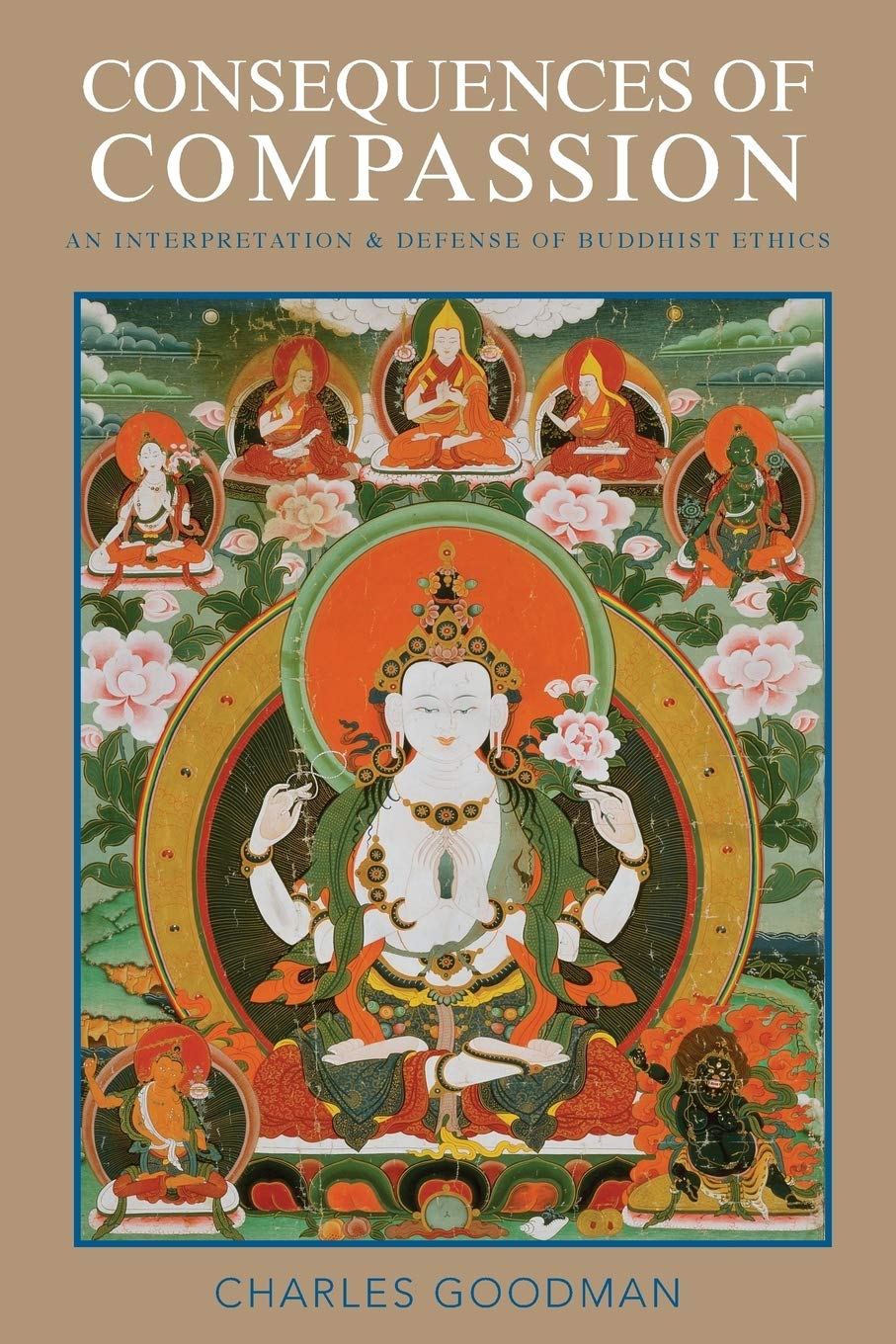
To many Westerners, the most appealing teachings of the Buddhist tradition pertain to ethics. Many readers have drawn inspiration from Buddhism's emphasis on compassion, nonviolence, and tolerance, its concern for animals, and its models of virtue and selfcultivation. There has been, however, controversy and confusion about which Western ethical theories resemble Buddhist views and in what respects. In this book, Charles Goodman illuminates the relations between Buddhist concepts and Western ethical theories. Every version of Buddhist ethics, says Goodman, takes the welfare of sentient beings to be the only source of moral obligations. Buddhist ethics can thus be said to be based on compassion in the sense of a motivation to pursue the welfare of others. On this interpretation, the fundamental basis of the various forms of Buddhist ethics is the same as that of the welfarist members of the family of ethical theories that analytic philosophers call 'consequentialism.' Goodman uses this hypothesis to illuminate a variety of questions. He examines the three types of compassion practiced in Buddhism and argues for their implications for important issues in applied ethics, especially the justification of punishment and the question of equality.
⚠️ WARNING (California Proposition 65):
This product may contain chemicals known to the State of California to cause cancer,
birth defects, or other reproductive harm.
For MAP (Minimum Advertised Price) violations and Intellectual Property (IP) or Trademark concerns, please contact:
support@ergodebooks.com
⚠️ California Proposition 65 Warning: Some products sold on this website may expose you to chemicals known to the State of California to cause cancer, birth defects, or other reproductive harm. For more information, visit www.P65Warnings.ca.gov.