
Title

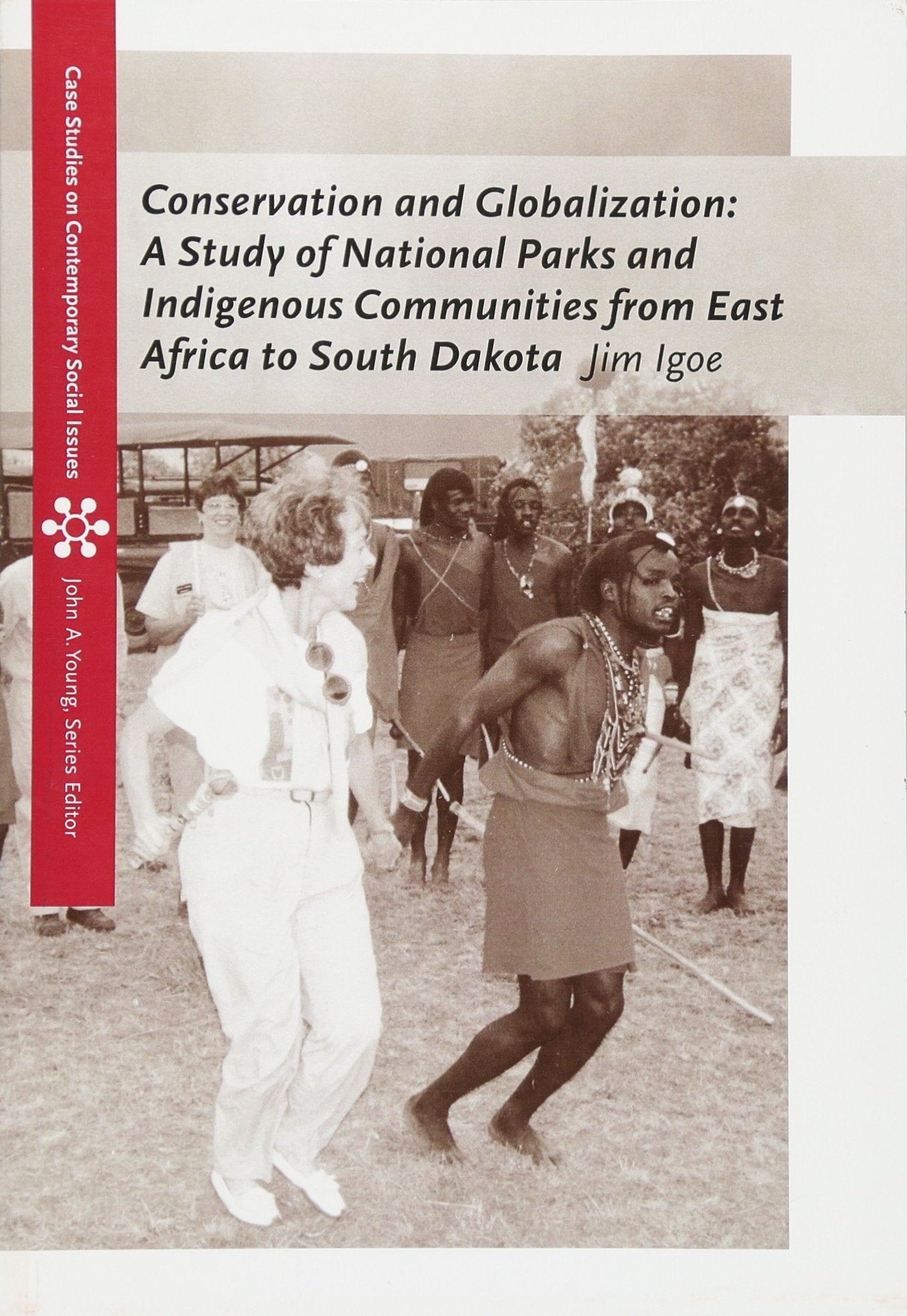
Conservation and Globalization: A Study of National Parks and Indigenous Communities from East Africa to South Dakota (Case Stud,Used
Sold by Ergodebooks, an authorized reseller.
Returns accepted within 30 days | support@ergodebooks.com
Shipping Information
- Free Standard Shipping — United States only
- Processing Time: 3–5 business days
- Estimated Delivery: 6–10 business days after dispatch
- Double-boxed, fully insured & discreetly packaged
- Tracking number sent via email once dispatched
Returns & Refund
Returns accepted within 30 days of delivery.
Damaged or Defective Item
Free return shipping + replacement or full refund
Wrong Item Received
Free return shipping + replacement or full refund
Change of Mind
Return shipping at customer's expense · 25% restocking fee applies
Payment Option

CONSERVATION AND GLOBALIZATION opens with a discussion of these two broad issues as they relate to the author's fieldwork with Maasai herding communities on the margins of Tarangire National Park in Tanzania. It explores different theoretical perspectives (NeoMarxist and Foucauldian) on globalization and why both are relevant to the case studies presented. Readers are introduced to the practice of multisited ethnography and its centrality to the anthropological study of globalization. While drawing on examples from specific Maasai communities, the book is more broadly concerned with the historical and contemporary links between these communities and a global system of institutions, ideas, and money. The ecological incompatibility of Western national parkstyle conservation with East African savanna ecosystems and Maasai resource management practices, are highlighted. The concept of national parks is traced temporally and geographically from Maasai communities to the enclosure movement in 18th century England and westward expansion in 19th century North America. The relationships of parks to JudeoChristian assumptions about 'man's place in nature,' colonial ideologies like Manifest Destiny and the Civilizing Mission, and capitalist notions of private property and 'The Tragedy of the Commons,' are explored. The book also looks at the latest conservation paradigm of 'CommunityBased Conservation,' and explores its connections to the Soviet Collapse, economic and political liberalization, and the global proliferation of NGOs.
⚠️ WARNING (California Proposition 65):
This product may contain chemicals known to the State of California to cause cancer, birth defects, or other reproductive harm.
For more information, please visit www.P65Warnings.ca.gov.
- Q: How many pages does this book have? A: This book has two hundred pages. It offers an in-depth exploration of conservation and globalization.
- Q: What is the binding type of this book? A: The binding type is paperback. This makes it lightweight and easy to handle.
- Q: What are the dimensions of this book? A: The dimensions are six inches by nine inches and it is approximately half an inch thick.
- Q: Is this book suitable for academic use? A: Yes, this book is suitable for academic use. It provides theoretical perspectives and case studies relevant to social issues.
- Q: Who is the author of this book? A: The author is Jim Igoe. He conducts fieldwork on conservation and globalization.
- Q: What themes are explored in this book? A: The book explores themes of conservation, globalization, and multi-sited ethnography.
- Q: How should I care for this paperback book? A: Keep it in a dry place and avoid exposure to direct sunlight. This will help preserve the book's condition.
- Q: Can I clean the cover of this book? A: Yes, you can clean the cover with a damp cloth. Avoid using harsh chemicals to prevent damage.
- Q: Is this book considered safe for all age groups? A: Yes, the book is generally safe for all age groups. However, it is recommended for readers interested in social issues.
- Q: What if my book arrives damaged? A: If your book arrives damaged, contact customer support within a specified time frame for a replacement or refund.
- Q: Can I return this book if I don't like it? A: Yes, you can return the book according to the store's return policy. Make sure to check the specific conditions.
- Q: Does this book include case studies? A: Yes, the book includes case studies from various communities. It provides real-world examples of conservation and globalization.
- Q: Is this book part of a larger series? A: No, this book is not part of a larger series. It stands alone as a comprehensive study.
- Q: What kind of research methods does the author use? A: The author employs multi-sited ethnography as a research method. This approach allows for broader insights into the topic.
- Q: Does this book discuss community-based conservation? A: Yes, the book discusses community-based conservation as part of the latest conservation paradigms.