
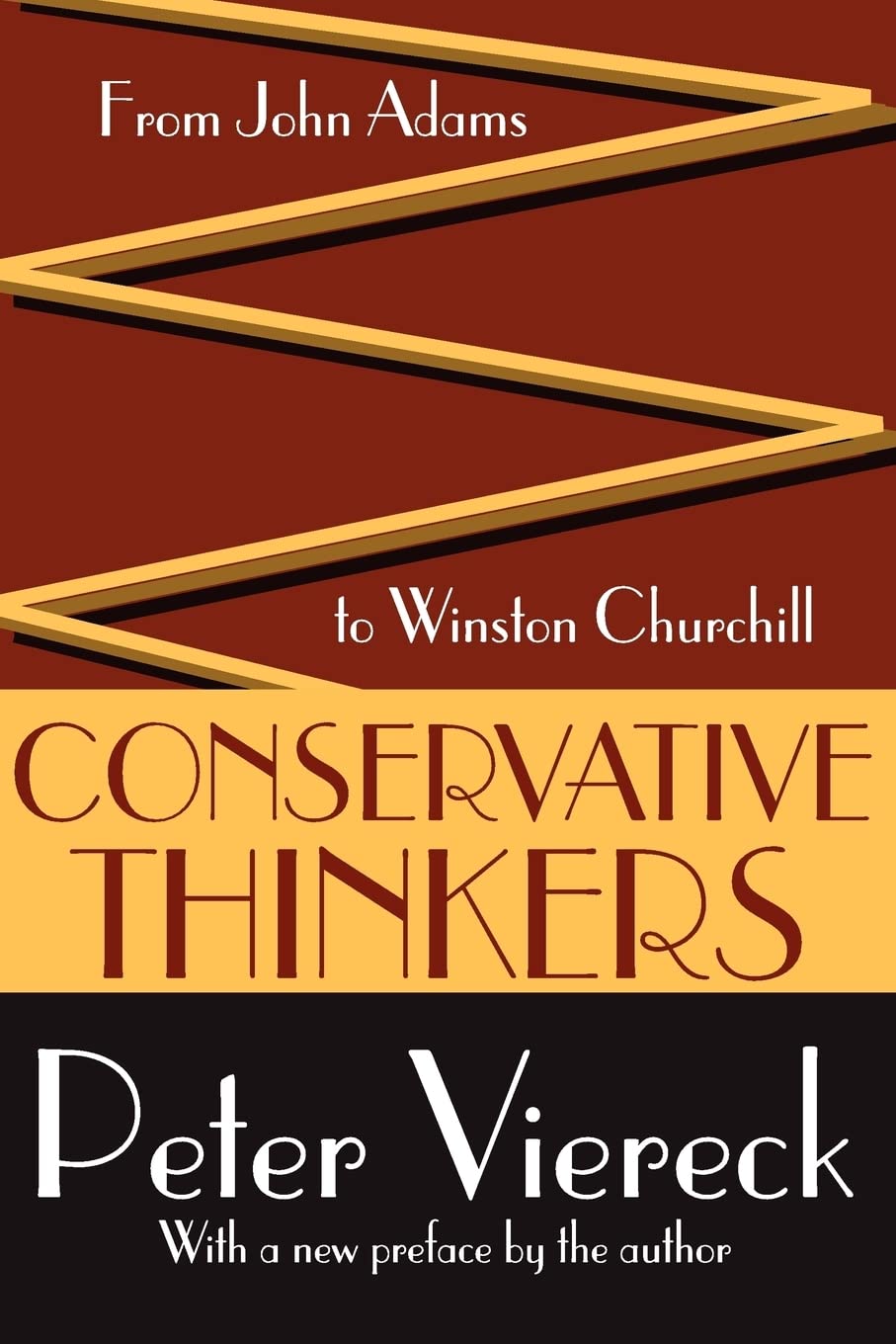
Title
Conservative Thinkers: From John Adams to Winston Churchill,Used
Sold by Ergodebooks, an authorized reseller.
Returns accepted within 30 days | support@ergodebooks.com
Shipping Information
- Free Standard Shipping — United States only
- Processing Time: 3–5 business days
- Estimated Delivery: 6–10 business days after dispatch
- Double-boxed, fully insured & discreetly packaged
- Tracking number sent via email once dispatched
Returns & Refund
Returns accepted within 30 days of delivery.
Damaged or Defective Item
Free return shipping + replacement or full refund
Wrong Item Received
Free return shipping + replacement or full refund
Change of Mind
Return shipping at customer's expense · 25% restocking fee applies
Payment Option

Across America today, conservatism is being hotly debated both across the political spectrum and within the conservative movement itself. Much of the public debate is without definition or historical context. This history of conservatism by renowned historian, social critic, and poet Peter Viereck aims to meet the need for a concise, balanced picture of conservative thought in all its different shadings and cultural contexts.The analytical portion of the book provides a succinct but thorough critical overview of conservatism's most representative figures. Viereck begins with chapters defining conservatism itself, its special technical terms, and its changing historical circumstances. The rest deals with its actual thinkers and statesmen. After each main conservative thesis, the anticonservative rebuttal is summarized, and the reader is allowed to reach his own conclusions. Though the first stress is on conservative political philosophy (from John Adams to Churchill), key sections also stress nonpolitical conservatism: in religion (Cardinal Newman) and in the primarily cultural protest against material progress (Coleridge, Dostoyevsky, Melville, Henry Adams).Every major point is concretely illustrated by an appended crossreference to a primary source in the second half, a wellchosen anthology of key conservative documents. Criteria for inclusion are three, representativeness, depth of perception, importance of influence. The result is not uniformity but a gamut: from extreme intolerant reaction to an evolutionary moderate spirit. The former passes imperceptibly into authoritarianism; the latter, into liberalism.
⚠️ WARNING (California Proposition 65):
This product may contain chemicals known to the State of California to cause cancer, birth defects, or other reproductive harm.
For more information, please visit www.P65Warnings.ca.gov.