If you have any questions, you are always welcome to contact us. We'll get back to you as soon as possible, withing 24 hours on weekdays.
Customer service
All questions about your order, return and delivery must be sent to our customer service team by e-mail at yourstore@yourdomain.com
Sale & Press
If you are interested in selling our products, need more information about our brand or wish to make a collaboration, please contact us at press@yourdomain.com
Help
If you have any questions, you are always welcome to contact us. We'll get back to you as soon as possible, withing 24 hours on weekdays.
Customer service
All questions about your order, return and delivery must be sent to our customer service team by e-mail at yourstore@yourdomain.com
Sale & Press
If you are interested in selling our products, need more information about our brand or wish to make a collaboration, please contact us at press@yourdomain.com
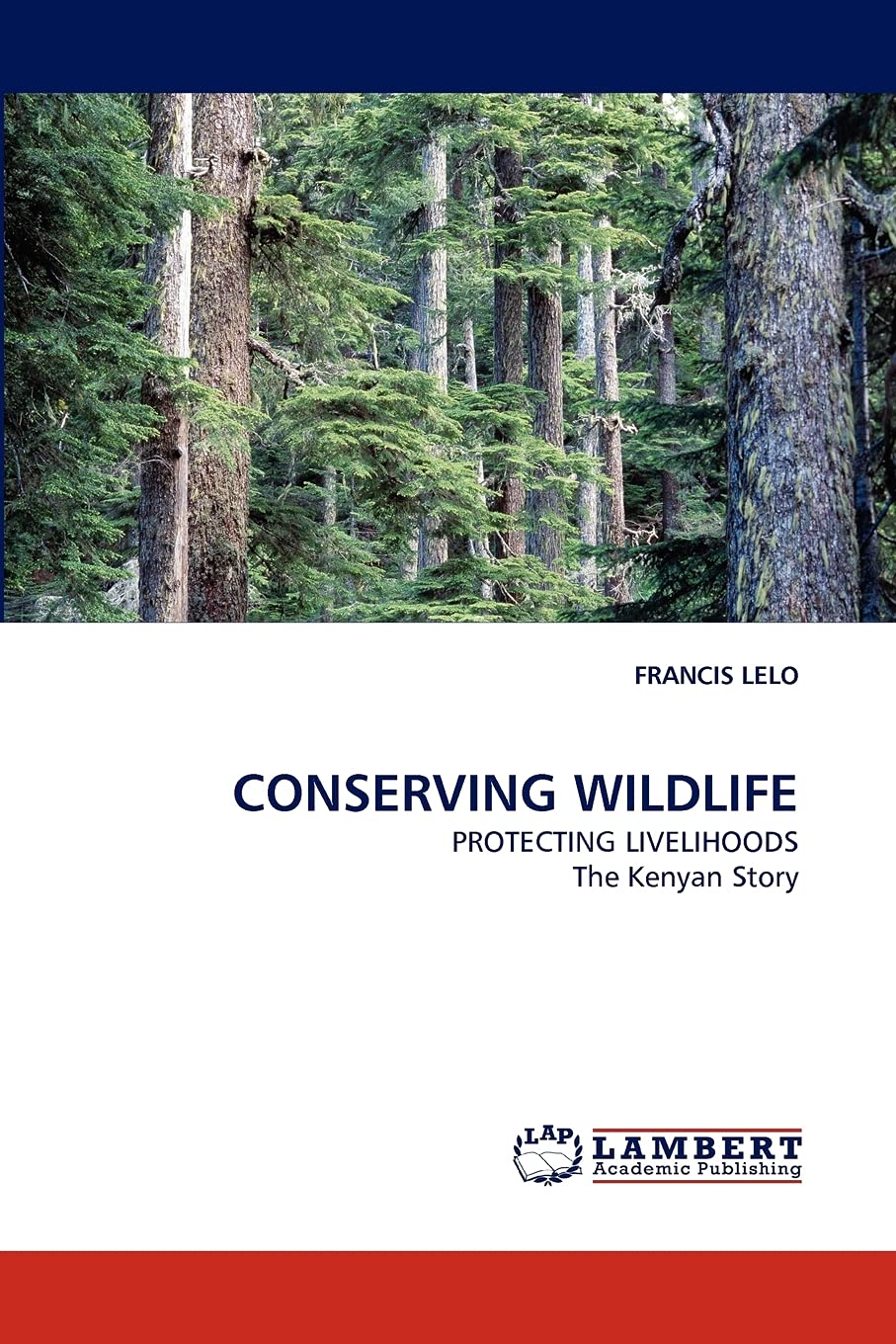
This publication is based on a study carried out in Donyo Sabuk National Park in Kenya. The findings of the study have broad application in Kenyan scene where people/wildlife conflicts have reached peak levels. The issues hinge on historical mistakes committed by wildlife conservationists of yester years who ignored not only local people's interests but failed to consider ecological needs of the wildlife when establishing national parks. The findings lead to the conclusion that a common ground can be found where both the government conservation policies and local people's interests can accommodate each other. The problem is that the two groups have not been talking to one another. This publication discusses in details the various tools that could be applied to allay both groups' fears and lay a foundation for cooperative participation in wildlife management in Kenya. The publication proposes a winwin approach focusing on commonly agreed goals for wildlife management, derived from the distinct needs and concerns of the various stakeholders whose interests are at stake.
⚠️ WARNING (California Proposition 65):
This product may contain chemicals known to the State of California to cause cancer,
birth defects, or other reproductive harm.
For MAP (Minimum Advertised Price) violations and Intellectual Property (IP) or Trademark concerns, please contact:
support@ergodebooks.com
⚠️ California Proposition 65 Warning: Some products sold on this website may expose you to chemicals known to the State of California to cause cancer, birth defects, or other reproductive harm. For more information, visit www.P65Warnings.ca.gov.