
Title
Constitutional Orphan: Gender Equality and the Nineteenth Amendment,Used
Sold by Ergodebooks, an authorized reseller.
Returns accepted within 30 days | support@ergodebooks.com
Shipping Information
- Free Standard Shipping — United States only
- Processing Time: 3–5 business days
- Estimated Delivery: 6–10 business days after dispatch
- Double-boxed, fully insured & discreetly packaged
- Tracking number sent via email once dispatched
Returns & Refund
Returns accepted within 30 days of delivery.
Damaged or Defective Item
Free return shipping + replacement or full refund
Wrong Item Received
Free return shipping + replacement or full refund
Change of Mind
Return shipping at customer's expense · 25% restocking fee applies
Payment Option

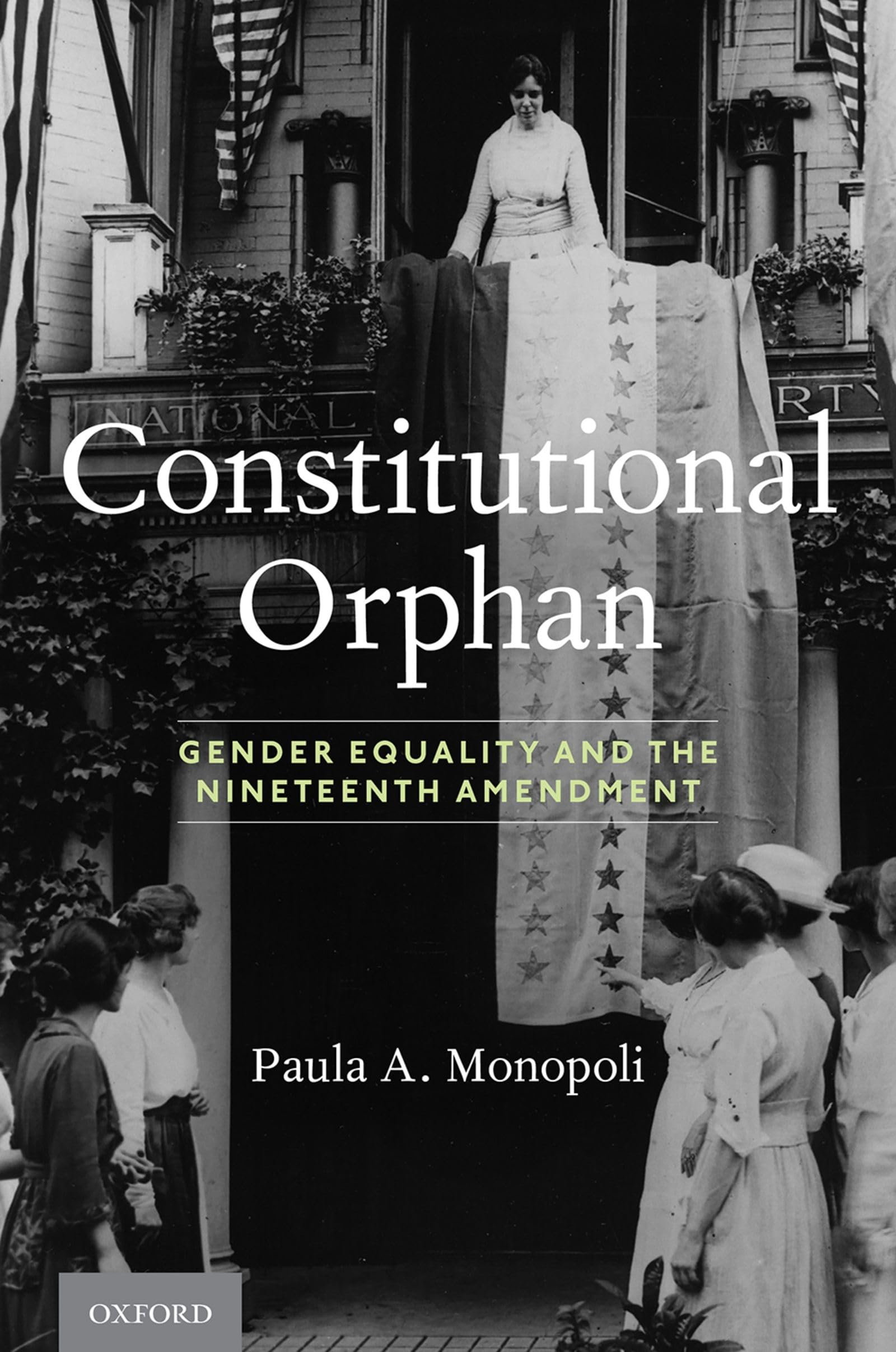
In Constitutional Orphan, Professor Paula Monopoli explores the significant role of former suffragists in the constitutional development of the Nineteenth Amendment the woman suffrage amendment ratified in 1920. She sheds new light on the connection between the suffragists as institutional actors in civil society and the emergence of a 'thin' conception of the Nineteenth Amendment as a mere nondiscrimination in voting rule, rather than a robust equality norm. In this compelling legal history, Monopoli illuminates how the Nineteenth had implications for federalism, women's citizenship and the definition of equality, as well as how gender, race and class intersect to affect our constitutional development.Monopoli explores the choice by both the National Woman's Party and the National American Woman Suffrage Association to turn away from African American suffragists who were denied the vote even after ratification of the Nineteenth Amendment. Using original sources, legislative history and case analysis, she develops a persuasive theory connecting that moral and strategic failure to the emergence of a narrow interpretation of the amendment. Monopoli also evaluates the impact of class divisions among former suffragist allies. These divisions around support for the NWP's Equal Rights Amendment, found social feminists opposing that 'blanket' amendment for fear of its impact on the constitutional validity of protective labor legislation for workingclass women.Monopoli details how many state courts, left without federal enforcement legislation to guide them, used strict construction to cabin the emergence of a more robust interpretation of the Nineteenth Amendment, as a broad equality norm. She concludes with an examination of new legal scholarship that suggests ways in which such a robust understanding of the Nineteenth Amendment could be used today to expand gender equality. In this compelling legal history, Monopoli illuminates how gender, race and class intersect to affect our constitutional development.
⚠️ WARNING (California Proposition 65):
This product may contain chemicals known to the State of California to cause cancer, birth defects, or other reproductive harm.
For more information, please visit www.P65Warnings.ca.gov.